

[MEDICINE / PSYCHIATRY]. Of the Imagination: As a Cause and as a Cure of Disorders of the Body; exemplified by Fictitious Tractors, and Epidemical Convulsions. [...] Read to the Literary and Philosophical Society of Bath
![[MEDICINE / PSYCHIATRY]. Of the Imagination: As a](https://d3525k1ryd2155.cloudfront.net/h/635/117/1770117635.0.x.jpg)

- Bath, England: Printed by R. Cruttwell, and sold by Cadell and Davies, London, 1800
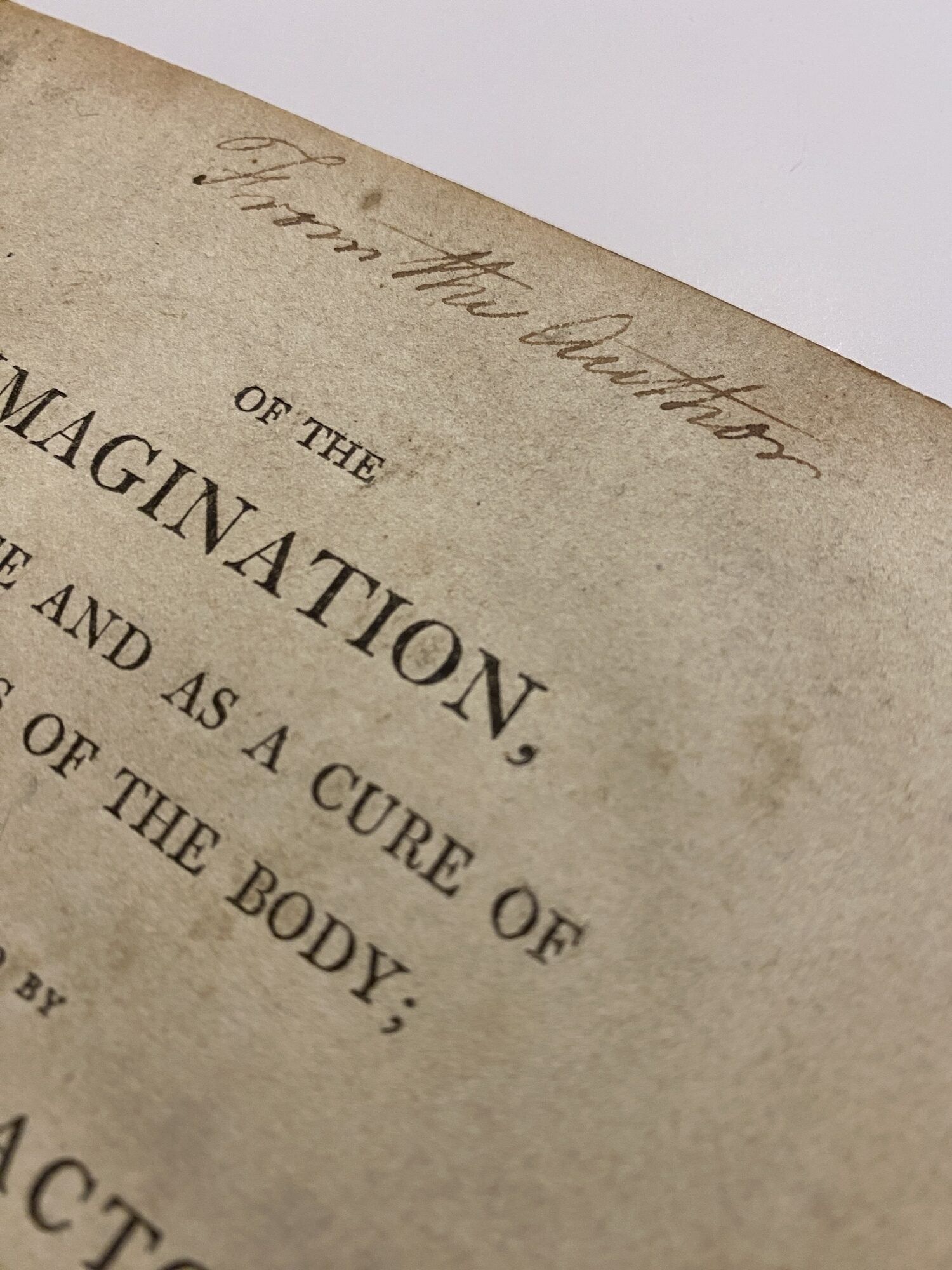
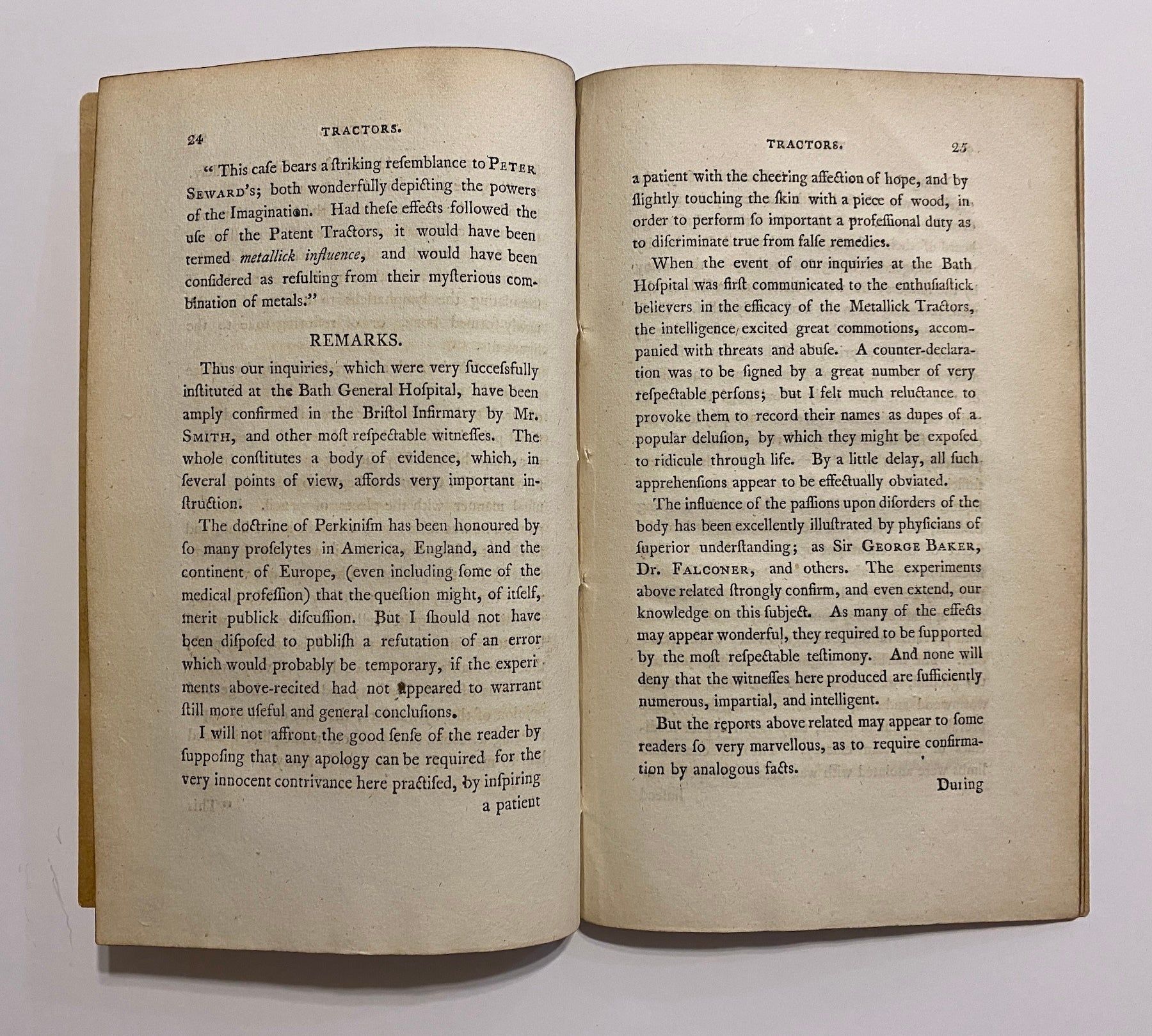
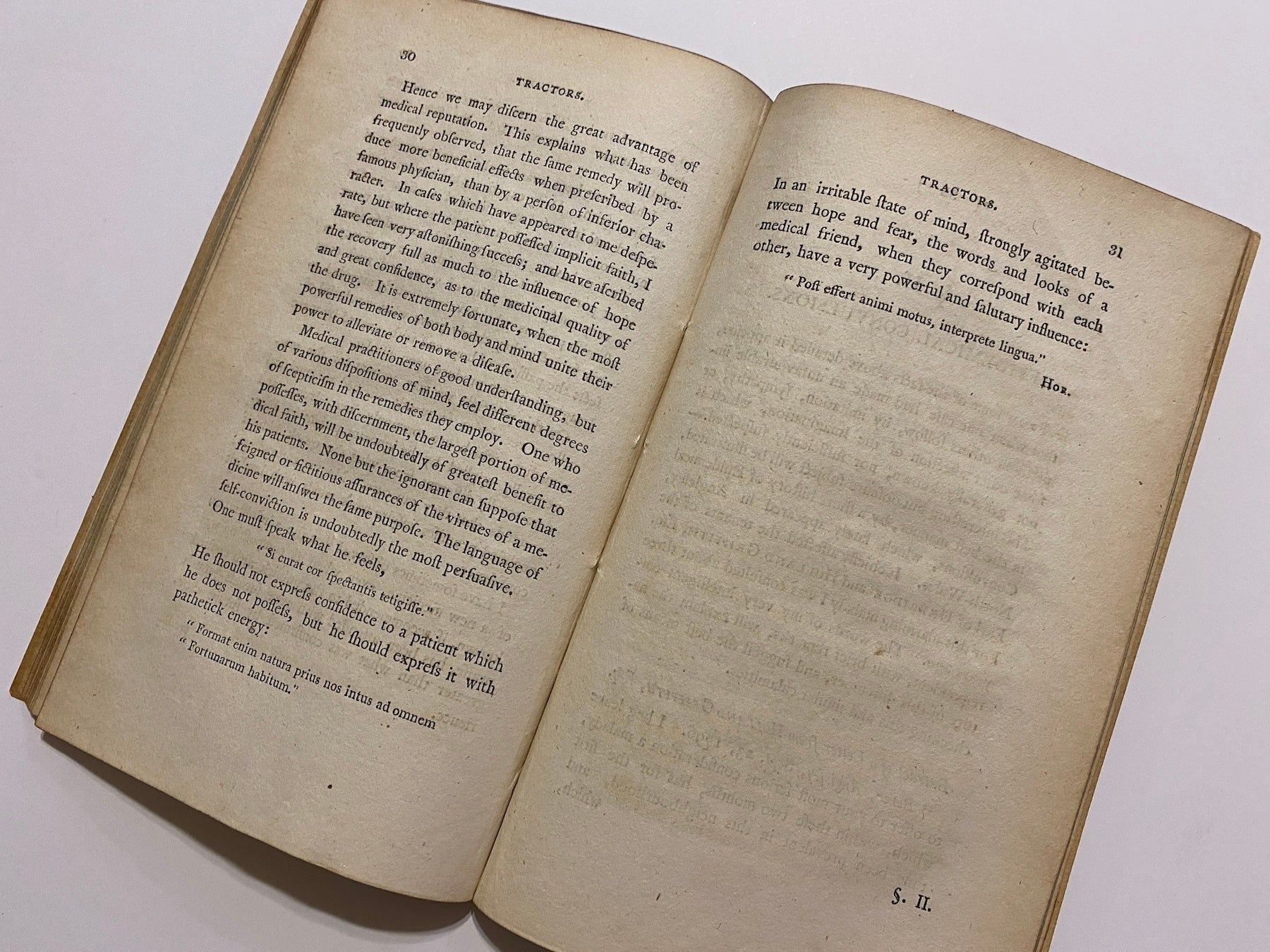
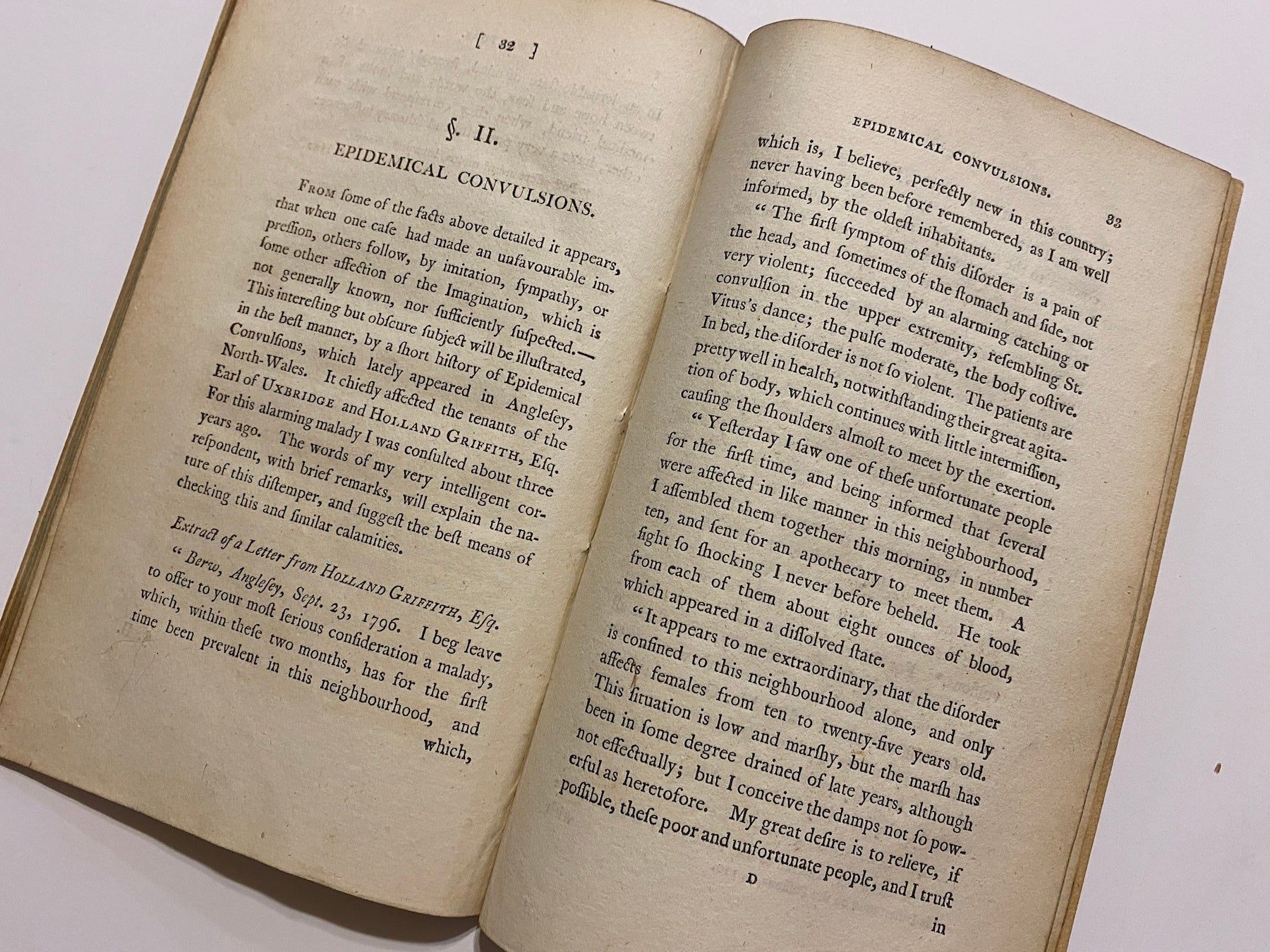
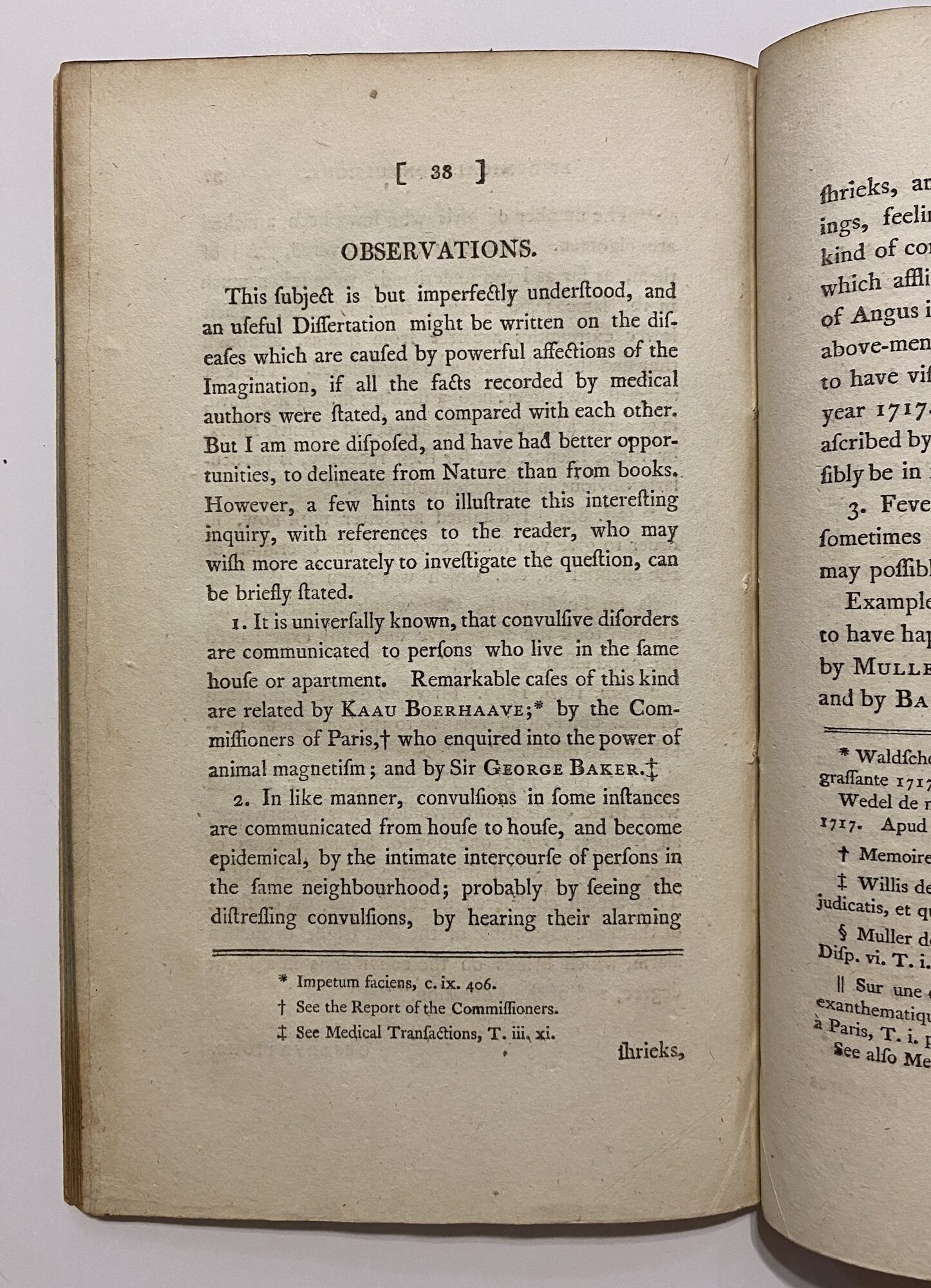
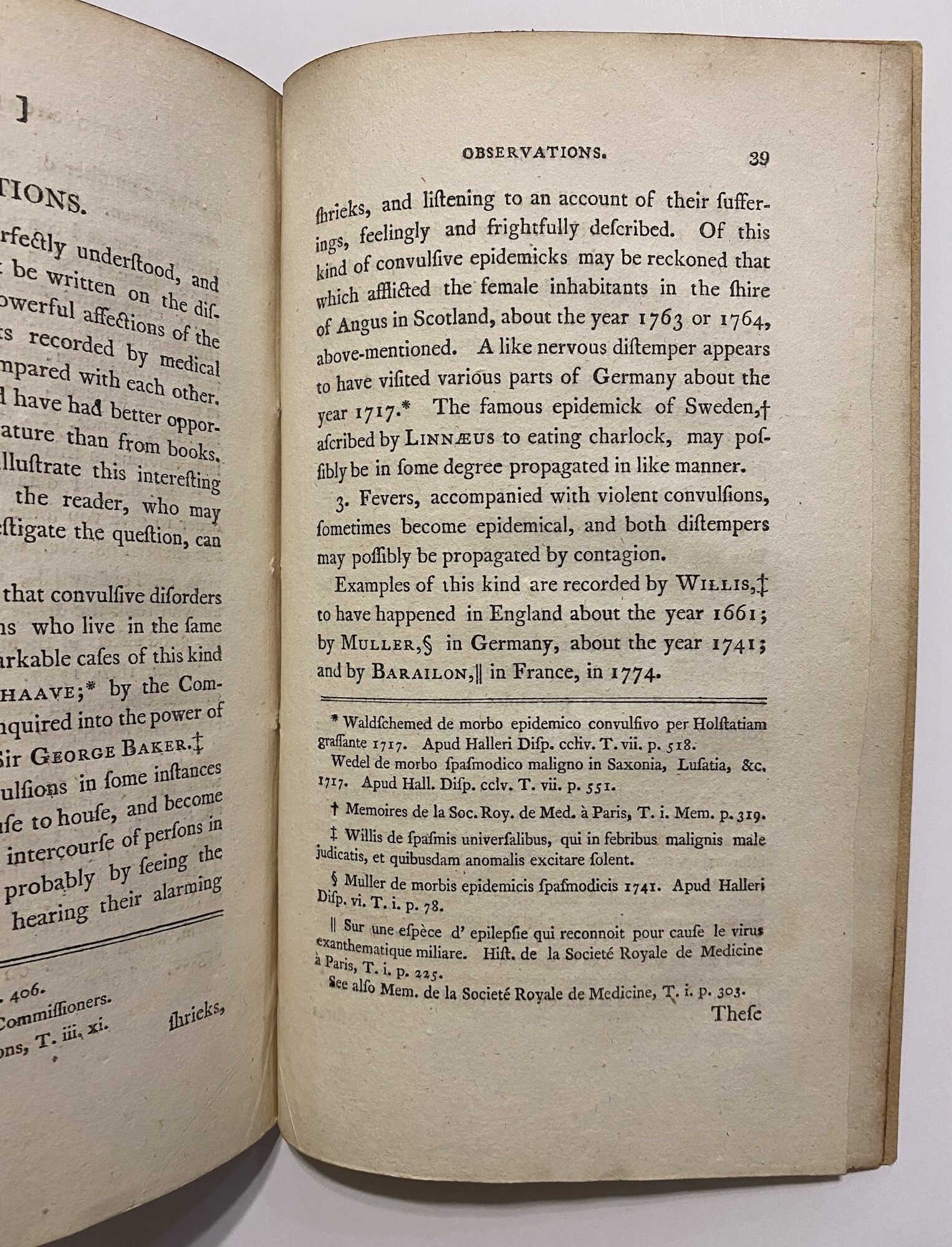
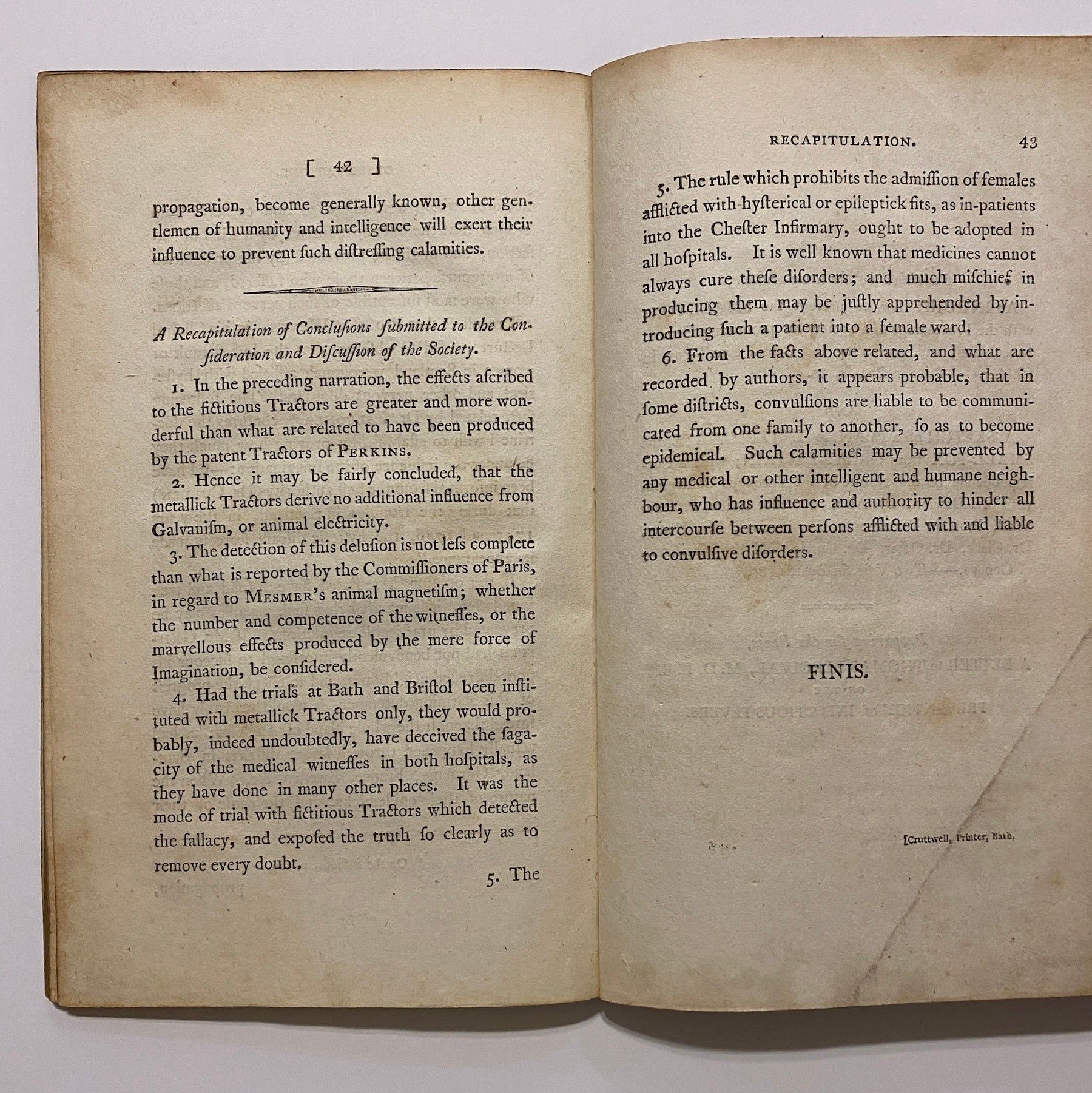
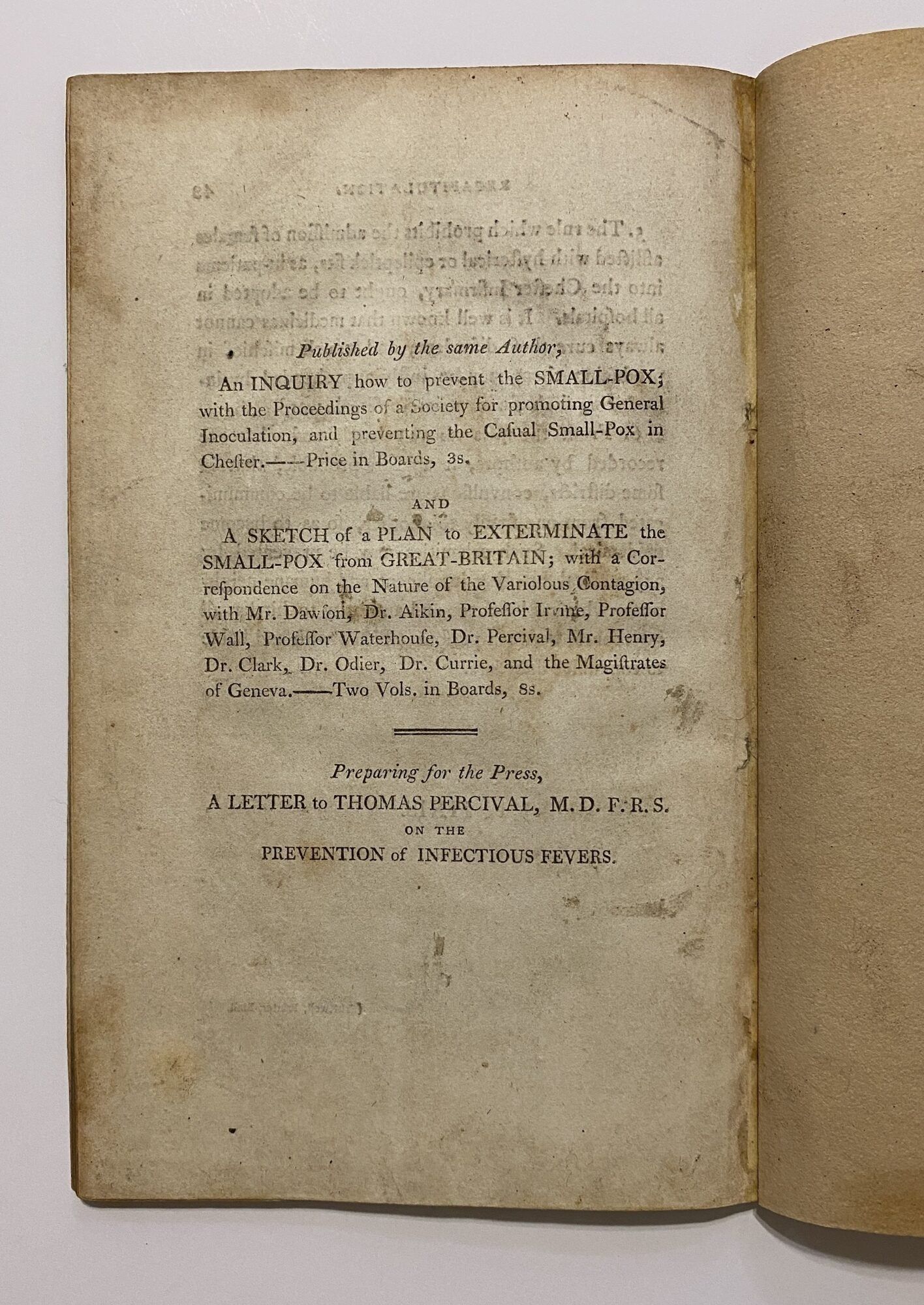
Bath, England: Printed by R. Cruttwell, and sold by Cadell and Davies, London, 1800. First Edition. Very good. 8vo. [4], 43, [1] pp. (title-page and final page soiled and a little browned). Extracted from a binding, bound in recent pale brown wrappers in the antique style, preserved in blue cloth chemise and slipcase. INSCRIBED "FROM THE AUTHOR," THIS IS THE FIRST CLINICAL DEMONSTRATION OF THE PLACEBO EFFECT, AND THE FIRST DOCUMENTED ACCOUNT OF THE USE OF A PLACEBO IN A SINGLE-BLIND CLINICAL TRIAL. THE UNASSUMING TITLE OF THIS PAMPHLET BELIES ITS PERMANENT MEDICAL AND PSYCHIATRIC IMPORTANCE. IT IS OF FURTHER INTEREST THAT THE SUBJECT OF THE PLACEBO WAS A MASSIVE "QUACK MEDICINE" HOAX OF INTERNATIONAL SIGNIFICANCE.
RARE ON THE MARKET: We have been searching for a copy of this first edition for ten years.
BACKGROUND OF THE CASE: Dr. Elisha Perkins (1741-1799), of Connecticut, had introduced the use of "Metallic Tractors" for "curing" a wide range of disorders, including pains in the head, face, teeth, breast, bones, sides, stomach, back, rheumatism, gout and much more. Potential consumers were led to believe that even domestic animals could be "healed" by the Tractors' properties. These ridiculous pieces of metal measured about 3" long and were sold in pairs. Their precise composition was kept secret; supposedly they through the agency of "animal magnetism." Perkins' Metallic Tractors were bought by millions of ailing consumers in America, Britain, Scandinavia, Continental Europe and beyond. The most notable customer was George Washington who enthusiastically hailed their efficacy and bought several sets for family and friends. Amongst all contemporary instruments of quack medicine, Perkins' Tractors was one of the most expensive: 5 guineas for a pair. So wide-ranging was the sceme that it is believed that the Perkins name was the first truly successful international "name branding" campaign anywhere, medical or otherwise.
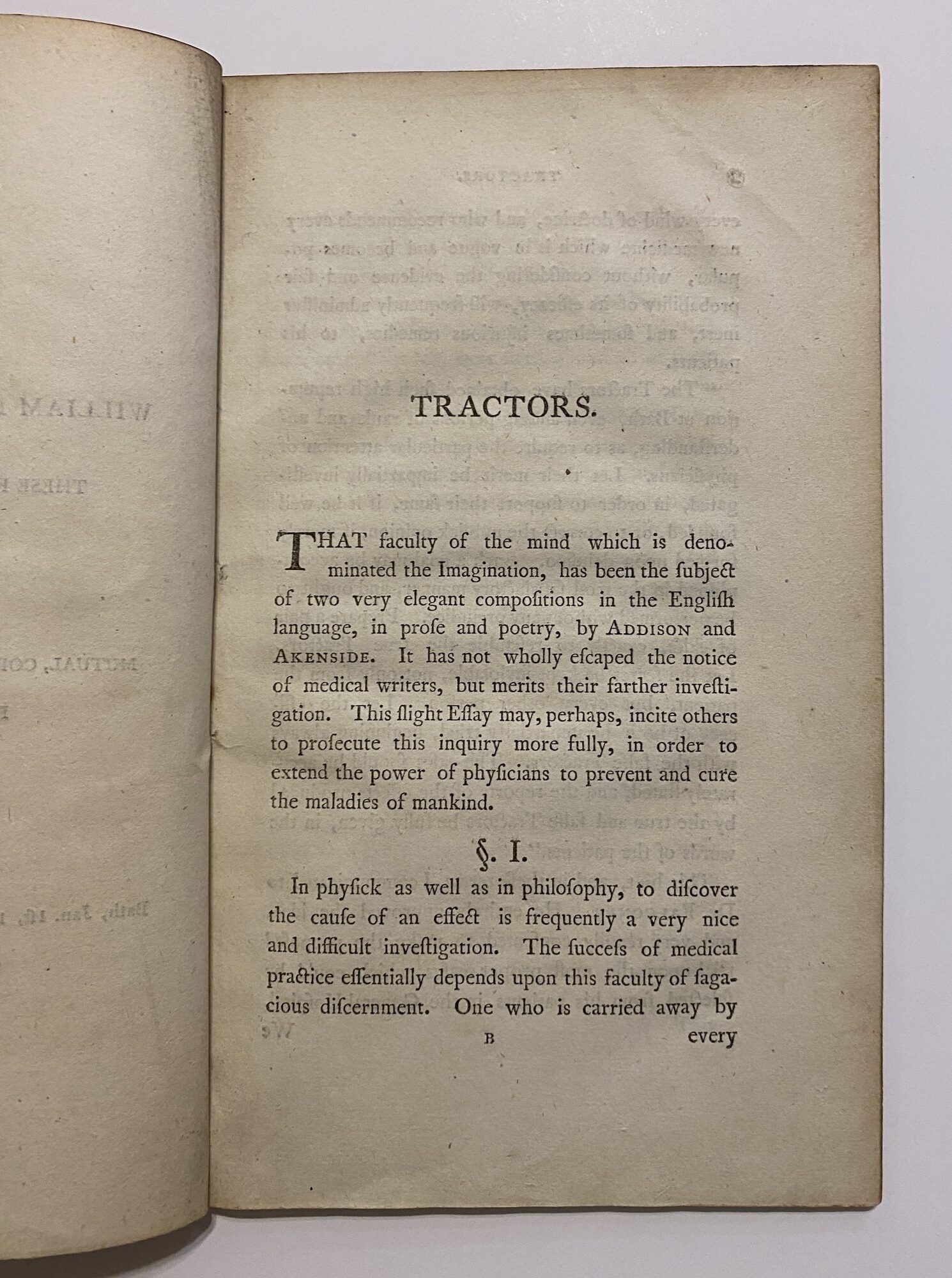
Enter John Haygarth, M.D. (1740-1827). Described by one of his biographers as "an Enlightenment man," Haygarth trained in Edinburgh and Leyden before becoming physician to the infirmary in the northern English town of Chester, where he remained for thirty years. Haygarth retired to Bath, and although he was no longer a clinician there he continued to take an active interest in the medicine of the day. Not surprisingly, Haygarth became intrigued by Perkins' Tractors, which had become ubiquitous in Bath and elsewhere. In an attempt to determine the value of the Tractors, Haygarth put to his friend William Falconer, at that time physician to the General Hospital at Bath, the following proposal which appears on p. 2 of the present pamphlet. The significance of Hagarth's text is such that it merits reprinting in full:
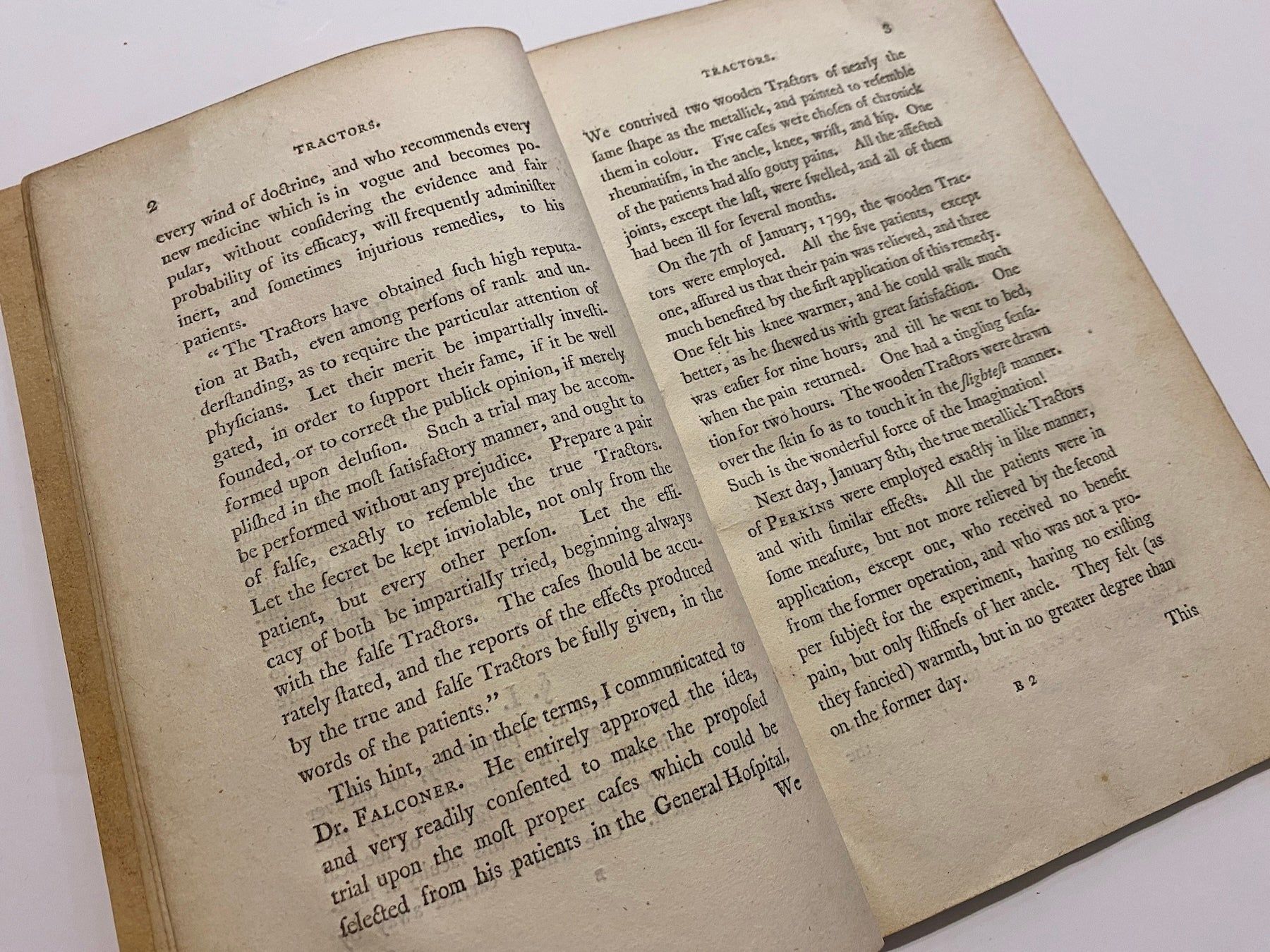
"The Tractors have obtained such a high reputation at Bath, even amongst persons of rank and understanding, as to require the particular attention of physicians. Let their merit be impartially investigated, in order to support their fame, if it be well-founded, or to correct the public opinion, if merely formed upon delusion [...] Prepare a pair of false, exactly to resemble the true Tractors. Let the secret be kept inviolable, not only from the patient but also from any other person. Let the efficacy of both be impartially tried and the reports of the effects produced by the true and false Tractors be fully given in the words of the patients."
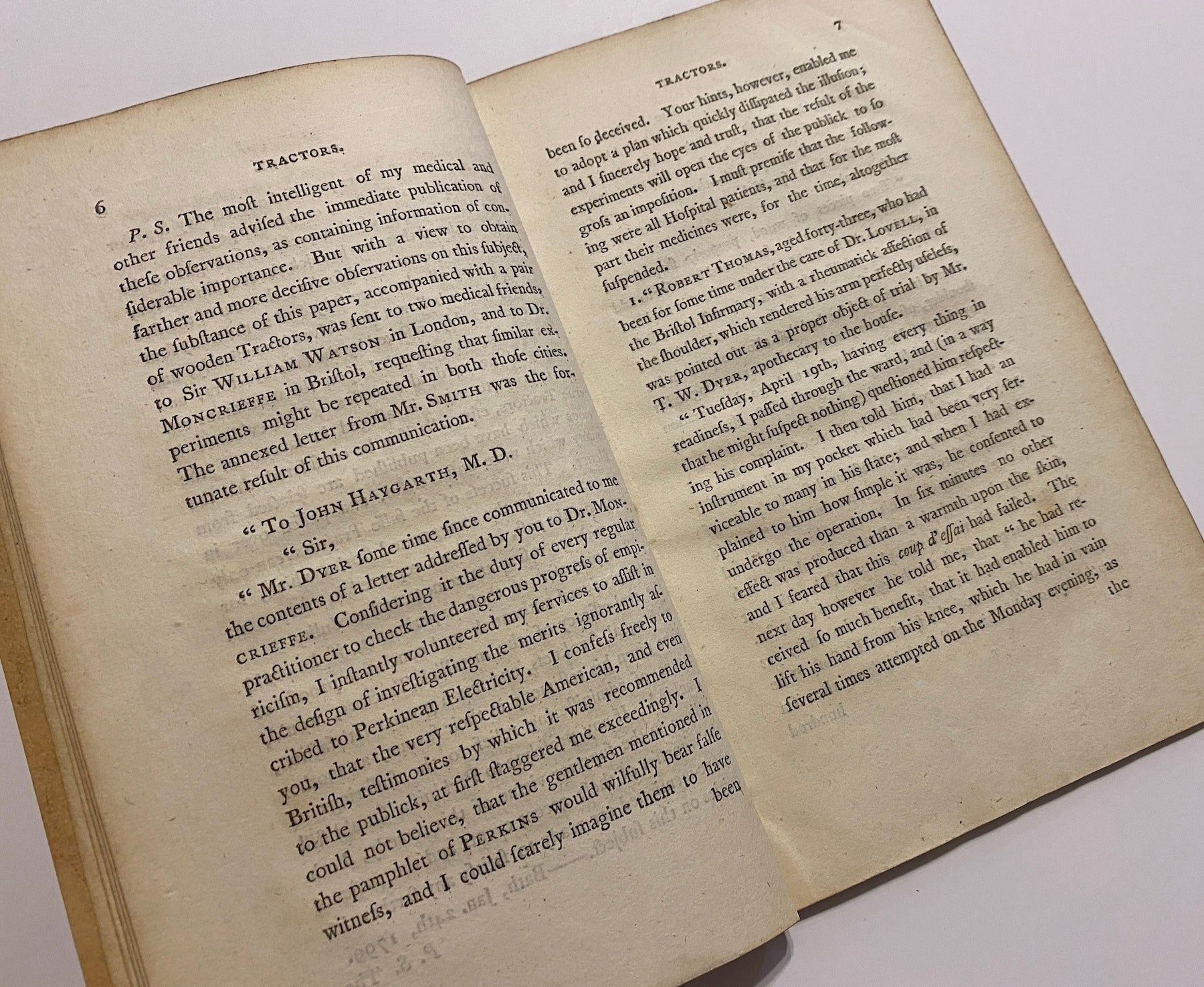
And so Haygarth fabricated his own fake Tractors to use as placebos. These he made out of pieces of pencils, bones, and painted tobacco pipes, i.e. materials that could clearly not be influenced by either electricity of any spurious animal magnetism. At Haygarth's suggestion, the tests were carried out by Dr. Falconer at the Bath General Hospital and by Dr. Richard Smith at the Bristol Infirmary. The fake Tractors appeared to be EQUALLY SUCCESSFUL as the "real" Tractors. Haygarth concluded that the "Imagination can cause, as well cure, diseases of the body" and his detailed account of his effective dismissal of Perkins' quackery appears in the present pamphlet. While the word "placebo" had been in use since 1772, the present work documents the first clinically administered and supervised demonstration of the placebo effect. Furthermore, other trials using only "genuine" tractors demonstrated NO EFFECTS in either infants or horses, i.e. subjects who could not reasonably be influenced by suggestion and the imagination!
It is a remarkable fact that Elisha Perkins received the first medical patent issued under the Constitution of the United States, in 1796, for THIS device, which consisted only of a pair of metal rods, about 3" long, that were designed to "draw off the noxious electrical fluid that lay at the root of suffering."
§ Wellcome III, p. 227. ESTC T26355. Hunter & Macalpine, Three Hundred Years of Psychiatry 1535-1860, p. 573. James Delbourgo, A Most Amazing Scene of Wonders: Electricity and the Enlightenment in Early America, 239-277. Christopher Booth, "The Rod of Aesculapios: John Haygarth (1740-1827) and Perkins' metallic tractors" in: Journal of Medical Biography, vol. 13, no. 3, pp. 155-161. Ibid., John Haygarth, FRS (1740-1827): A Physician of the Enlightenment, 2005, pp. 103-109. Ulrich Trohler, To Improve the Evidence in Medicine: The 18th-Century British Origins of a Critical Approach, 2003, p. 93. D.J. Lanska, "The assessment of Perkins' patent metallic 'tractors': Abandonment of an 18th-century therapeutic fad following trials using sham instruments" in: Journal of the History of Neuroscience, 2019, pp. 147-175.
RARE ON THE MARKET: We have been searching for a copy of this first edition for ten years.
BACKGROUND OF THE CASE: Dr. Elisha Perkins (1741-1799), of Connecticut, had introduced the use of "Metallic Tractors" for "curing" a wide range of disorders, including pains in the head, face, teeth, breast, bones, sides, stomach, back, rheumatism, gout and much more. Potential consumers were led to believe that even domestic animals could be "healed" by the Tractors' properties. These ridiculous pieces of metal measured about 3" long and were sold in pairs. Their precise composition was kept secret; supposedly they through the agency of "animal magnetism." Perkins' Metallic Tractors were bought by millions of ailing consumers in America, Britain, Scandinavia, Continental Europe and beyond. The most notable customer was George Washington who enthusiastically hailed their efficacy and bought several sets for family and friends. Amongst all contemporary instruments of quack medicine, Perkins' Tractors was one of the most expensive: 5 guineas for a pair. So wide-ranging was the sceme that it is believed that the Perkins name was the first truly successful international "name branding" campaign anywhere, medical or otherwise.
Enter John Haygarth, M.D. (1740-1827). Described by one of his biographers as "an Enlightenment man," Haygarth trained in Edinburgh and Leyden before becoming physician to the infirmary in the northern English town of Chester, where he remained for thirty years. Haygarth retired to Bath, and although he was no longer a clinician there he continued to take an active interest in the medicine of the day. Not surprisingly, Haygarth became intrigued by Perkins' Tractors, which had become ubiquitous in Bath and elsewhere. In an attempt to determine the value of the Tractors, Haygarth put to his friend William Falconer, at that time physician to the General Hospital at Bath, the following proposal which appears on p. 2 of the present pamphlet. The significance of Hagarth's text is such that it merits reprinting in full:
"The Tractors have obtained such a high reputation at Bath, even amongst persons of rank and understanding, as to require the particular attention of physicians. Let their merit be impartially investigated, in order to support their fame, if it be well-founded, or to correct the public opinion, if merely formed upon delusion [...] Prepare a pair of false, exactly to resemble the true Tractors. Let the secret be kept inviolable, not only from the patient but also from any other person. Let the efficacy of both be impartially tried and the reports of the effects produced by the true and false Tractors be fully given in the words of the patients."
And so Haygarth fabricated his own fake Tractors to use as placebos. These he made out of pieces of pencils, bones, and painted tobacco pipes, i.e. materials that could clearly not be influenced by either electricity of any spurious animal magnetism. At Haygarth's suggestion, the tests were carried out by Dr. Falconer at the Bath General Hospital and by Dr. Richard Smith at the Bristol Infirmary. The fake Tractors appeared to be EQUALLY SUCCESSFUL as the "real" Tractors. Haygarth concluded that the "Imagination can cause, as well cure, diseases of the body" and his detailed account of his effective dismissal of Perkins' quackery appears in the present pamphlet. While the word "placebo" had been in use since 1772, the present work documents the first clinically administered and supervised demonstration of the placebo effect. Furthermore, other trials using only "genuine" tractors demonstrated NO EFFECTS in either infants or horses, i.e. subjects who could not reasonably be influenced by suggestion and the imagination!
It is a remarkable fact that Elisha Perkins received the first medical patent issued under the Constitution of the United States, in 1796, for THIS device, which consisted only of a pair of metal rods, about 3" long, that were designed to "draw off the noxious electrical fluid that lay at the root of suffering."
§ Wellcome III, p. 227. ESTC T26355. Hunter & Macalpine, Three Hundred Years of Psychiatry 1535-1860, p. 573. James Delbourgo, A Most Amazing Scene of Wonders: Electricity and the Enlightenment in Early America, 239-277. Christopher Booth, "The Rod of Aesculapios: John Haygarth (1740-1827) and Perkins' metallic tractors" in: Journal of Medical Biography, vol. 13, no. 3, pp. 155-161. Ibid., John Haygarth, FRS (1740-1827): A Physician of the Enlightenment, 2005, pp. 103-109. Ulrich Trohler, To Improve the Evidence in Medicine: The 18th-Century British Origins of a Critical Approach, 2003, p. 93. D.J. Lanska, "The assessment of Perkins' patent metallic 'tractors': Abandonment of an 18th-century therapeutic fad following trials using sham instruments" in: Journal of the History of Neuroscience, 2019, pp. 147-175.
Details
Title
[MEDICINE / PSYCHIATRY]. Of the Imagination: As a Cause and as a Cure of Disorders of the Body; exemplified by Fictitious Tractors, and Epidemical Convulsions. [...] Read to the Literary and Philosophical Society of Bath
Author
Haygarth, John, M.D.
Condition
Very Good
Publisher
Printed by R. Cruttwell, and sold by Cadell and Davies, London: Bath, England
Date
1800
Edition
First Edition