

Curry & Rice (On Forty Plates) Or The Ingredients of Social Life At "Our Station" in India By George Francklin Atkinson Captain
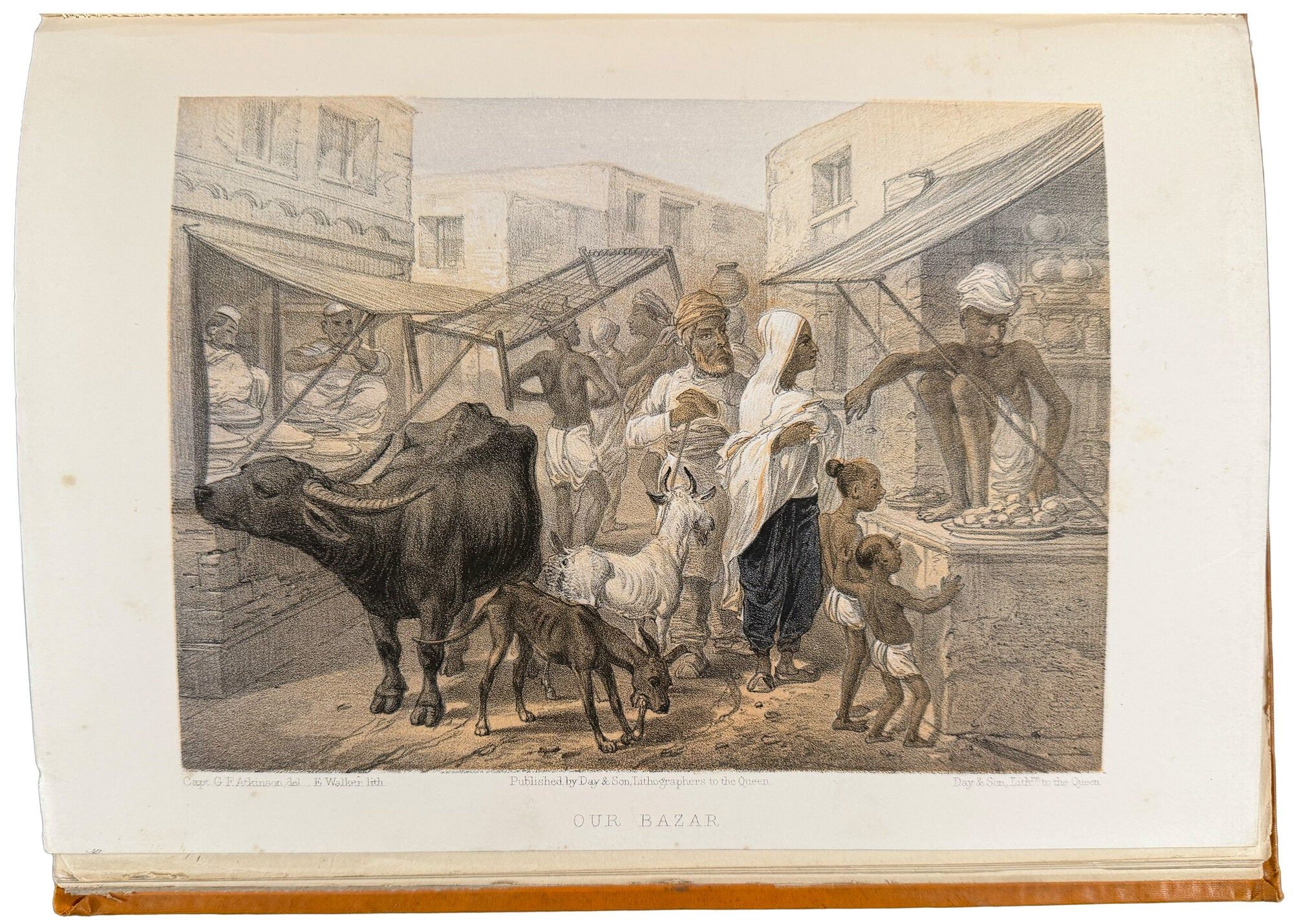
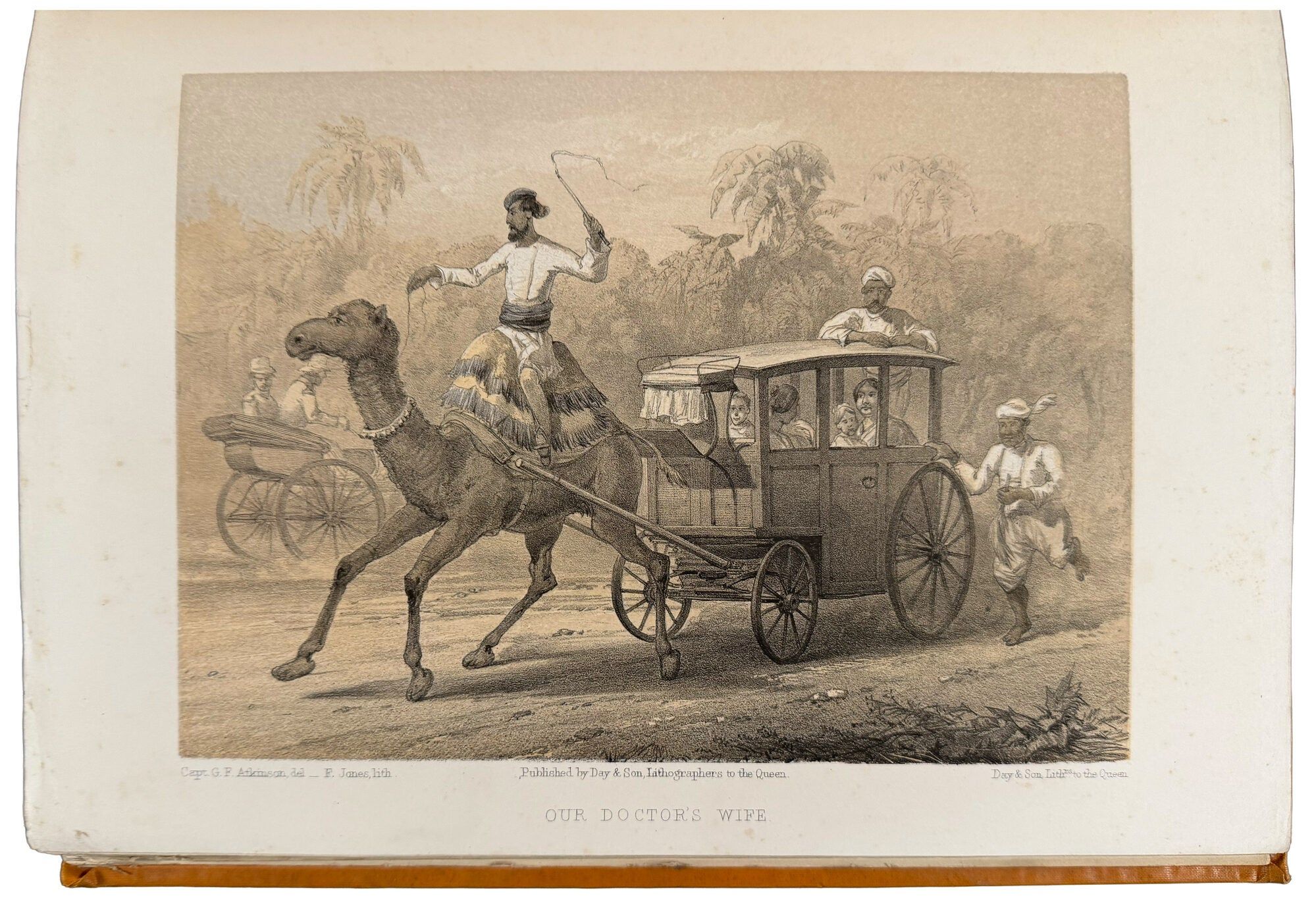
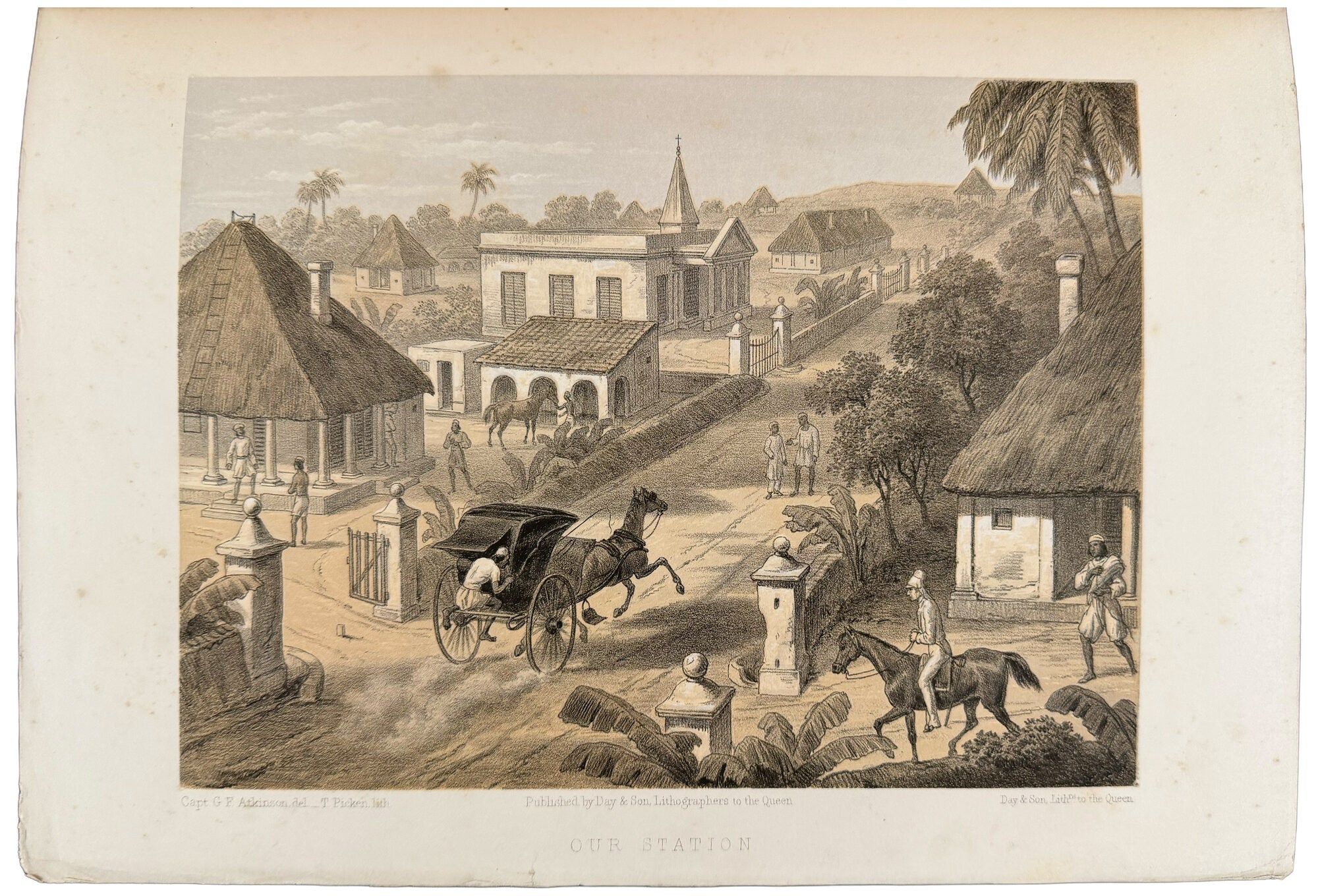
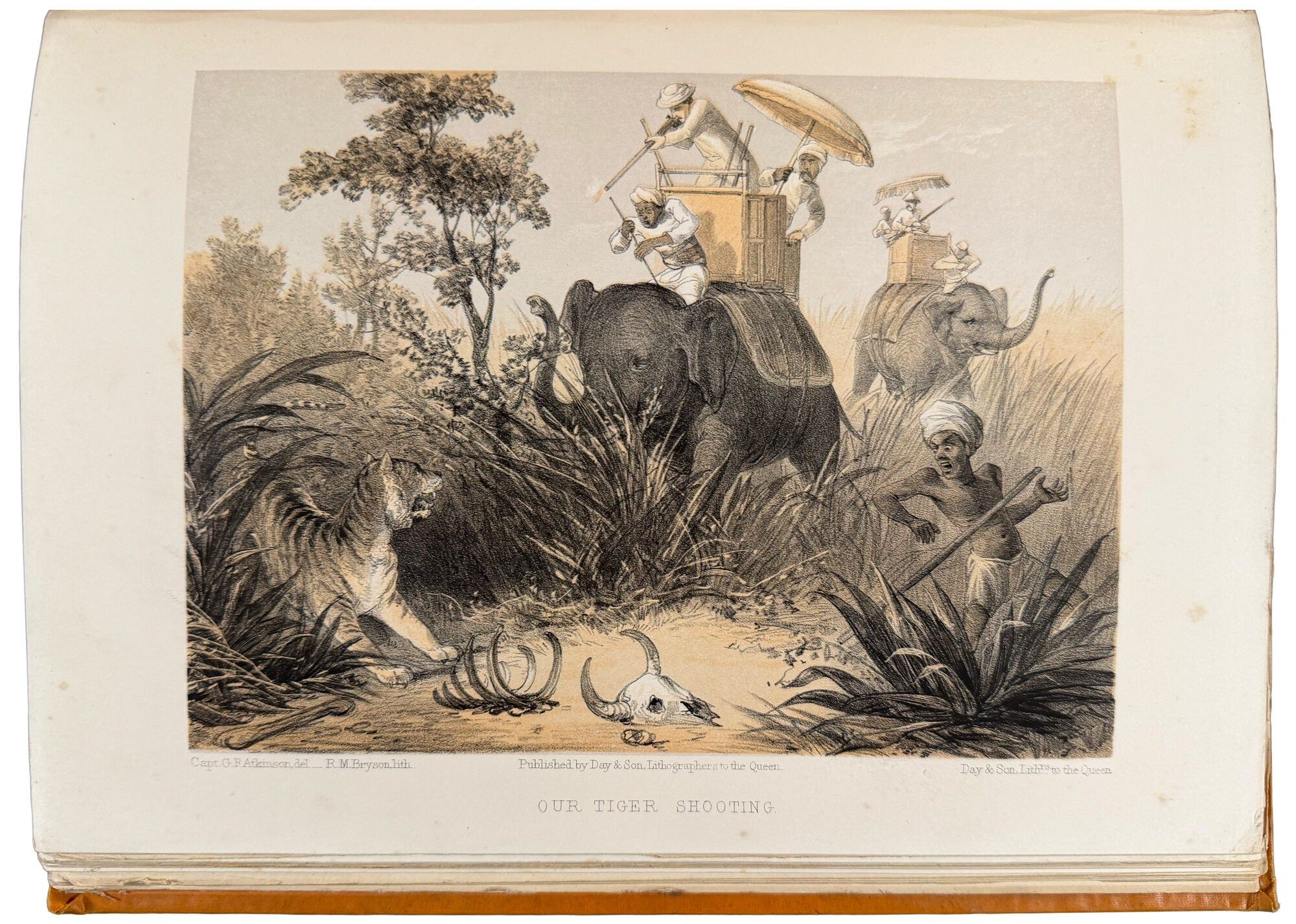
- 4to
- London: Day and Son, 1859
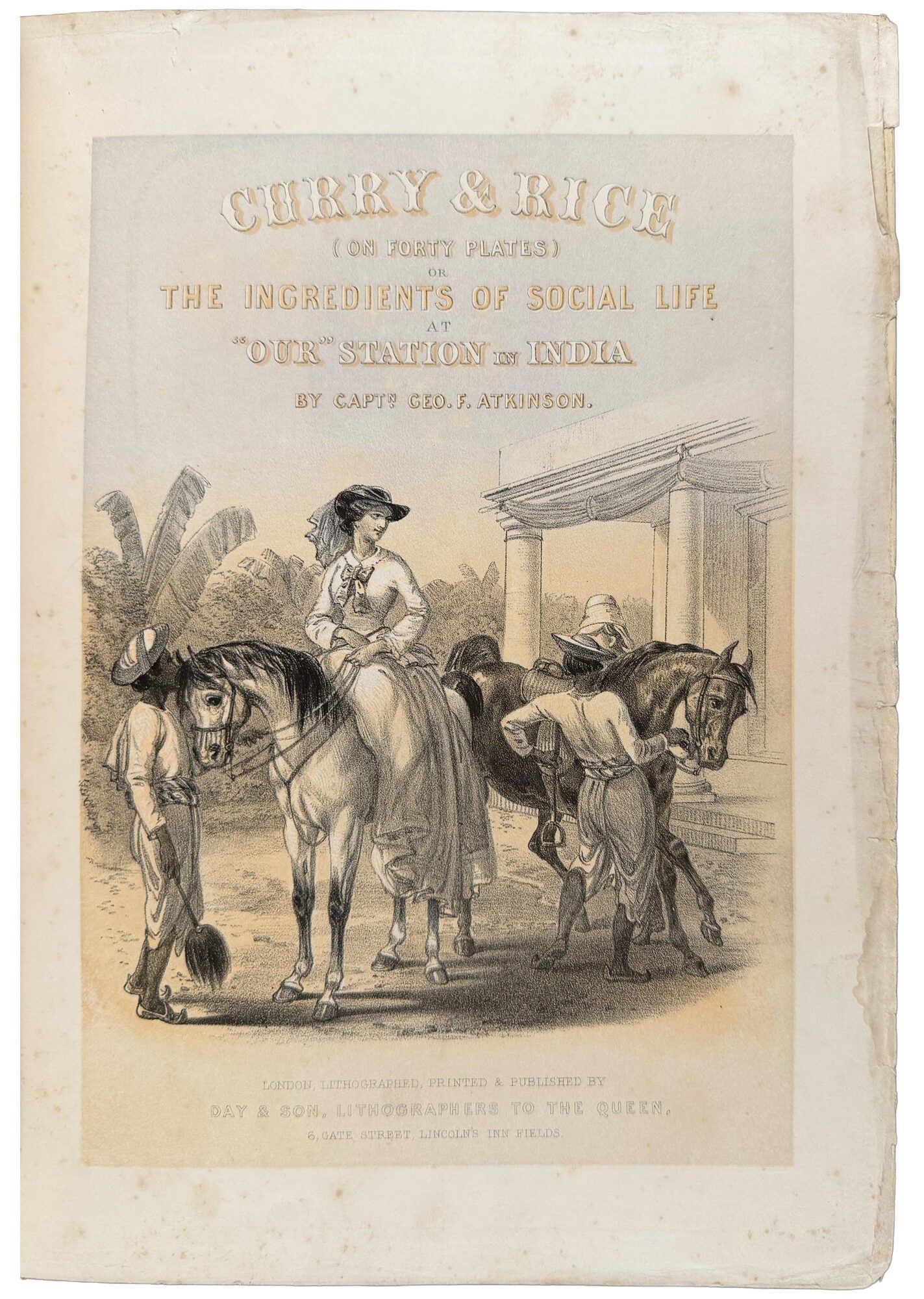
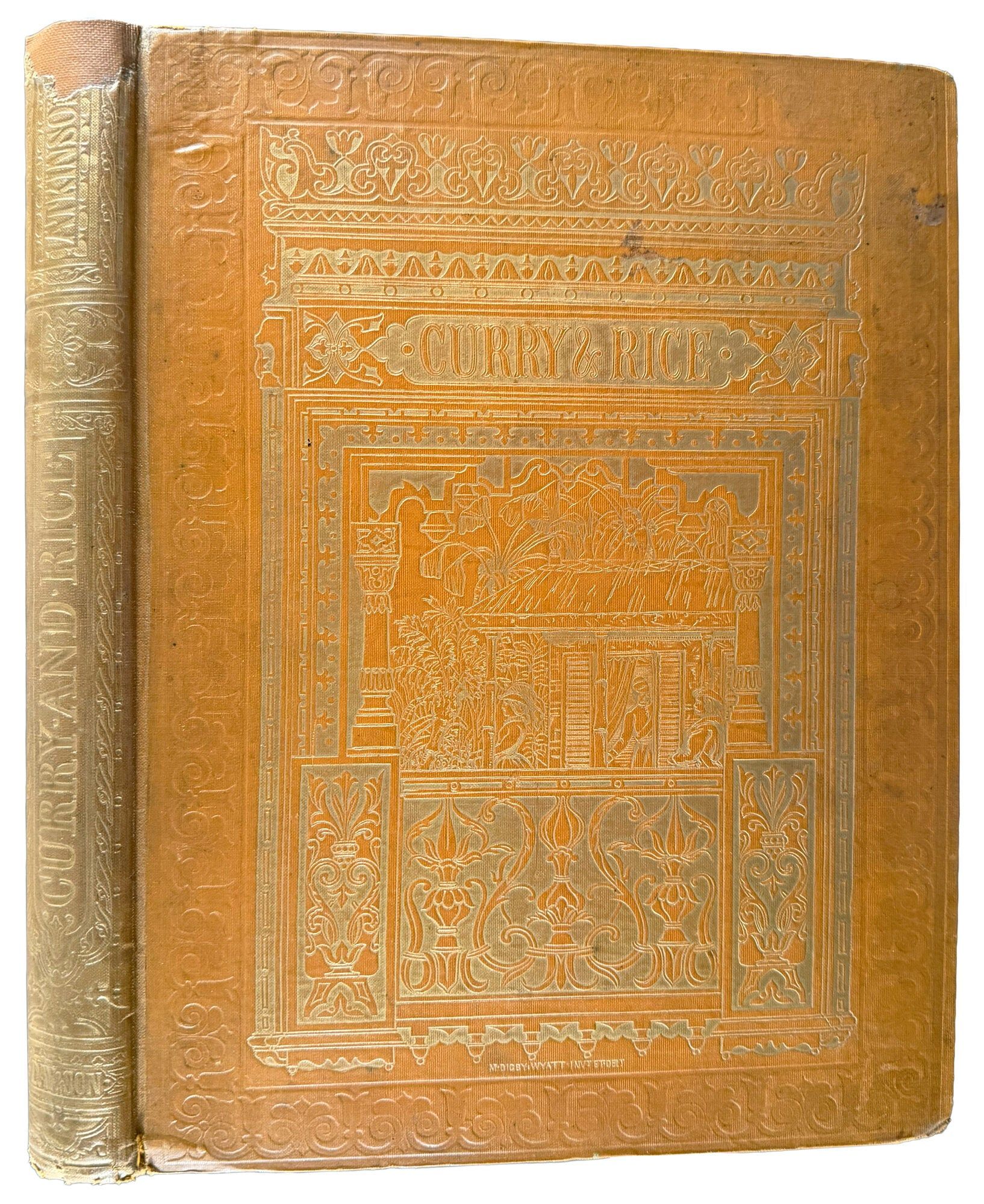
London: Day and Son, 1859. 4to. (11 3/8 x 8 inches). Second Edition. Illustrated with 40 plates, each accompanied by a description leaf. Gilt-stamped cloth, all edges gilt
A sharply observed illustrated satire of Anglo-Indian station life, presenting British colonial society in India through forty comic plate by a Bengal Engineers officer.
Atkinson's Curry & Rice uses the fictional Bengal station of "Kabob" as a comic framework for the social types, rituals, amusements, and hierarchies of British India in the years around the 1857 Uprising. The plates move through the official and domestic world of the station, including the judge, magistrate, colonel, padre, doctor, bazaar, cook room, pig-sticking, wedding, and departure for home. Each figure is treated as one of the "ingredients" of colonial society, giving the book its extended culinary conceit. George Francklin Atkinson served in the Bengal Engineers and brought to the work both firsthand familiarity with colonial life and a practised eye for caricature. His satire is often aimed at the self-importance, routines, and social codes of British civil and military society. The humour is strongly period-coded, making the book a revealing document of British attitudes as well as a lively visual record of station culture. The forty tinted lithographs are central to the work's appeal. They combine social observation, theatrical composition, and comic exaggeration, giving form to the everyday spaces of Anglo-Indian life: verandahs, offices, bazaars, domestic interiors, sporting grounds, and ceremonial gatherings.
A sharply observed illustrated satire of Anglo-Indian station life, presenting British colonial society in India through forty comic plate by a Bengal Engineers officer.
Atkinson's Curry & Rice uses the fictional Bengal station of "Kabob" as a comic framework for the social types, rituals, amusements, and hierarchies of British India in the years around the 1857 Uprising. The plates move through the official and domestic world of the station, including the judge, magistrate, colonel, padre, doctor, bazaar, cook room, pig-sticking, wedding, and departure for home. Each figure is treated as one of the "ingredients" of colonial society, giving the book its extended culinary conceit. George Francklin Atkinson served in the Bengal Engineers and brought to the work both firsthand familiarity with colonial life and a practised eye for caricature. His satire is often aimed at the self-importance, routines, and social codes of British civil and military society. The humour is strongly period-coded, making the book a revealing document of British attitudes as well as a lively visual record of station culture. The forty tinted lithographs are central to the work's appeal. They combine social observation, theatrical composition, and comic exaggeration, giving form to the everyday spaces of Anglo-Indian life: verandahs, offices, bazaars, domestic interiors, sporting grounds, and ceremonial gatherings.
Details
Title
Curry & Rice (On Forty Plates) Or The Ingredients of Social Life At "Our Station" in India By George Francklin Atkinson Captain
Author
ATKINSON, George Francklin (1822-1859)
Binding
4to
Condition
Unknown
Publisher
Day and Son: London
Date
1859