

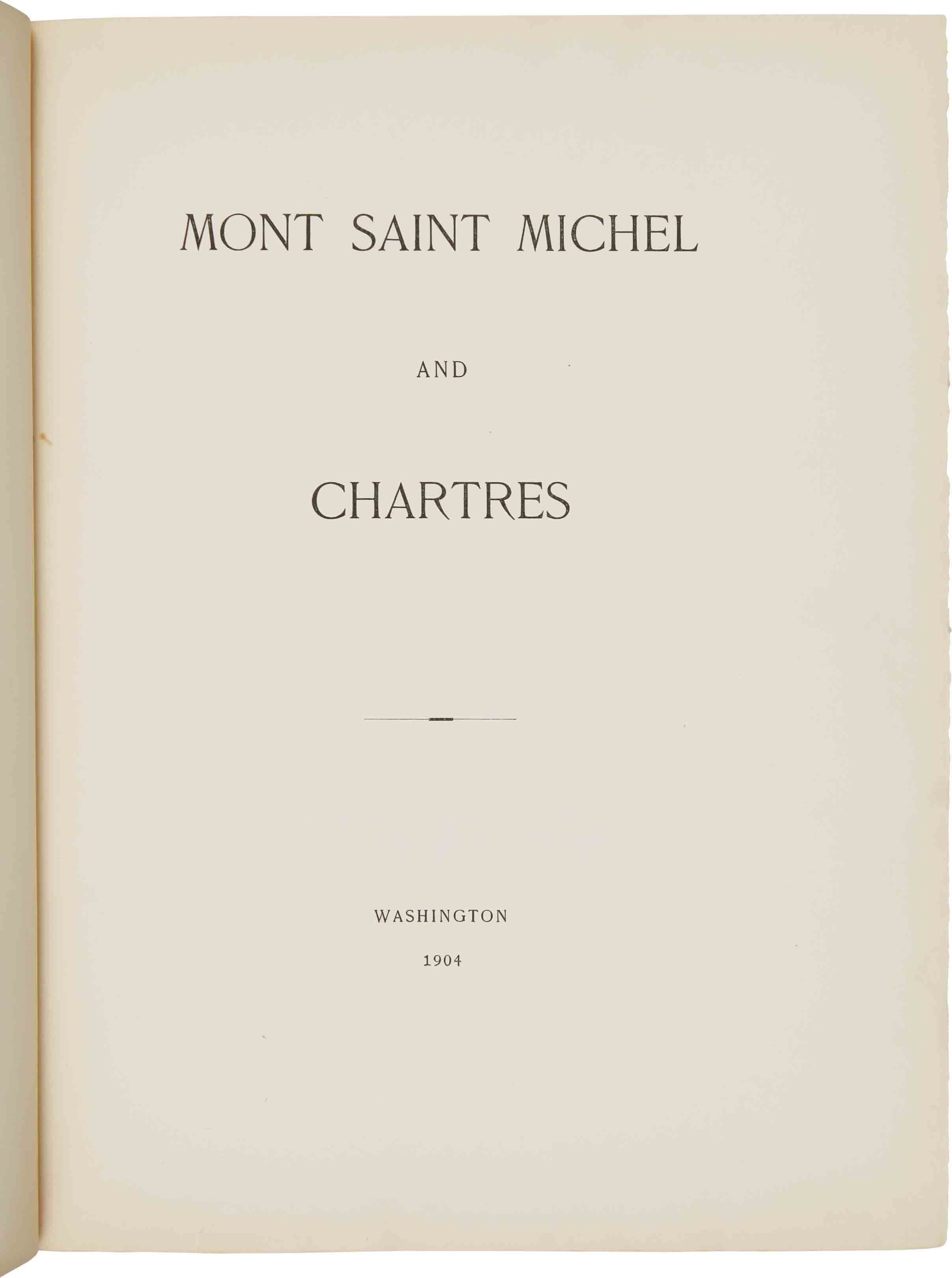
MONT SAINT MICHEL AND CHARTRES.
- Washington: [Privately Printed for the Author], , 1904.
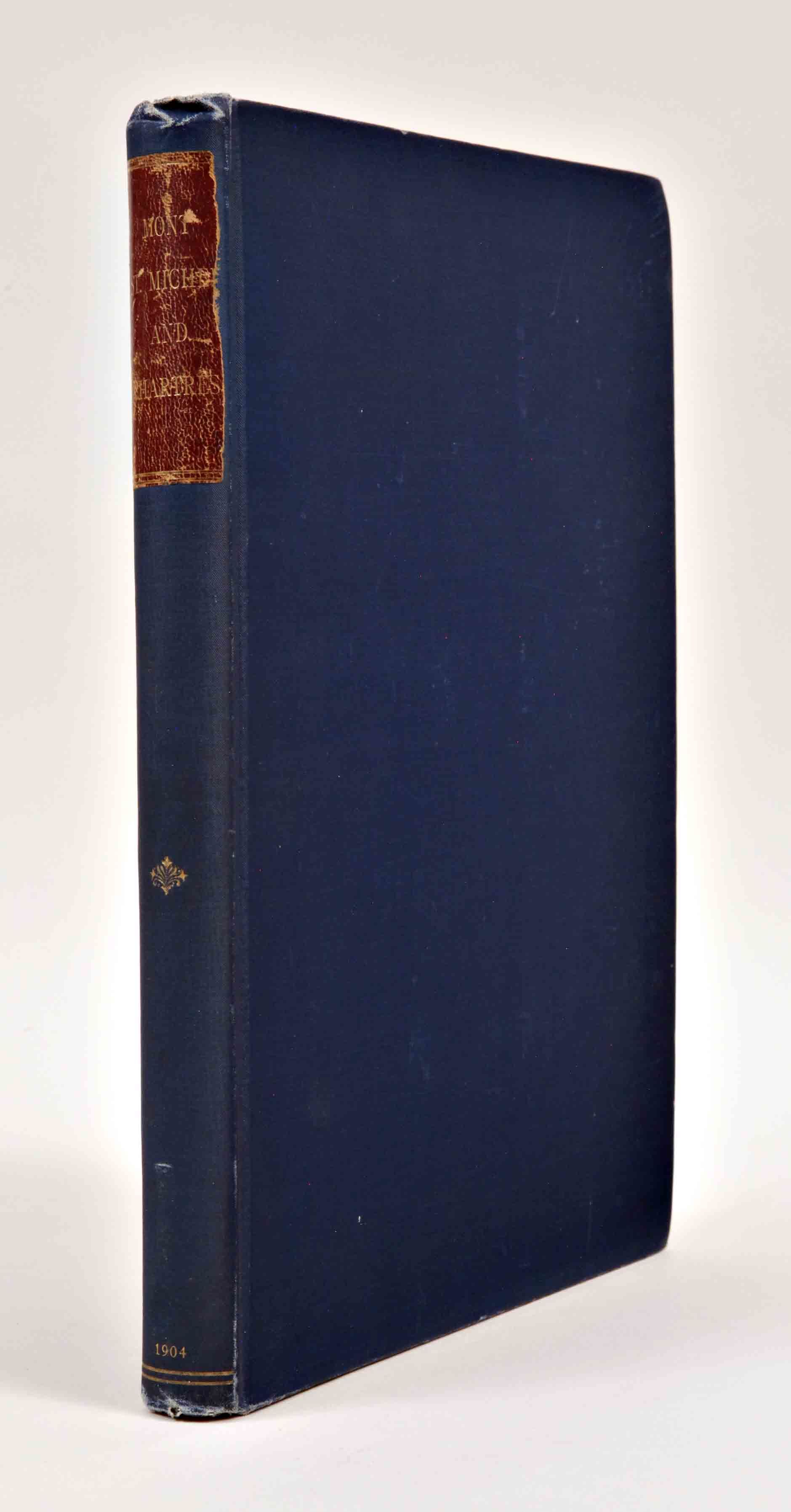
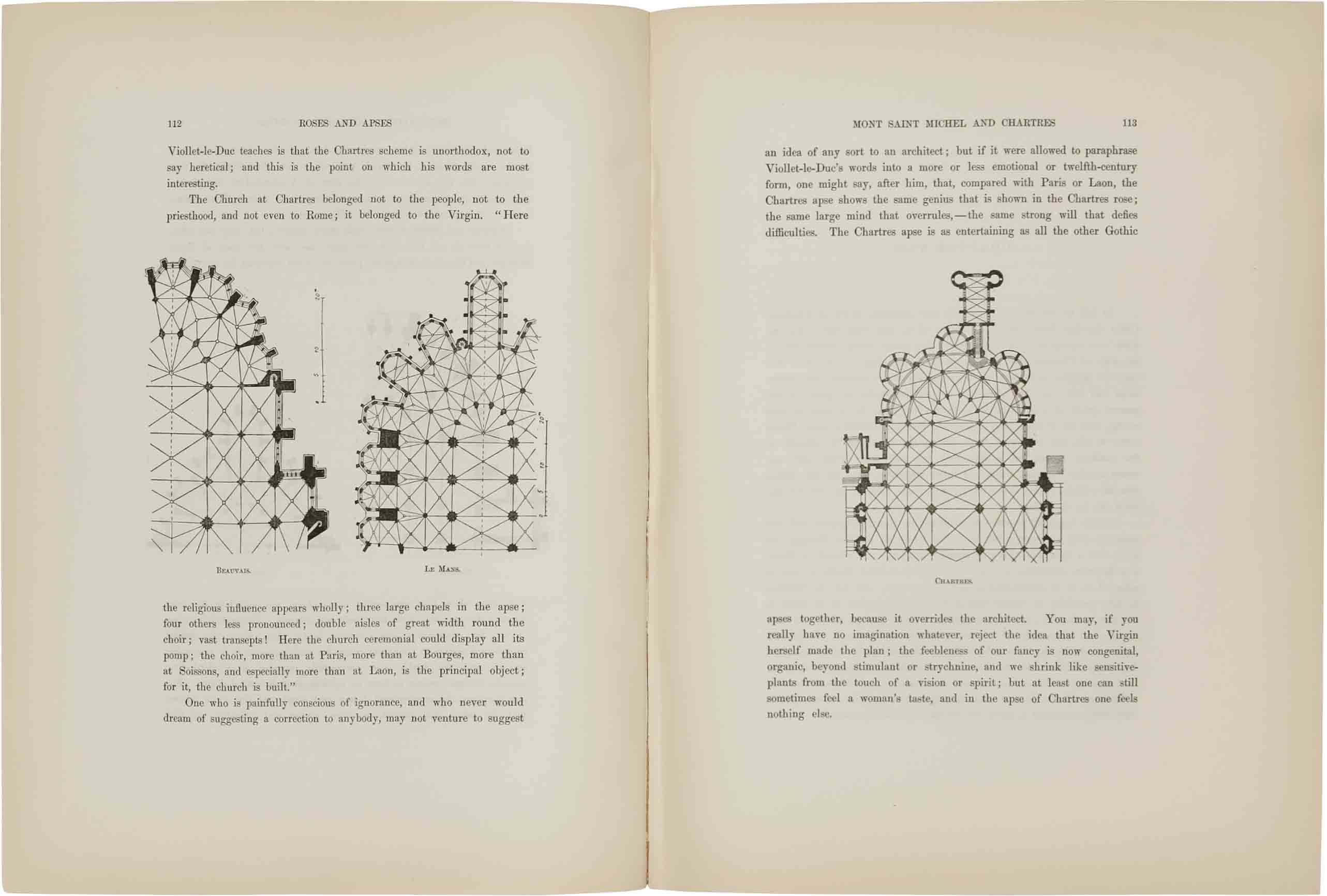
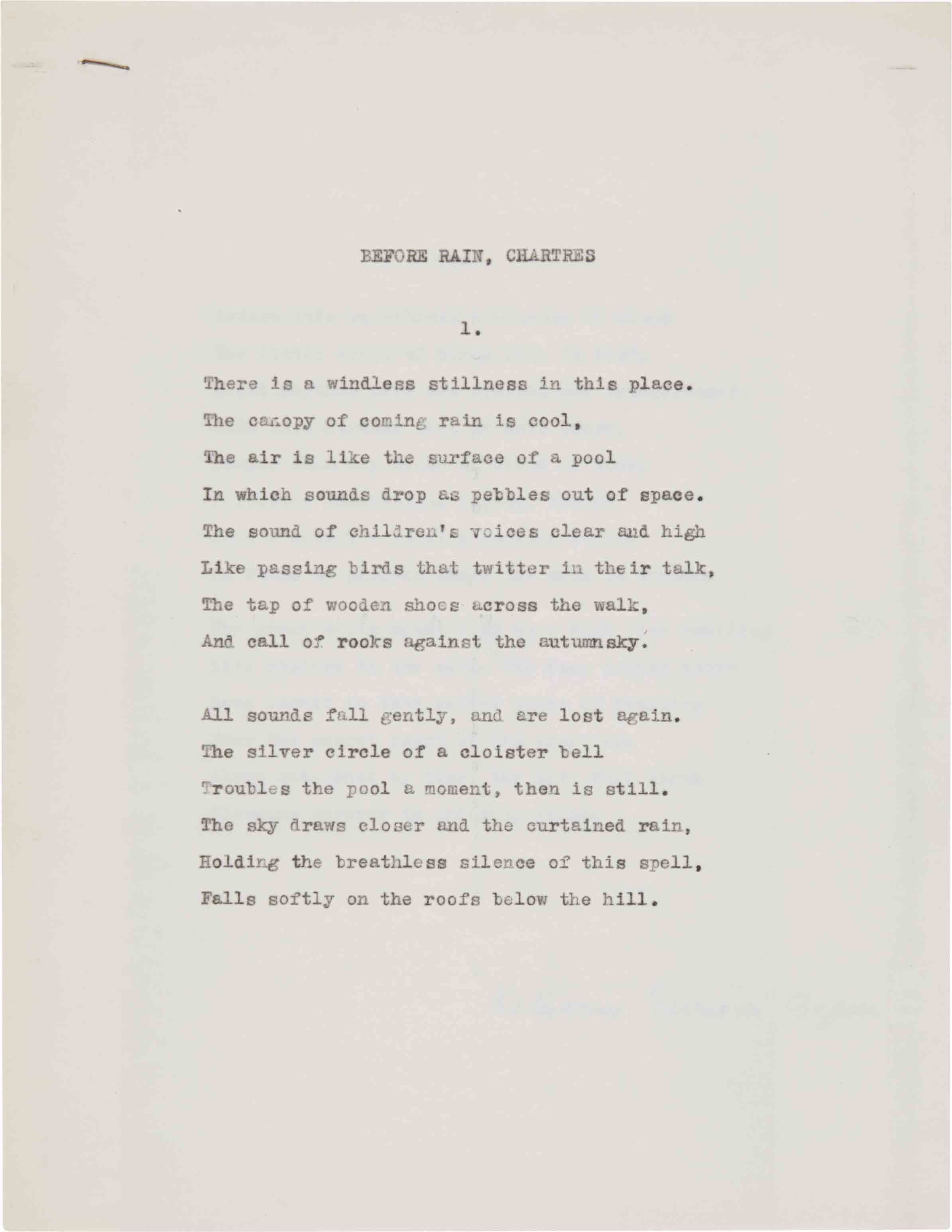
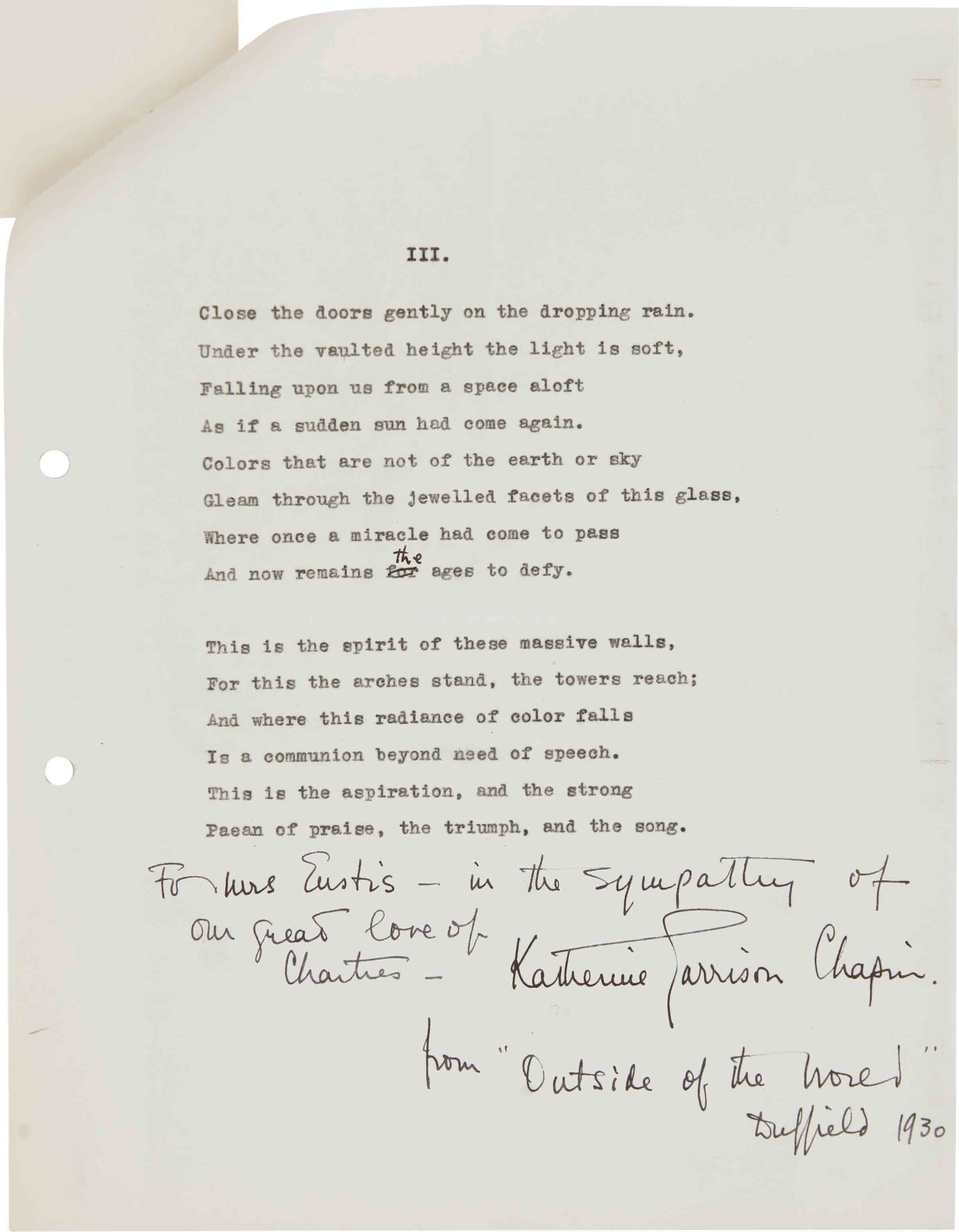
Washington: [Privately Printed for the Author],, 1904.. First, Privately Published Edition, Inscribed by Adams to a Friend and Neighbor First edition of Henry Adams' important and highly personal meditation on medieval culture and architecture, privately published for distribution initially to family and, eventually, to friends, with this copy bearing a presentation inscription from Adams to his friend and Lafayette Square neighbor Edith Eustis. The size of the edition, while not specified, was quite small, and in both format and intent Mont Saint Michel foreshadows The Education of Henry Adams, published three years later. In 1912, Adams prepared a revised and enlarged edition of this work, again for private distribution, and in 1913 the first public edition appeared, accompanied by an introduction by eminent American architect Ralph Adams Cram. An heir to one of America's most distinguished political families, Henry Adams (1838–1918) was the grandson of U.S. President John Qunicy Adams and the great-grandson of President John Adams. His father, Charles Francis Adams, was a diplomat and during the Civil War served as ambassador to the United Kingdom, with young Henry accompanying him as his private secretary. After the war, Henry went on to work as a journalist, Harvard professor, novelist, and historian. Among his published works were two novels, Democracy (1880) and Esther (1884); a nine-volume History of the United States during the administrations of Jefferson and Madison (1889–1891); and two very personal works, both written in his sixties, Mont Saint Michel and Chartres (1904) and The Education of Henry Adams (1907). According to Adams, the two works were meant to function as companion pieces, with Mont Saint Michel and Chartres serving as a study in "thirteenth-century unity," expressed ultimately in the figure of the Virgin, and The Education as a study in "twentieth-century multiplicity," epitomized by the invention of the Dynamo. In 1872, Adams married Boston socialite Marian "Clover" Hooper, who would later become an accomplished photographer. The couple eventually moved to Washington, D.C., where their Lafayette Square salon became a fashionable gathering place for politicians, authors, artists, scientists, and thinkers. In December 1885, Clover, who had long been given to bouts of depression, took her own life by ingesting a vial of potassium cyanide, a chemical used in developing photographs. Devastated by the loss of his wife, Henry in the decades after her death came increasingly to reject the masculine worlds of politics and business, finding comfort and satisfaction in the social company of women, most notably his nieces and such friends and neighbors as Edith Eustis, to whom the present volume is inscribed. This copy bears Henry Adams' presentation inscription on the front free endpaper: "For Edith Eustis from Henry Adams Washington. December, 1907." The recipient, Edith Livingston Morton Eustis (1874–1964), was Adams' friend and a Lafayette Square neighbor. Writing to author Edith Wharton's sister-in-law, Mary Cadwalader Jones, in 1910, Adams went so far as to describe Eustis as one "[o]f my six most intimate women-friends here." Eustis was the daughter of U.S. Vice President Levi P. Morton. Her husband, William Corcoran Eustis, was the grandson of Washington banker, philanthropist, and art collector William W. Corcoran, who had rented Henry and Clover Adams their first home in Washington, D.C., upon their arrival there in 1877. Laid into the present volume are seven typescript pages of poetry, with four pages reproducing the text of Henry Adams' "Prayer to the Virgin of Chartres" and his "Prayer to the Dynamo," and the remaining three given to Katherine Garrison Chapin's poem, Before Rain, Chartres. The latter bears a presentation inscription from Chapin to Edith Eustis: "For Mrs. Eustis - in the sympathy of our great love of Chartres - Katherine Garrison Chapin. from 'Outside of the World' Duffield 1930." Born to a wealthy New York family, Katherine Garrison Chapin (1890–1977) was a poet, librettist, and playwright. Chapin's husband, Francis Biddle, held various positions in the Franklin D. Roosevelt administration. Eustis was a longtime friend of both Franklin and Eleanor Roosevelt. An altogether fitting association copy of a book that one critic has described as "one of the most eloquent tributes to the power of Woman ever penned by a man....its necessary connection with the author's personal history cannot be overlooked....The book...should not be looked upon, possibly, as an historical study, but rather as a cathedral of words—various, complex, and beautiful, yet designed to give a single impression—a cathedral erected by Henry Adams to the glory of Womankind" (Cargill). Large quarto. Original blue cloth, spine and leather label gilt. Binding and extremities rubbed and a touch worn, leather label worn and chipped at edges. Some thumb soiling to outer margins of a few leaves, otherwise clean internally. Author's ink presentation inscription dated Washington, 1907, to Edith Eustis on front free endpaper. With seven pages of typescript, including three-page typescript poem inscribed from Katherine Garrison Chapin to Edith Eustis laid in. Overall, very good. BAL 31. Henry Adams to Mary Cadwalader Jones, February 3, 1910, in The Letters of Henry Adams, Volume 6, 1906-1918, ed. J.C. Levenson, Ernest Samuels, et al. (Cambridge, MA: Harvard Univ. Press, 1988), p.307. Henry Adams to Edith Morton Eustis, February 28, 1908, ibid., p.122. Oscar Cargill, Intellectual America: Ideas on the March (New York: MacMillan Company, 1941), pp.565-567. Elizabeth Stevenson, Henry Adams: A Biography (New York: Macmillan Company, 1955), p.372.
Details
Title
MONT SAINT MICHEL AND CHARTRES.
Author
[Adams, Henry]:
Condition
Unknown
Publisher
Washington: [Privately Printed for the Author],
Date
1904.