

Casas Grandes: A Fallen Trade Center of the Gran Chichimeca
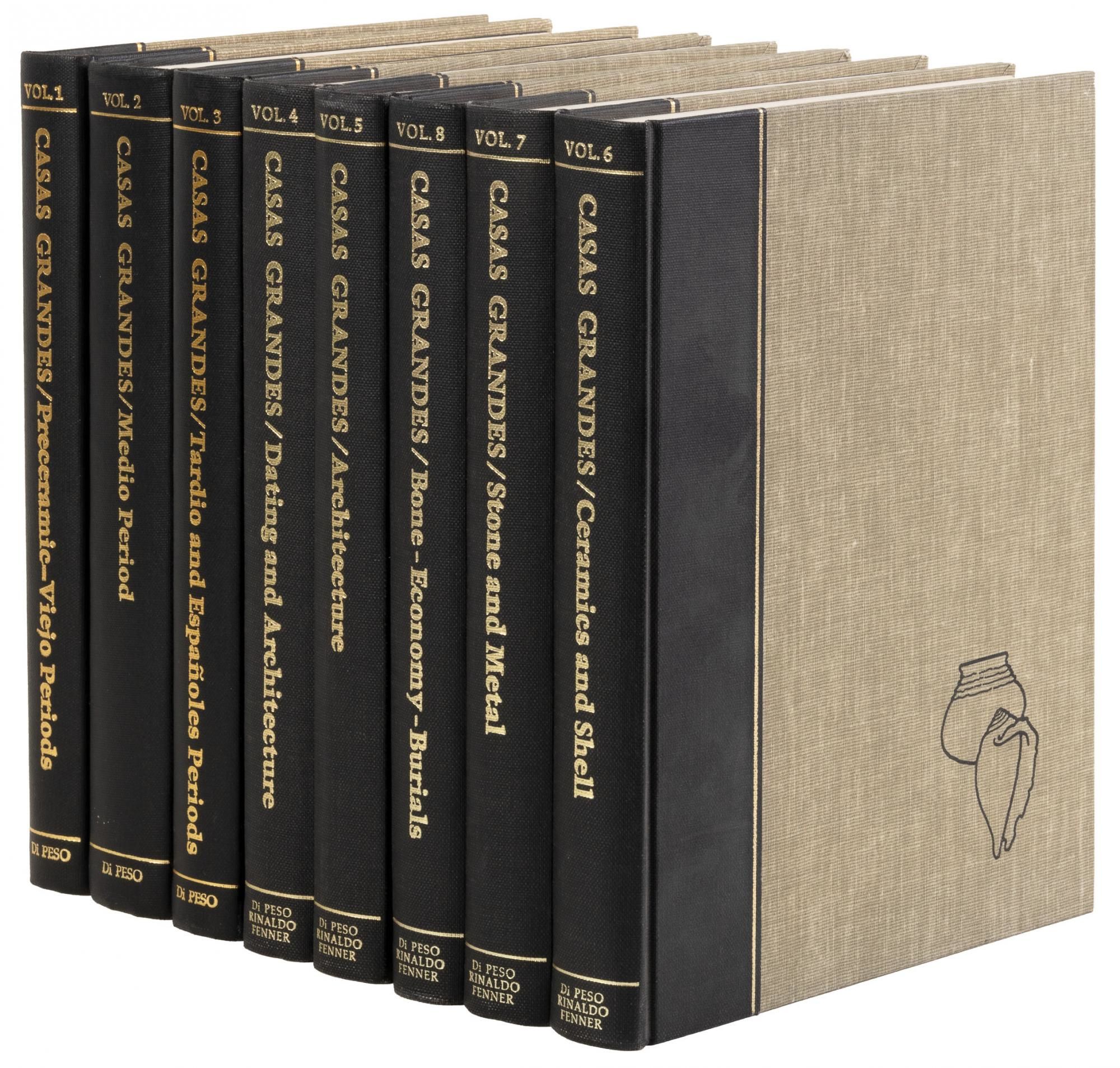
- Hardcover
- Flagstaff: Amerind Foundation, 1974
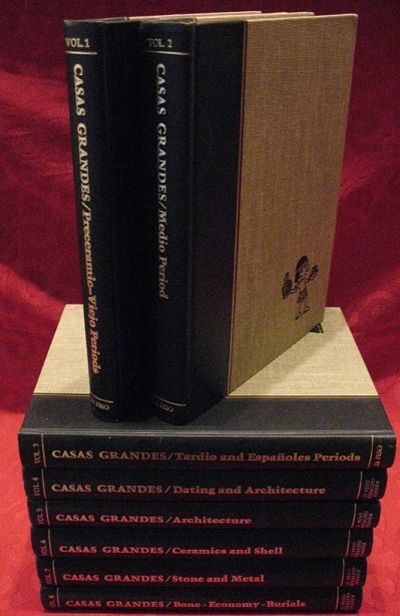
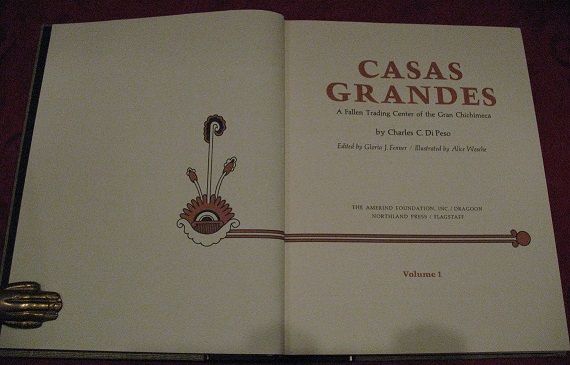
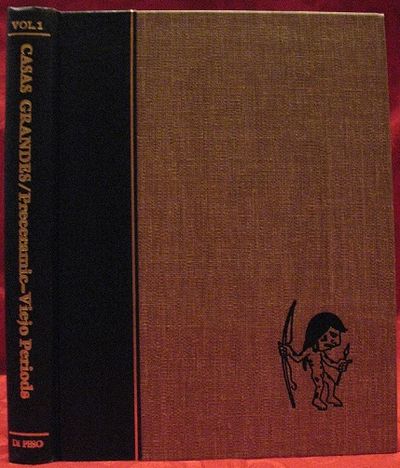
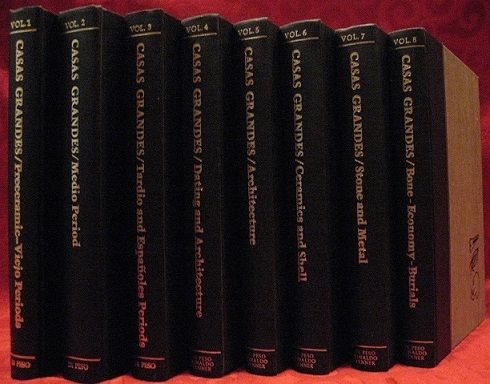
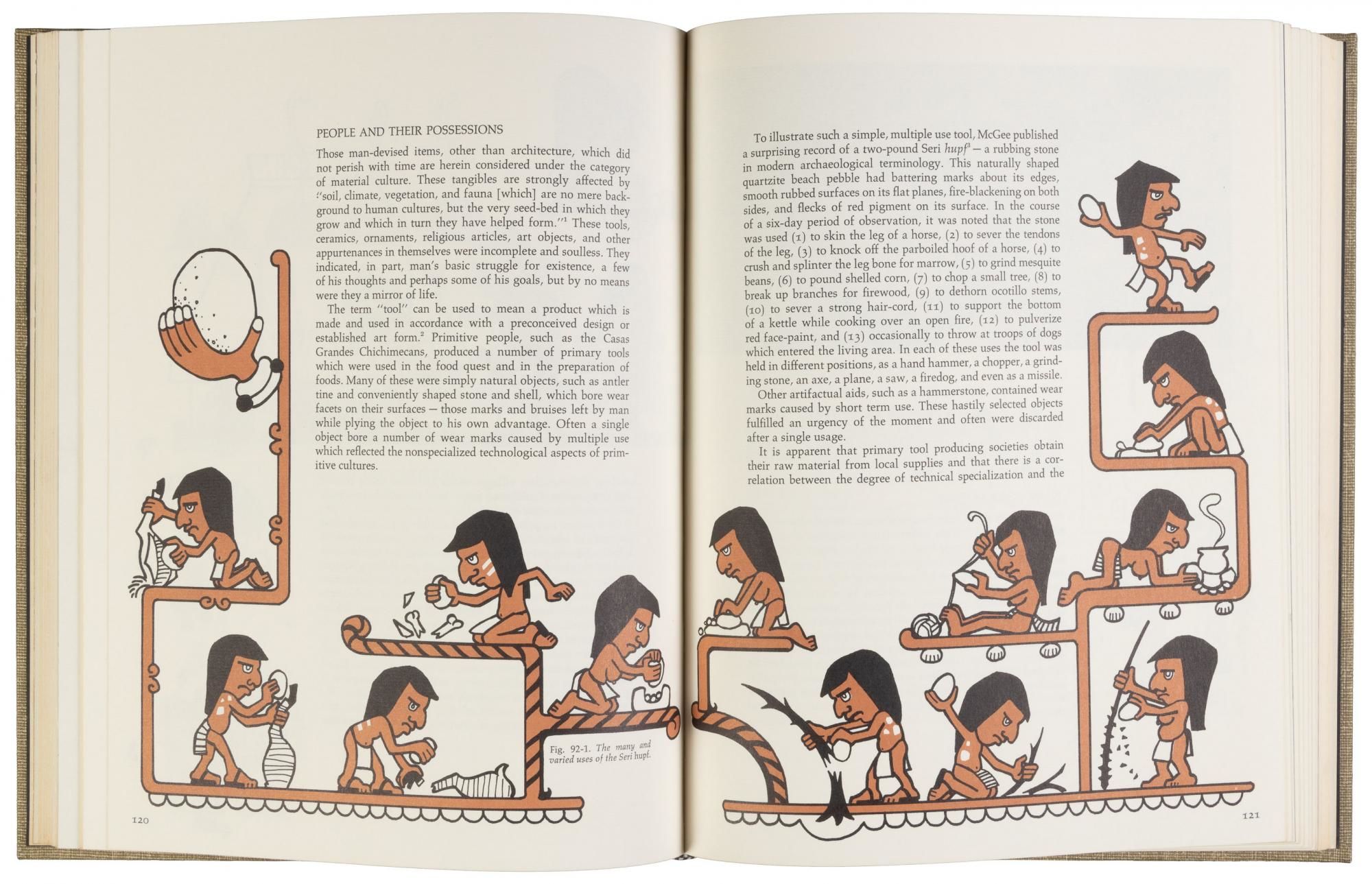
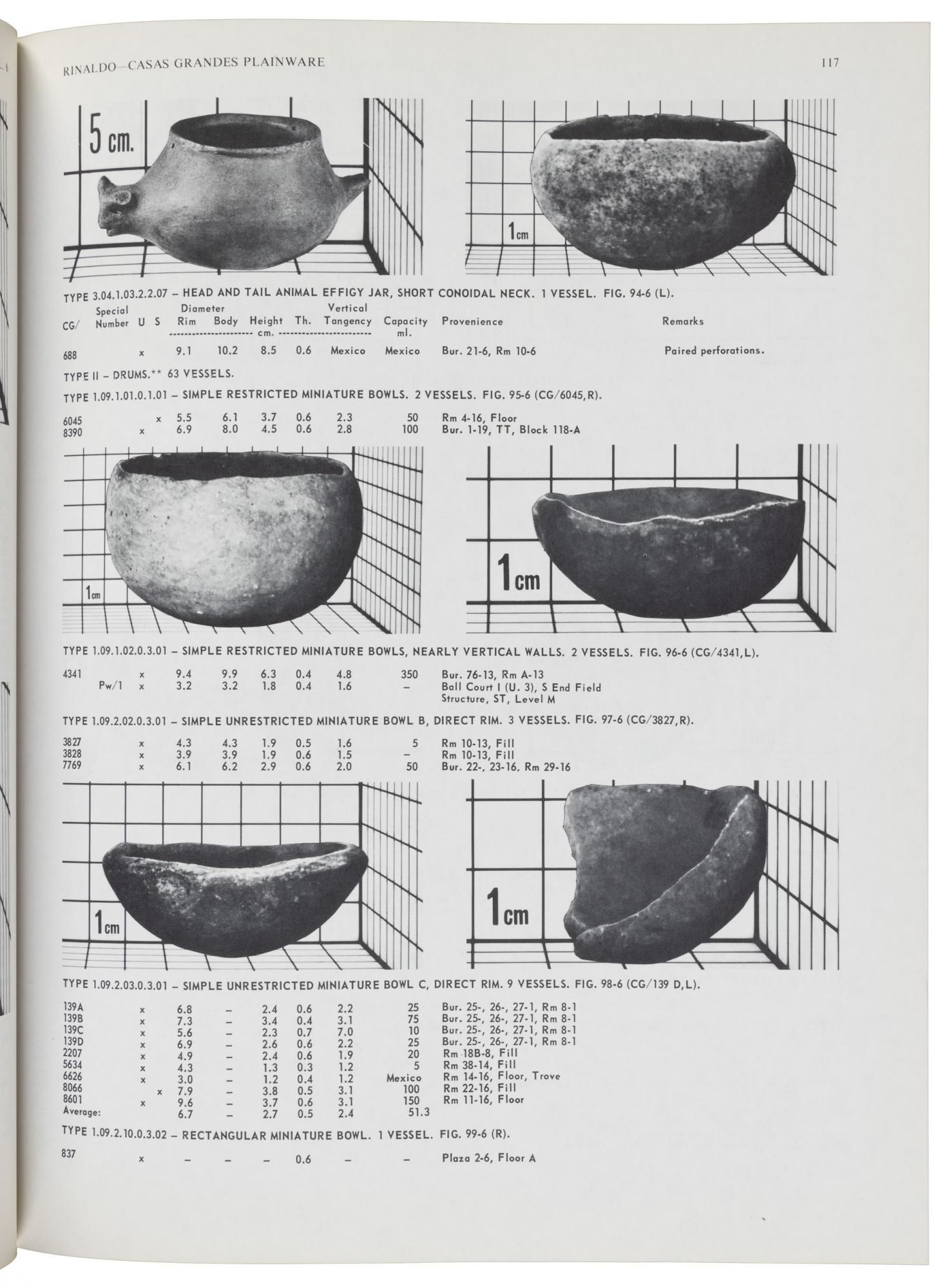
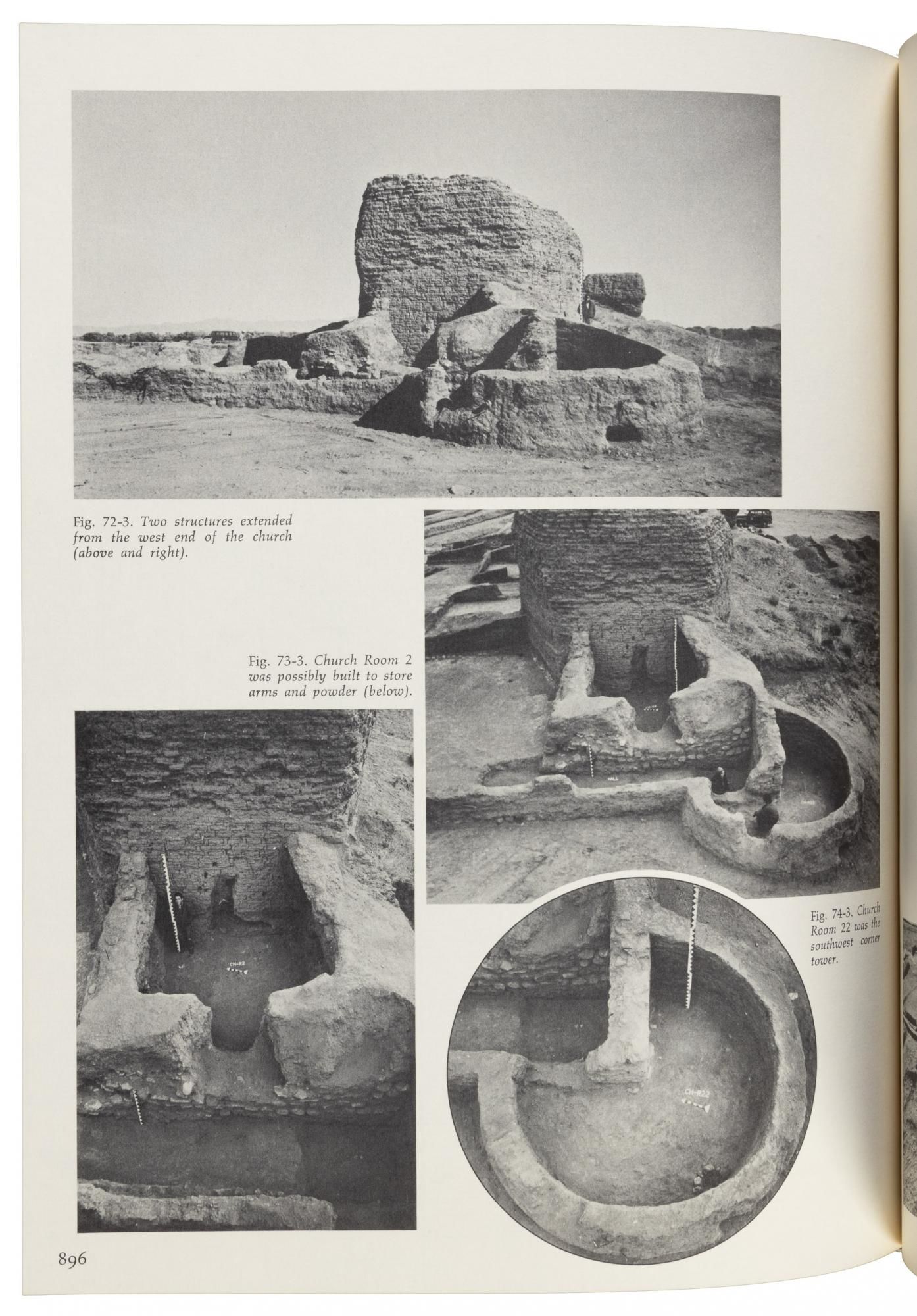
8 volumes. [iv]+287 pages with drawings, illustrations, figures, photographs, maps and notes. [288]-755 pages with drawings, illustrations, figures, photographs, maps, foldout map tipped in at back and notes. [756]-1104 pages with drawings, illustrations, figures, photographs, maps, notes, bibliography foldout map tipped in at back and index. xi+474 pages with drawings, illustrations, figures, tables, charts, photographs, maps, and three foldout maps and one fold out table loose in back pocket. viii+[475]+940 pages with drawings, illustrations, figures, tables, charts, photographs, maps, index and one foldout map and one fold out table loose in back pocket. x+560 pages with drawings, illustrations, figures, tables, charts, photographs, maps and index. viii+536 pages with drawings, illustrations, figures, tables, charts, photographs, maps and index. xii+424 pages with drawings, illustrations, figures, tables, charts, photographs, maps and index although a pocket in the back no material issued for pocket. Quarto (11 3/4" x 9 1/4") bound in quarter black cloth with gilt lettering to spine over grey cloth with pictorials at heal corner. Illustrated by Alice Wesche. Amerind Foundation Series number 9. First editions.
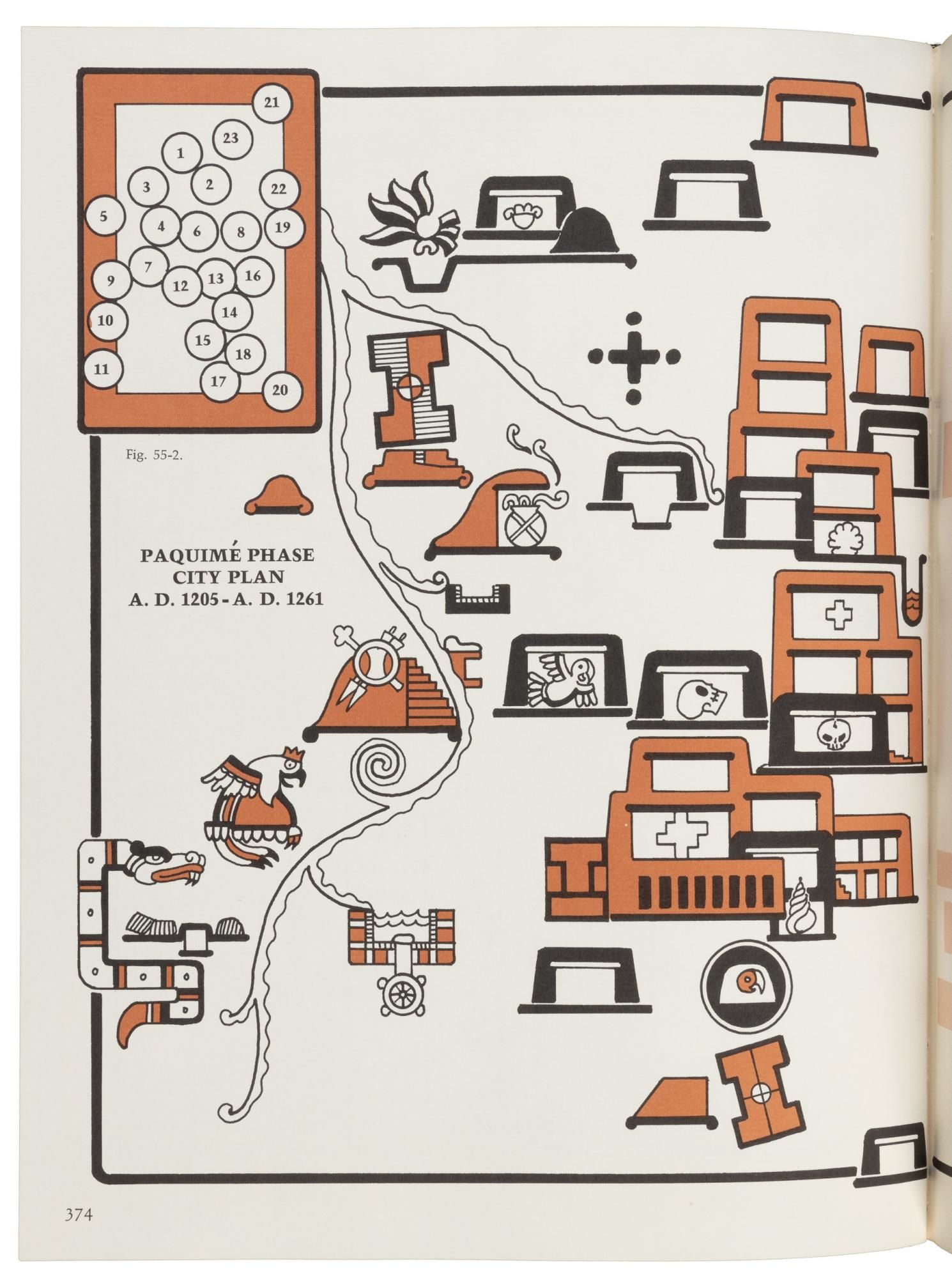
In Casas Grandes the Amerind Foundation has provided the best written, best illustrated and best produced multi-volume work available on Northern American archaeology. The massive publication resulted from fifteen years field and laboratory study of the Joint Casas Grandes Expedition, a cooperative project of the Foundation and the Mexican Instituto Nacional de Antropologia e Historia under the direction of Dr Di Peso. The archaeology and ethnohistory of the great trading center at Paquime (Casas Grandes) is the core of the monograph, the comparative anthropology following Walter Taylor's conjunctive approach, make up the ample medulla and cortex of the work. Di Peso applies the name Chicimecan (from the Chichimecs of Anahuac) to the Indians of the mesoamerican Northern Frontier, and labels local cultural subdivisions by archaeological or ethnographic prefix, such as Anassazi - or Hopi-Chichimecan. Gran Chichimeca is bounded on the south by the tropic of Cancer, the east by the Gulf of Mexico and the 97th meridian, the north by the 38th parallel and the west by the Pacific Ocean and the 124th meridian. Di Peso recognizes both local linguistic and cultural diversity and the related historical development of some cultural items in the subcontinental area. Mesoamerican contacts in Gran Chichimeca mostly involved soft diffusion by means of an Aztec-like puchteca complex - traders and artisans who traveled widely to the northwest exchanging local for foreign produce, for example northern turquoise for southern macaw feathers, but also introducing political, technological, religious and artistic practices. At no time in the historical continuum (in the Casas Grandes zone, 10,000 BC to AD 1821) of the Gran Chichimeca did any one conquest culture affect all the indigenous peoples; and it is equally apparent that not all of the conquest cultures came from the same Mesoamerican hearth. Skeletal remains from 461 recovered burials support the cultural evidence that the Viejo Period population and the Paquimians belonged to the regional Indian breeding population and that the puchtecha contacts resulted in little gene flow. In the 13th century Paquime covered 88 acres and served as trading center for 85,000 square miles. The buildings included 3-7 story apartments (one with 1780 rooms), ranch style house clusters, ceremonial mounds and ball courts, a merchandise mart, public plazas, wells, cisterns, underground water mains and sewers, signal towers, and hillside fortresses. The city was burned in AD 1340. (Journal of Anthropological Research Volume 32, number 2. J N Spuhler).
Volume 1: Preceramic-Viejo Periods. Volume 2: Medio Period. Volume 3: Tardo and Espanoles Periods. Bolume 4-8: Casas Grandes Research and Reference Materials to support the first three volumes.
Condition:
A very good to fine set issued without dust jackets. Due to the size and/or weight of this lot extra shipping and/or handling charges may apply.
In Casas Grandes the Amerind Foundation has provided the best written, best illustrated and best produced multi-volume work available on Northern American archaeology. The massive publication resulted from fifteen years field and laboratory study of the Joint Casas Grandes Expedition, a cooperative project of the Foundation and the Mexican Instituto Nacional de Antropologia e Historia under the direction of Dr Di Peso. The archaeology and ethnohistory of the great trading center at Paquime (Casas Grandes) is the core of the monograph, the comparative anthropology following Walter Taylor's conjunctive approach, make up the ample medulla and cortex of the work. Di Peso applies the name Chicimecan (from the Chichimecs of Anahuac) to the Indians of the mesoamerican Northern Frontier, and labels local cultural subdivisions by archaeological or ethnographic prefix, such as Anassazi - or Hopi-Chichimecan. Gran Chichimeca is bounded on the south by the tropic of Cancer, the east by the Gulf of Mexico and the 97th meridian, the north by the 38th parallel and the west by the Pacific Ocean and the 124th meridian. Di Peso recognizes both local linguistic and cultural diversity and the related historical development of some cultural items in the subcontinental area. Mesoamerican contacts in Gran Chichimeca mostly involved soft diffusion by means of an Aztec-like puchteca complex - traders and artisans who traveled widely to the northwest exchanging local for foreign produce, for example northern turquoise for southern macaw feathers, but also introducing political, technological, religious and artistic practices. At no time in the historical continuum (in the Casas Grandes zone, 10,000 BC to AD 1821) of the Gran Chichimeca did any one conquest culture affect all the indigenous peoples; and it is equally apparent that not all of the conquest cultures came from the same Mesoamerican hearth. Skeletal remains from 461 recovered burials support the cultural evidence that the Viejo Period population and the Paquimians belonged to the regional Indian breeding population and that the puchtecha contacts resulted in little gene flow. In the 13th century Paquime covered 88 acres and served as trading center for 85,000 square miles. The buildings included 3-7 story apartments (one with 1780 rooms), ranch style house clusters, ceremonial mounds and ball courts, a merchandise mart, public plazas, wells, cisterns, underground water mains and sewers, signal towers, and hillside fortresses. The city was burned in AD 1340. (Journal of Anthropological Research Volume 32, number 2. J N Spuhler).
Volume 1: Preceramic-Viejo Periods. Volume 2: Medio Period. Volume 3: Tardo and Espanoles Periods. Bolume 4-8: Casas Grandes Research and Reference Materials to support the first three volumes.
Condition:
A very good to fine set issued without dust jackets. Due to the size and/or weight of this lot extra shipping and/or handling charges may apply.
Details
Title
Casas Grandes: A Fallen Trade Center of the Gran Chichimeca
Author
DiPeso, Charles Corradino (1920-1982) <i>etal</i>
Binding
Hardcover
Condition
Very Good
Publisher
Amerind Foundation: Flagstaff
Date
1974
Edition
First
Size
Quarto
Pages
8 volumes