

Geográfica descripción de la parte Septentrional del polo ártico de la América y nueva iglesia de las indias occidentales y sitios astronómicos de esta provincia de predicadores de Antequera, Valle de Oaxac
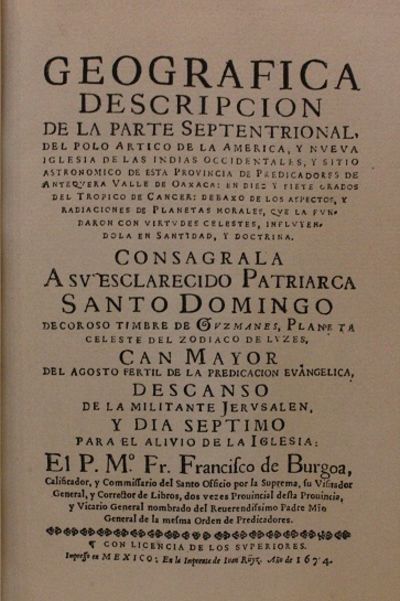
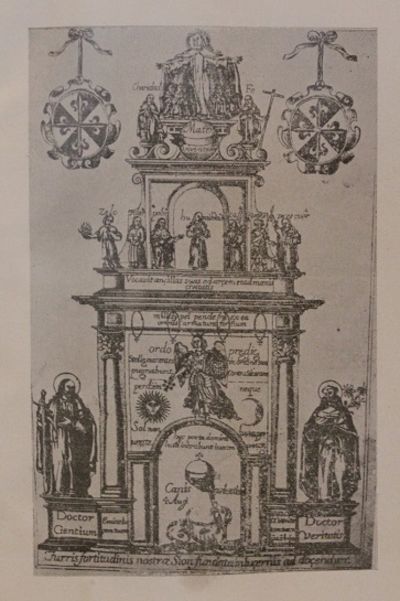
- Mexico City: Archivo General de la Nacion, 1934
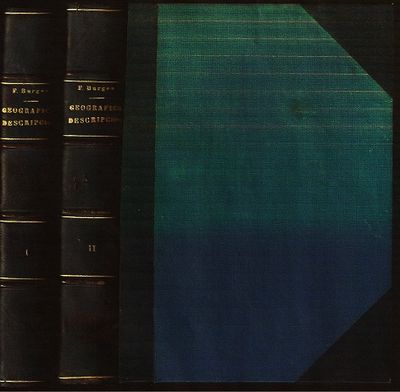
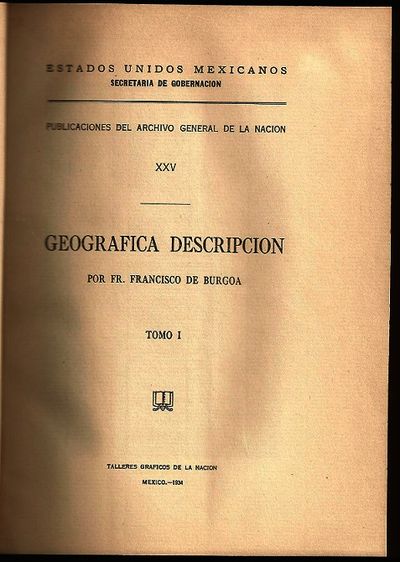
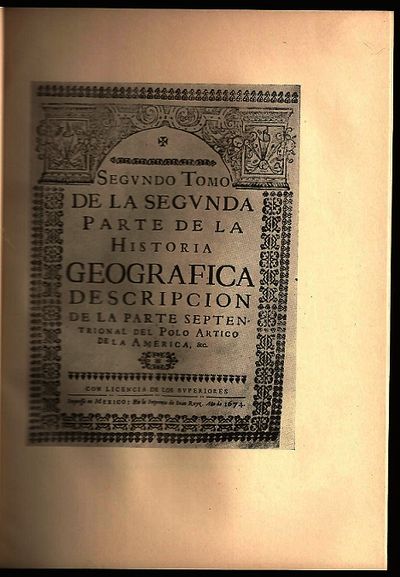
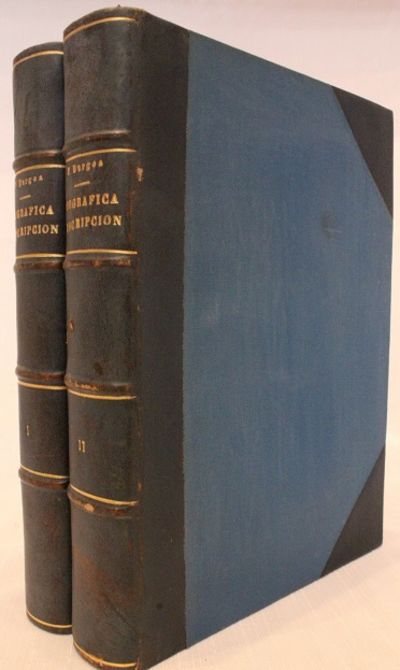
2 volumes: 427 pages with facsimile title and index; 513 pages with two facsimile pages, appendix and index. Royal octavo (9 1/2" x 7") bound in three quarter blue leather with raised spine bands and gilt lettering to spine. From the library of George M Foster. Second edition.
The two chronicles by Francisco de Burgoa easily hold first place for inflated style and bombastic phraseology, especially the opening remarks to various chapters. Yet for the important area of Oaxaca, and the numerous subjects he treats, Burgoa's works are indispensable and irreplaceable sources. Burgoa, born in Oaxaca, was related to numerous local colonial families. He took his final vows in 1625, and by 1649 was provincial of his Order. In that post he made a special effort to visit various parts of Oaxaca, especially seeking notices of Zapotecan antiquities, with the aim of writing a history of Oaxaca. Before his death in 1681he did not complete it but left two prolix yet valuable published treatises. The two chronicles are the usually abbreviated Palestra historial and Geográfica descripción. Burgoa conceived of them as a single work, but they differ in contents. The Palestra historial is a typical chronicle. It begins with the arrival in 1526 of Dominicans in Mexico City, and shortly thereafter their appearance in Oaxaca. Burgoa rehearses the lives of many missionaries already biographized by Davila Padilla, but Burgoa emphasizes their apostolate in the Oaxaca areas, even before formal establishment of the Province of San Hipolito (1592). These lives are uniformly eulogistic, but scattered through them are important bits of information on the numerous Indian groups of Oaxaca. The Geográfica descripción has 80 chapters. They detail the histories of the Monasteries and the work of their friars among the Indians, with much less attention to biographical detail than in the Palestra historial. The data run to about mid-17th century in both. (Handbook of Middle American Indians)
George McClelland Foster, Jr born in Sioux Falls, South Dakota, on October 9, 1913, died on May 18, 2006, at his home in the hills above the campus of the University of California, Berkeley, where he served as a professor from 1953 to his retirement in 1979, when he became professor emeritus. His contributions to anthropological theory and practice still challenge us; in more than 300 publications, his writings encompass a wide diversity of topics, including acculturation, long-term fieldwork, peasant economies, pottery making, public health, social structure, symbolic systems, technological change, theories of illness and wellness, humoral medicine in Latin America, and worldview. The quantity, quality, and long-term value of his scholarly work led to his election to the National Academy of Sciences in 1976. Virtually all of his major publications have been reprinted and/or translated. Provenance from the executor of Foster's library laid in.
Condition:
Some occasional pencil marginalia by Foster. Foster's date of acquired on front paste down of volume one. Some rubbing to extremities else a very good set.
The two chronicles by Francisco de Burgoa easily hold first place for inflated style and bombastic phraseology, especially the opening remarks to various chapters. Yet for the important area of Oaxaca, and the numerous subjects he treats, Burgoa's works are indispensable and irreplaceable sources. Burgoa, born in Oaxaca, was related to numerous local colonial families. He took his final vows in 1625, and by 1649 was provincial of his Order. In that post he made a special effort to visit various parts of Oaxaca, especially seeking notices of Zapotecan antiquities, with the aim of writing a history of Oaxaca. Before his death in 1681he did not complete it but left two prolix yet valuable published treatises. The two chronicles are the usually abbreviated Palestra historial and Geográfica descripción. Burgoa conceived of them as a single work, but they differ in contents. The Palestra historial is a typical chronicle. It begins with the arrival in 1526 of Dominicans in Mexico City, and shortly thereafter their appearance in Oaxaca. Burgoa rehearses the lives of many missionaries already biographized by Davila Padilla, but Burgoa emphasizes their apostolate in the Oaxaca areas, even before formal establishment of the Province of San Hipolito (1592). These lives are uniformly eulogistic, but scattered through them are important bits of information on the numerous Indian groups of Oaxaca. The Geográfica descripción has 80 chapters. They detail the histories of the Monasteries and the work of their friars among the Indians, with much less attention to biographical detail than in the Palestra historial. The data run to about mid-17th century in both. (Handbook of Middle American Indians)
George McClelland Foster, Jr born in Sioux Falls, South Dakota, on October 9, 1913, died on May 18, 2006, at his home in the hills above the campus of the University of California, Berkeley, where he served as a professor from 1953 to his retirement in 1979, when he became professor emeritus. His contributions to anthropological theory and practice still challenge us; in more than 300 publications, his writings encompass a wide diversity of topics, including acculturation, long-term fieldwork, peasant economies, pottery making, public health, social structure, symbolic systems, technological change, theories of illness and wellness, humoral medicine in Latin America, and worldview. The quantity, quality, and long-term value of his scholarly work led to his election to the National Academy of Sciences in 1976. Virtually all of his major publications have been reprinted and/or translated. Provenance from the executor of Foster's library laid in.
Condition:
Some occasional pencil marginalia by Foster. Foster's date of acquired on front paste down of volume one. Some rubbing to extremities else a very good set.
Details
Title
Geográfica descripción de la parte Septentrional del polo ártico de la América y nueva iglesia de las indias occidentales y sitios astronómicos de esta provincia de predicadores de Antequera, Valle de Oaxac
Author
Burgoa, Francisco de (1605-1681)
Condition
Very Good
Publisher
Archivo General de la Nacion: Mexico City
Date
1934
Edition
Second
Size
Royal octavo
Pages
2 volumes: 427 pages with facsimile title and index; 513 pages with two facsimile pages, appendix and index