

Catalogue of the library of the Royal Colonial institute
- London: Institute of Northumberland, 1895
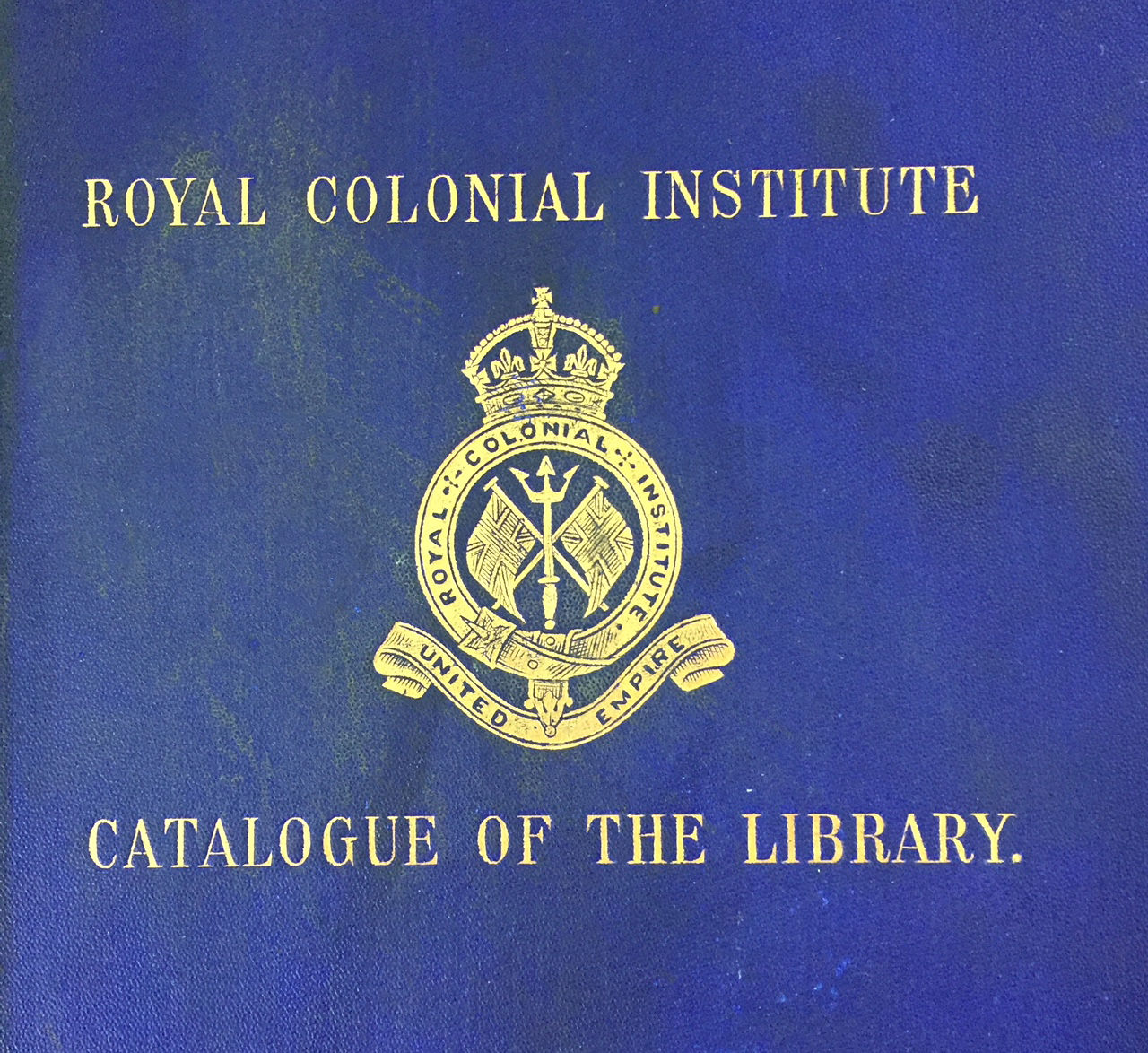
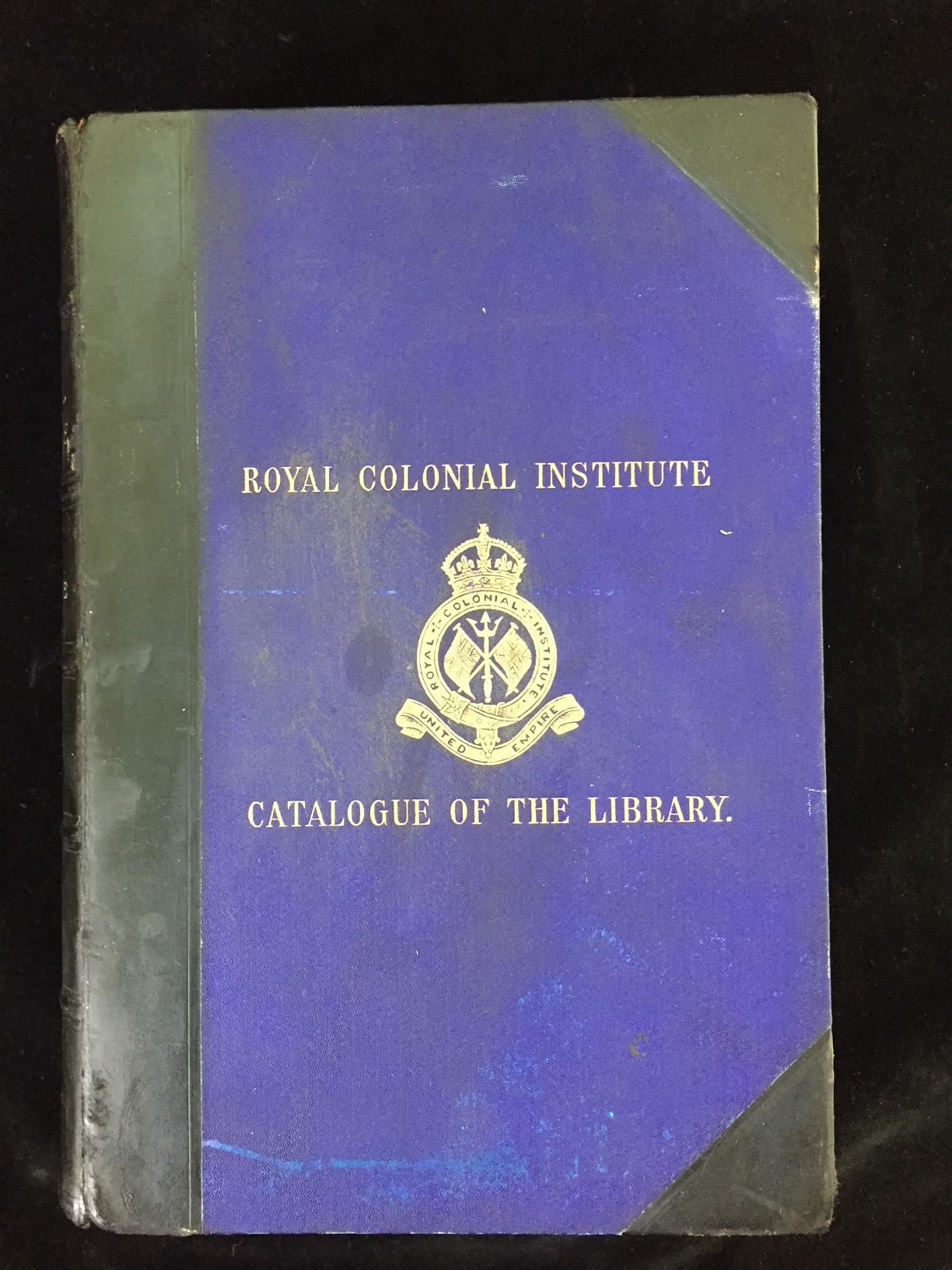
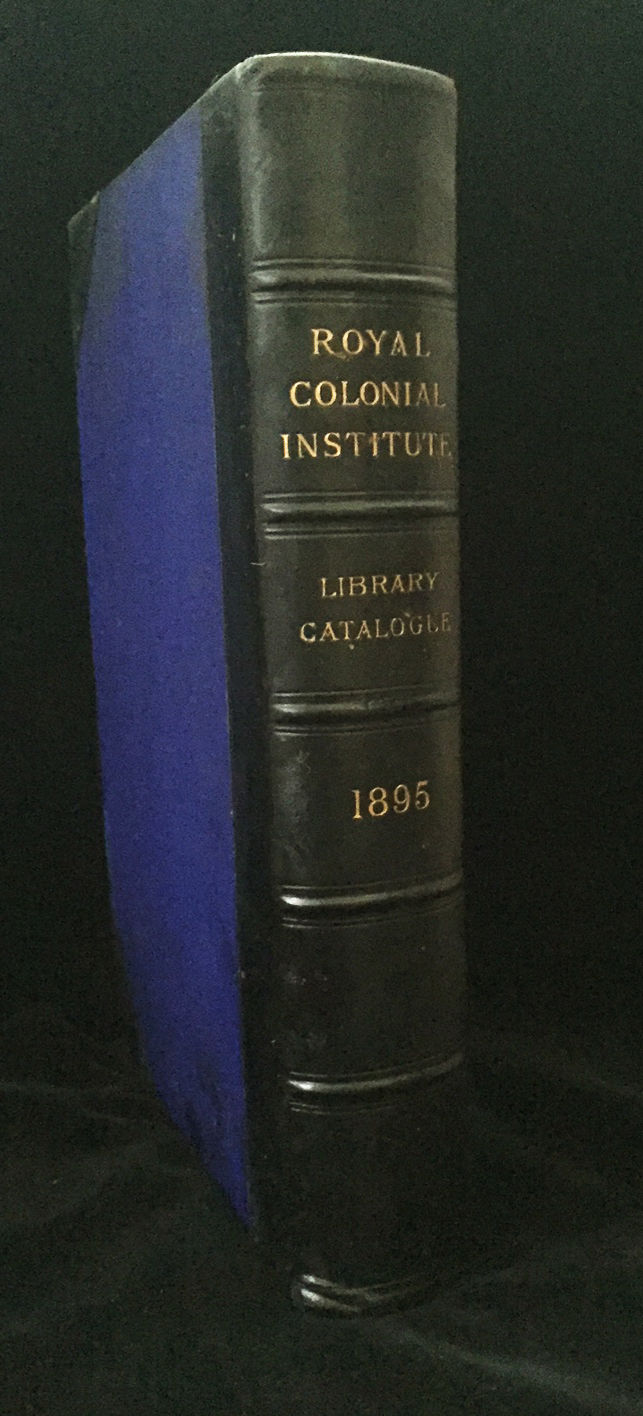
London: Institute of Northumberland, 1895. Half-calf over blue cloth, title and supra libros in gilt on cover. From the library of Chichester Fortescue, Lord Carlingford (see below), with his engraved bookplate. First printing of this 1895 edition of the library catalogue. According to the preface, two previous catalogues had been published, in 1881 and 1886. However, as a result of the immense and rapid growth of the collections, the Institute thought it best to create a new catalogue, which is divided into fourteen sections, including voyages, books about the separate colonies, books about the British Colonies generally, Colonial botany, poetry, and other subjects.
The Royal Colonial Institute, now the Royal Commonwealth Society, is a non-governmental entity originally created in 1868 to promote the values of the Commonwealth and its citizens. The identity of the Society was for more than a hundred years inseparably bound up with its library. “At a meeting on 26 June 1868, Chichester Parkinson-Fortescue recommended ‘the formation of a colonial library, to which all interested in the welfare of the colonies should have access,’ an aim affirmed by the Society’s first elected chairman, Viscount Bury.” The Society’s first librarian was appointed in 1869, and the first salaried librarian, Australian-born Joseph Sylvester O’Halloran, in 1885. The Society’s first home was above a shirt shop at No. 15 The Strand, London, where it remained until 1885. Because the library quickly increased in size and reputation, the organization moved in 1885 to 25 Northumberland Avenue in Central London, where it would remain until 2013. Despite the damage caused during World War II, the library grew to over half a million items; The Contemporary Review described the collection as “the most comprehensive single source for the history of the world’s greatest empire from its 16th century beginnings to its present fifty-nation Commonwealth.” Cambridge University recognized the collection as a “treasure-trove” of information on the Commonwealth and Britain’s former colonial territories, comprising over 300,000 printed items, about 800 archival collections (including manuscript diaries, correspondence, pictures, cine films, scrapbooks and newspaper cuttings) and over 120,000 photographs. Cambridge acquired the Library’s collections in 1993.
Provenance: Fortescue (1823-1898) was educated at Christ Church, Oxford where he took a first in classics and won the chancellor’s English essay. In 1847 he was elected to parliament for Louth as a liberal. He was junior lord of the treasury, under-secretary of state for the colonies, and succeeded Robert Peel as chief secretary for Ireland under Lord Russell. On formation of Gladstone’s first administration he became president of the Board of Trade, later lord privy seal and president of the council. He shared the burden and the credit of some great reforms following the disestablishment of the Irish Church. John Stuart Mill described his measure as the most important passed by the British parliament since the Roman Catholic Emancipation act. He was raised to the peerage as Lord Carlingford, and succeeded Lord Spencer as president of the council. He was a man of admirable character and engaging manners. In 1882, he was appointed a Knight of the Order of St. Patrick. Carlingford married Frances Elizabeth Anne, Countess Waldegrave, daughter of John Braham (1774-1856), considered the greatest English tenor and composer of all times in 1863. She had been married three times before, the second time to The 7th Earl Waldegrave. By that marriage she had inherited Strawberry Hill, as her husband was the nephew and heir of Walpole’s grand-niece Laura Elizabeth Waldegrave.
The Royal Colonial Institute, now the Royal Commonwealth Society, is a non-governmental entity originally created in 1868 to promote the values of the Commonwealth and its citizens. The identity of the Society was for more than a hundred years inseparably bound up with its library. “At a meeting on 26 June 1868, Chichester Parkinson-Fortescue recommended ‘the formation of a colonial library, to which all interested in the welfare of the colonies should have access,’ an aim affirmed by the Society’s first elected chairman, Viscount Bury.” The Society’s first librarian was appointed in 1869, and the first salaried librarian, Australian-born Joseph Sylvester O’Halloran, in 1885. The Society’s first home was above a shirt shop at No. 15 The Strand, London, where it remained until 1885. Because the library quickly increased in size and reputation, the organization moved in 1885 to 25 Northumberland Avenue in Central London, where it would remain until 2013. Despite the damage caused during World War II, the library grew to over half a million items; The Contemporary Review described the collection as “the most comprehensive single source for the history of the world’s greatest empire from its 16th century beginnings to its present fifty-nation Commonwealth.” Cambridge University recognized the collection as a “treasure-trove” of information on the Commonwealth and Britain’s former colonial territories, comprising over 300,000 printed items, about 800 archival collections (including manuscript diaries, correspondence, pictures, cine films, scrapbooks and newspaper cuttings) and over 120,000 photographs. Cambridge acquired the Library’s collections in 1993.
Provenance: Fortescue (1823-1898) was educated at Christ Church, Oxford where he took a first in classics and won the chancellor’s English essay. In 1847 he was elected to parliament for Louth as a liberal. He was junior lord of the treasury, under-secretary of state for the colonies, and succeeded Robert Peel as chief secretary for Ireland under Lord Russell. On formation of Gladstone’s first administration he became president of the Board of Trade, later lord privy seal and president of the council. He shared the burden and the credit of some great reforms following the disestablishment of the Irish Church. John Stuart Mill described his measure as the most important passed by the British parliament since the Roman Catholic Emancipation act. He was raised to the peerage as Lord Carlingford, and succeeded Lord Spencer as president of the council. He was a man of admirable character and engaging manners. In 1882, he was appointed a Knight of the Order of St. Patrick. Carlingford married Frances Elizabeth Anne, Countess Waldegrave, daughter of John Braham (1774-1856), considered the greatest English tenor and composer of all times in 1863. She had been married three times before, the second time to The 7th Earl Waldegrave. By that marriage she had inherited Strawberry Hill, as her husband was the nephew and heir of Walpole’s grand-niece Laura Elizabeth Waldegrave.
Details
Title
Catalogue of the library of the Royal Colonial institute
Author
ROYAL COLONIAL INSTITUTE
Condition
Unknown
Publisher
Institute of Northumberland: London
Date
1895