

Ahasuerus a race tragedy
- Los Angeles: privately printed, 1915
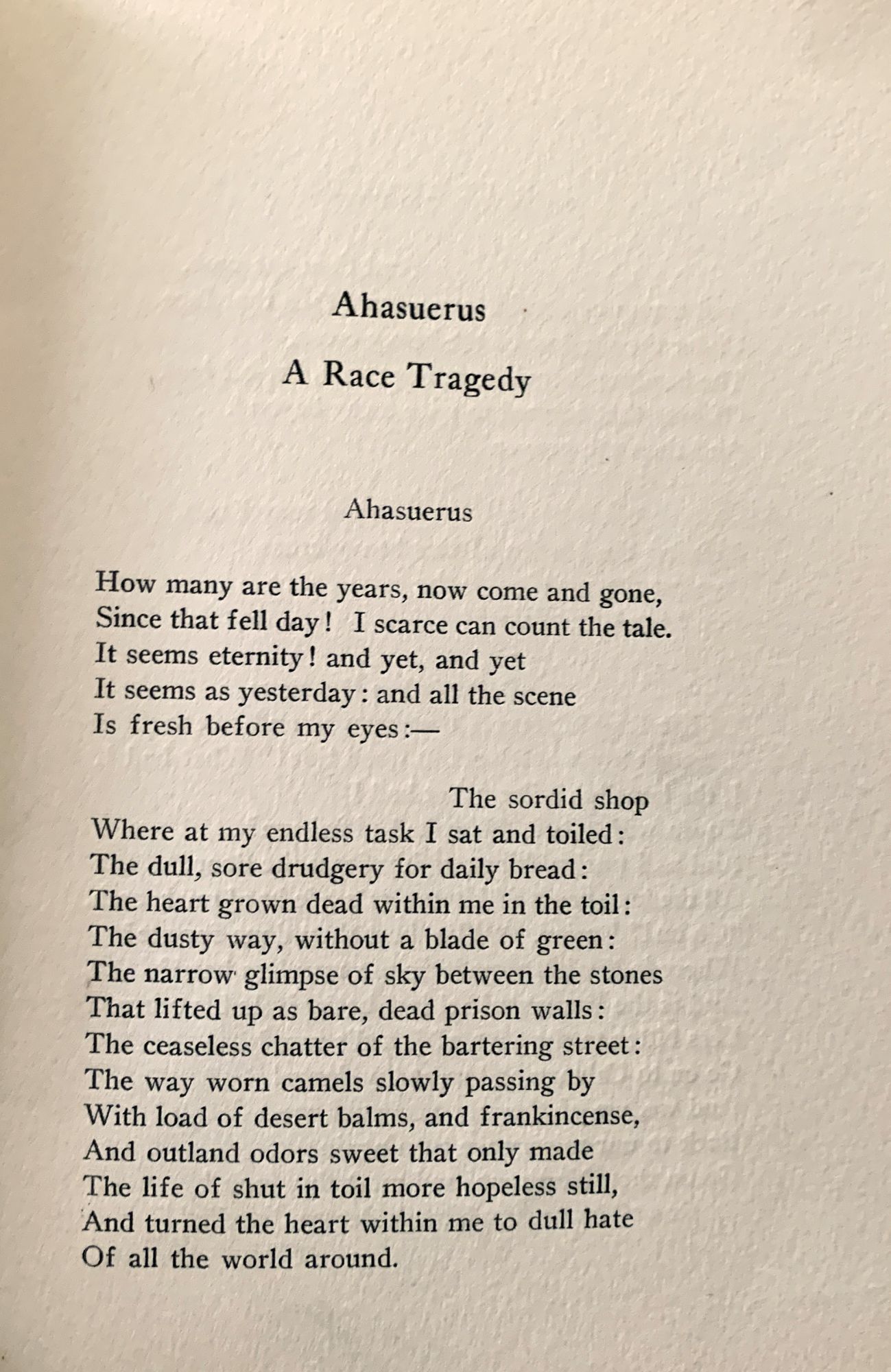
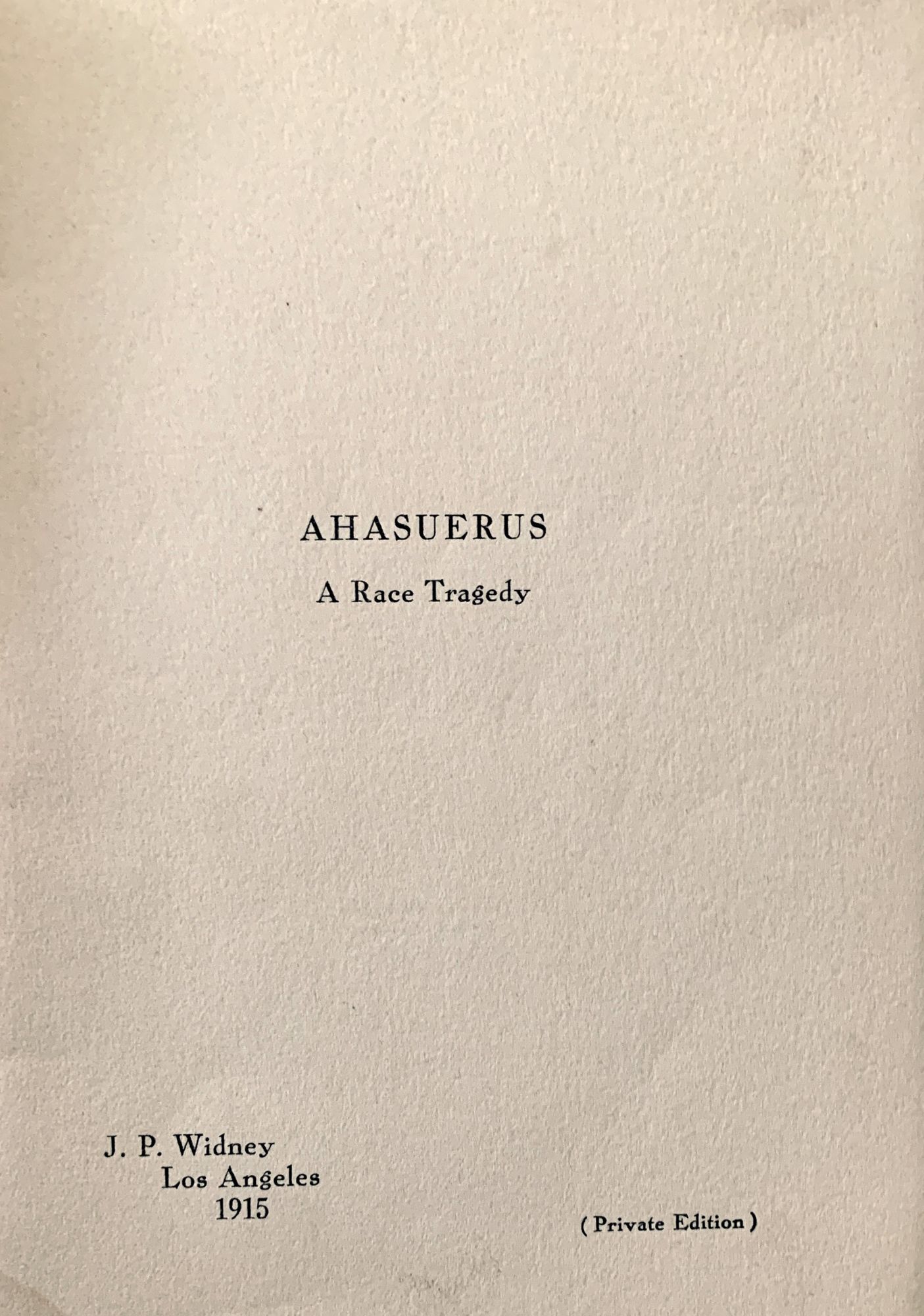
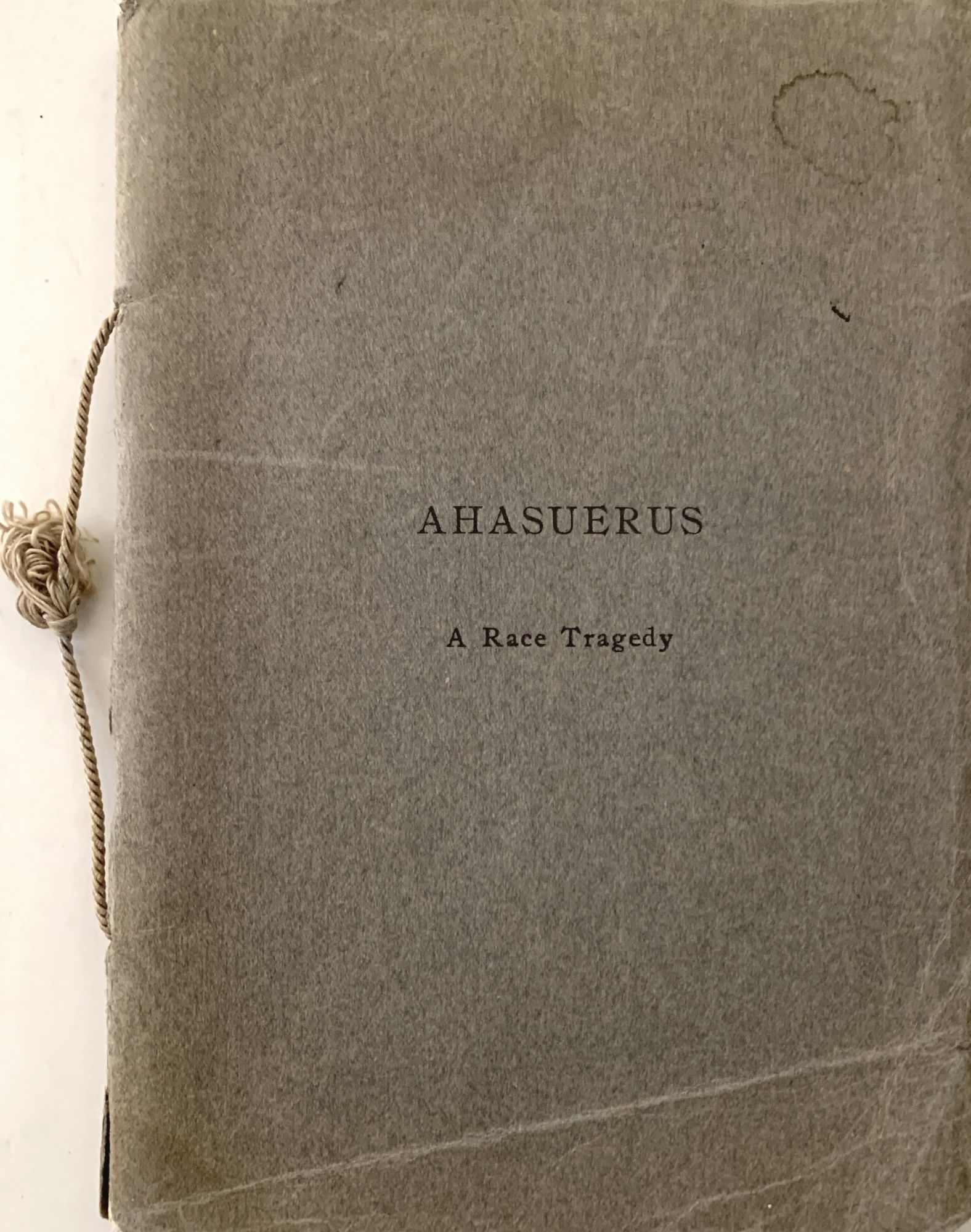
Los Angeles: privately printed, 1915. FIRST PRINTING. Original wrappers, title in black on front cover, stapled and tied with piece of silk string as issued. Presentation copy with the author’s signature to Mrs. Mary M. Bowman on the fly-leaf. First printing. Ahasuerus: A Race Tragedy is an epic poem loosely based on the Biblical Book of Esther. It tells the story of the Persian king Ahasuerus as he wanders through the desert encountering some of the characters of the Bible. One of the poem’s themes is the reconciliation of Gentile and Jew.
Ahasuerus, a royal Persian name, occurs throughout the Old Testament. Immediately preceding Artaxerxes I in the line of Persian kings, Ahasuerus is evidently to be identified with Xerxes. Ahasuerus appears most prominently in the Book of Esther, and the intrigues of the king’s court provide the biblical origin of the festival of Purim. The Jews of the Persian empire were threatened with destruction due to the machinations of Haman, the chief minister to Ahasuerus. Queen Esther uses her influence with the king to thwart the plot, however, and the Jews were instead given royal sanction to attack their enemies.
Widney (1841-1938) was an educator, philanthropist, religious leader and doctor who championed the development of Los Angeles in the nineteenth century. He was the second president of the University of Southern California and was one of the founders of the Church of the Nazarene. He was also a founder of the Los Angeles Library Association. His politics and racial beliefs were controversial, and he was said to be the model for an oil baron in Upton Sinclair's novel Oil! Although Widney advocated for the recognition of the potential power of minorities, especially in Southern California, there is some amount of anti-Semitism lurking within the poem. Despite Widney's contributions to Southern California culture, he was also known as an advocate of Eugenics and argued for Aryan superiority; His writings are still heavily quoted by white supremacists.
Widney’s books are quite rare on the market. Only one of his works, Race life of the Aryan peoples, was published commercially.
Ahasuerus, a royal Persian name, occurs throughout the Old Testament. Immediately preceding Artaxerxes I in the line of Persian kings, Ahasuerus is evidently to be identified with Xerxes. Ahasuerus appears most prominently in the Book of Esther, and the intrigues of the king’s court provide the biblical origin of the festival of Purim. The Jews of the Persian empire were threatened with destruction due to the machinations of Haman, the chief minister to Ahasuerus. Queen Esther uses her influence with the king to thwart the plot, however, and the Jews were instead given royal sanction to attack their enemies.
Widney (1841-1938) was an educator, philanthropist, religious leader and doctor who championed the development of Los Angeles in the nineteenth century. He was the second president of the University of Southern California and was one of the founders of the Church of the Nazarene. He was also a founder of the Los Angeles Library Association. His politics and racial beliefs were controversial, and he was said to be the model for an oil baron in Upton Sinclair's novel Oil! Although Widney advocated for the recognition of the potential power of minorities, especially in Southern California, there is some amount of anti-Semitism lurking within the poem. Despite Widney's contributions to Southern California culture, he was also known as an advocate of Eugenics and argued for Aryan superiority; His writings are still heavily quoted by white supremacists.
Widney’s books are quite rare on the market. Only one of his works, Race life of the Aryan peoples, was published commercially.
Details
Title
Ahasuerus a race tragedy
Author
WIDNEY Joseph Pomeroy
Condition
Unknown
Publisher
privately printed: Los Angeles
Date
1915
Edition
FIRST PRINTING