

Dei Bagni di Pisa trattato...
- Florence: nella stamperia Imperiale, 1750
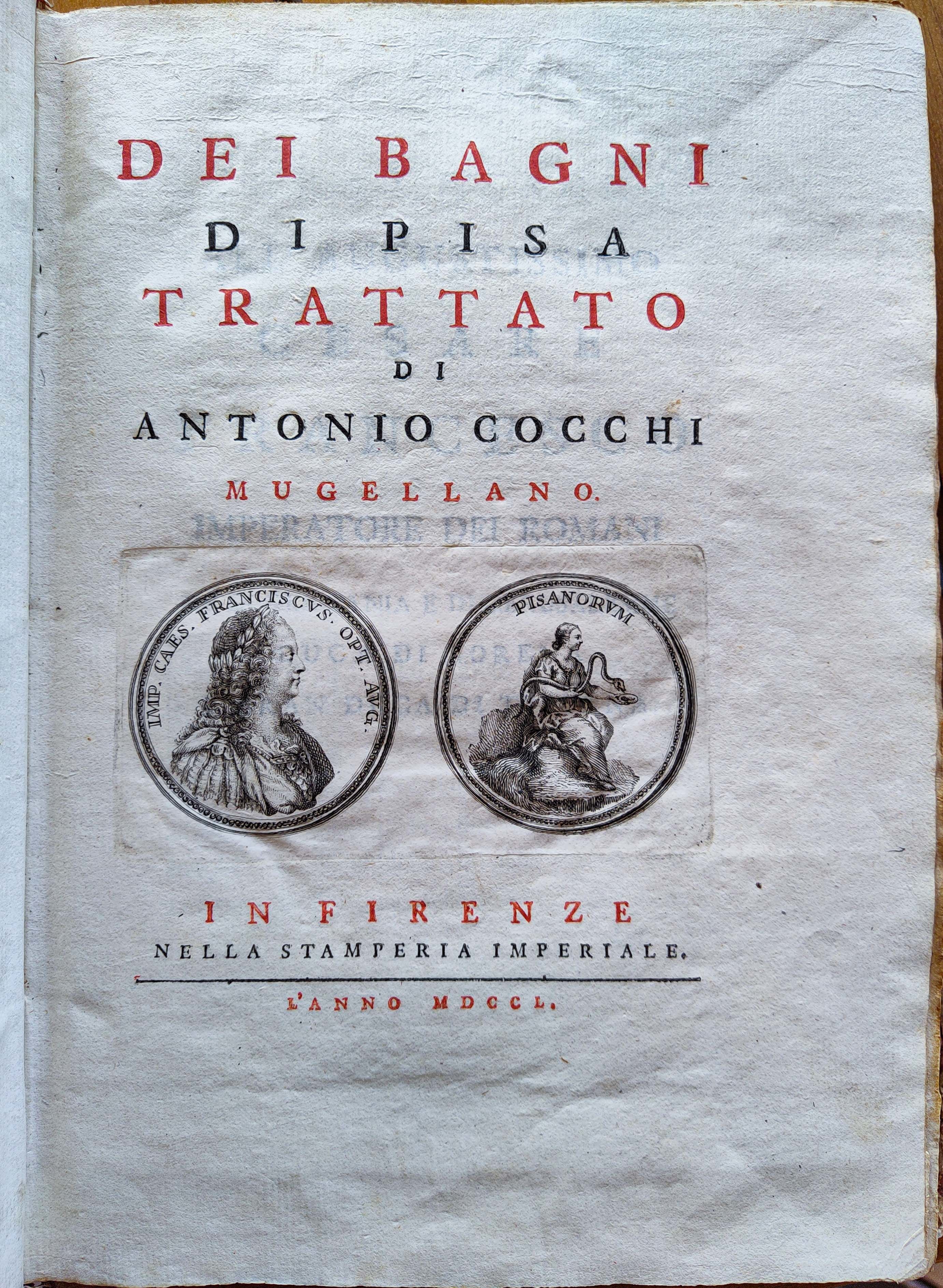
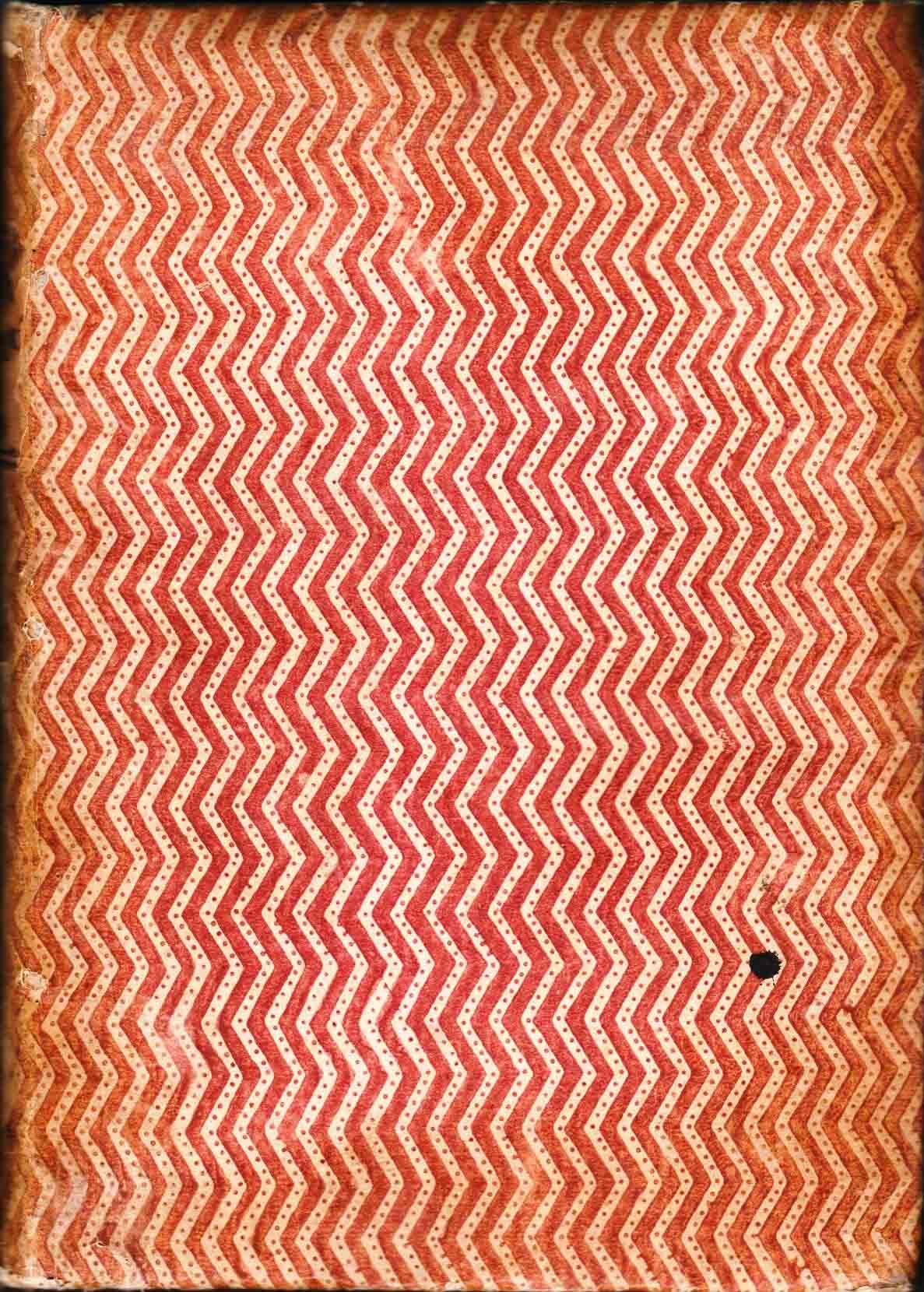
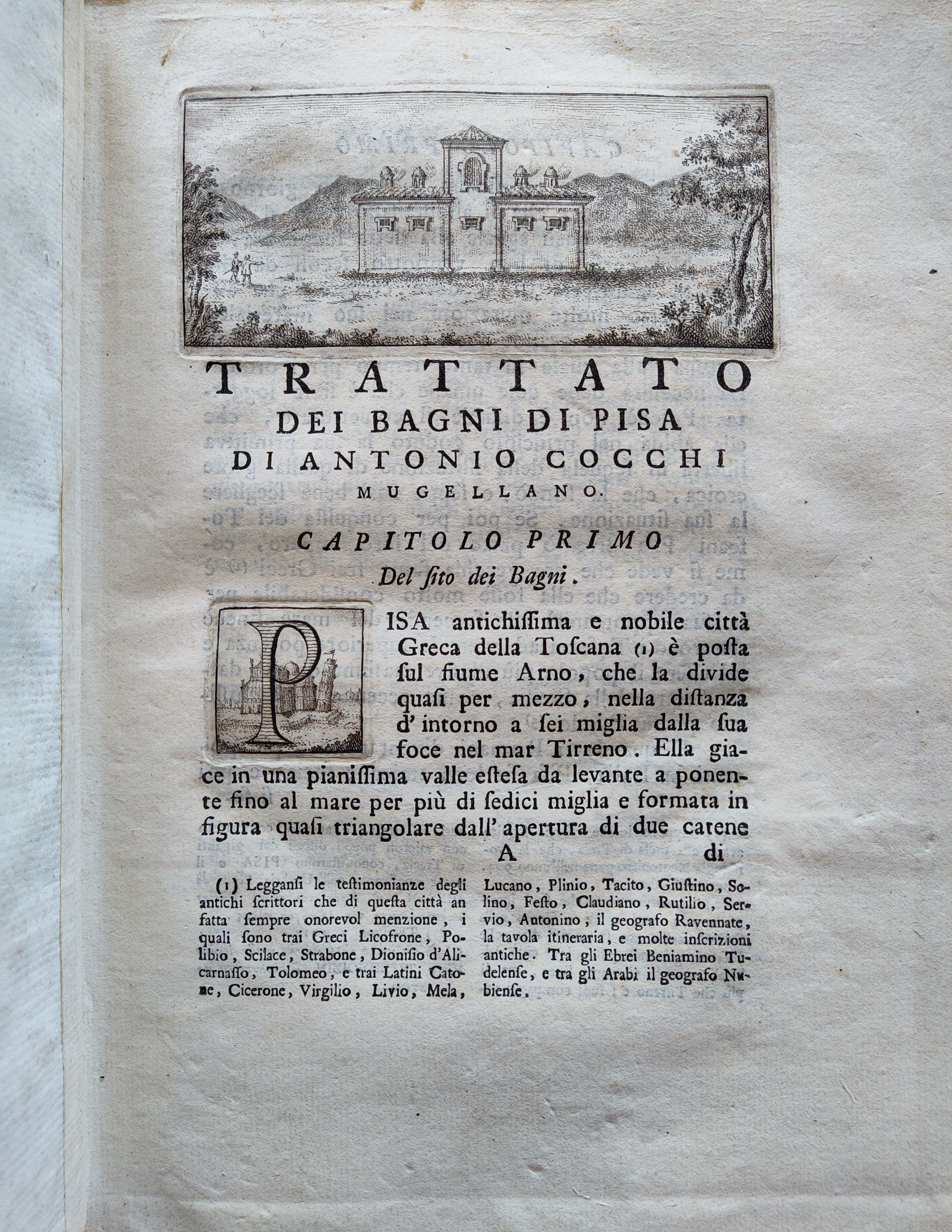
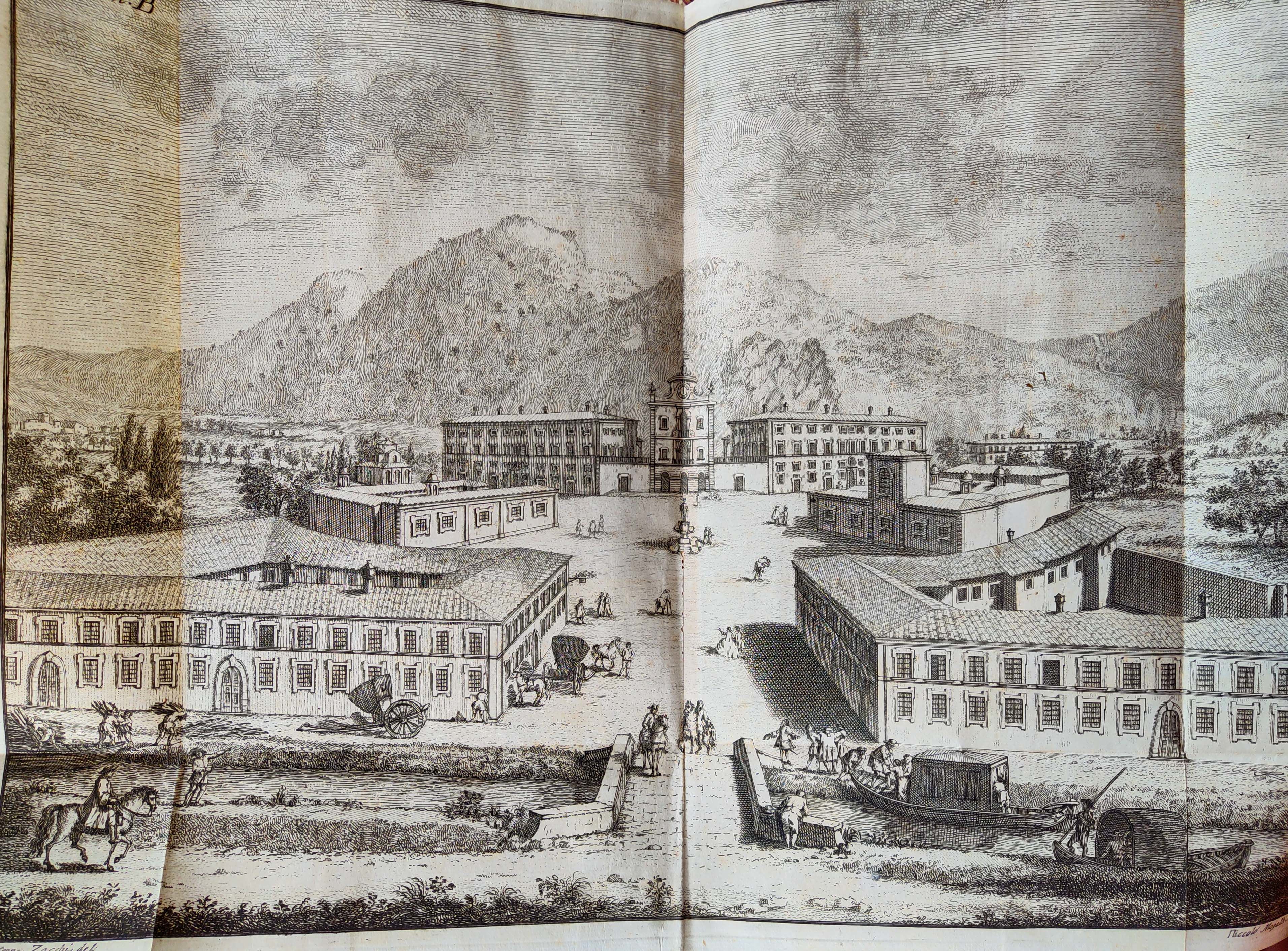
Florence: nella stamperia Imperiale, 1750. First edition. Very Good. Quarto [12], 415, [1] pages, and [7] folding engraved maps, plans, and views. Title-page printed in red and black. Engraved title vignettes (2 medals depicting Holy Roman Emperor Francis I, and the goddess Salus feeding a serpent from a dish held in her hand); engraved head-piece; engraved initial; woodcut initials. Bound in woodblock-printed red-and-white zig-zag paper over boards, titled in manuscript on spine. Spine darkened, with few small abrasions; darkened toward the edges of the lower board; small ink spots on lower and upper board. A fine, bright copy printed on high-quality stock. Reference: Lozzi, 3645; NLM 18th century, p. 91.
Comprehensive essay on the natural history, social history, and medicinal applications of the waters at San Giuliano Terme (known since antiquity as the Pisan Baths).
In 1743, the Grand Duke of Tuscany moved his summer residence to be near the so-called "Bagni di Pisa," an ancient hot spring not far from the city, enclosed in an elegant Neoclassical hospital building, and famous for its medicinal properties. He instituted several improvements to the area, including restaurants, inns, a renewal of the hospital building, and a scientific study of the water and its medical applications.
For this he enlisted Antonio Cocchi, professor of anatomy at the Florentine Studio (the same chair held earlier by Francesco Redi) and known throughout the European "republic of letters" as a naturalist, a historian of science, and as an advocate for vegetarianism. (In 1737 Cocchi was given the honor of transporting Galileo's bones to the dedicated mausoleum in the church of Santa Croce, denied by the See until then.)
With the completion of improvements to the hospital, the accelleration of the "Grand Tour," and the publication of Cocchi's treatise in 1750, the baths became a magnet for European aristocracy and wealthy bourgeois, and dozens of villas went up on the nearby slopes (which are still there). The complex itself enclosed eight separate baths: segregated for women, men, horses, lepers, seniors, the Queen, a second bath for women, and a separate one for special medicinal applications. The baths are said to be therapeutic against tumors, ulcers, wounds, fractures, fevers, dermatitis, arthritis, headaches, paralysis, and other conditions.
Comprehensive essay on the natural history, social history, and medicinal applications of the waters at San Giuliano Terme (known since antiquity as the Pisan Baths).
In 1743, the Grand Duke of Tuscany moved his summer residence to be near the so-called "Bagni di Pisa," an ancient hot spring not far from the city, enclosed in an elegant Neoclassical hospital building, and famous for its medicinal properties. He instituted several improvements to the area, including restaurants, inns, a renewal of the hospital building, and a scientific study of the water and its medical applications.
For this he enlisted Antonio Cocchi, professor of anatomy at the Florentine Studio (the same chair held earlier by Francesco Redi) and known throughout the European "republic of letters" as a naturalist, a historian of science, and as an advocate for vegetarianism. (In 1737 Cocchi was given the honor of transporting Galileo's bones to the dedicated mausoleum in the church of Santa Croce, denied by the See until then.)
With the completion of improvements to the hospital, the accelleration of the "Grand Tour," and the publication of Cocchi's treatise in 1750, the baths became a magnet for European aristocracy and wealthy bourgeois, and dozens of villas went up on the nearby slopes (which are still there). The complex itself enclosed eight separate baths: segregated for women, men, horses, lepers, seniors, the Queen, a second bath for women, and a separate one for special medicinal applications. The baths are said to be therapeutic against tumors, ulcers, wounds, fractures, fevers, dermatitis, arthritis, headaches, paralysis, and other conditions.
Details
Title
Dei Bagni di Pisa trattato...
Author
Cocchi, Antonio <1695-1758>.
Condition
Very Good
Publisher
nella stamperia Imperiale: Florence
Date
1750
Edition
First edition