

13 volumes of music with over 60 titles
- 18th and 19th century
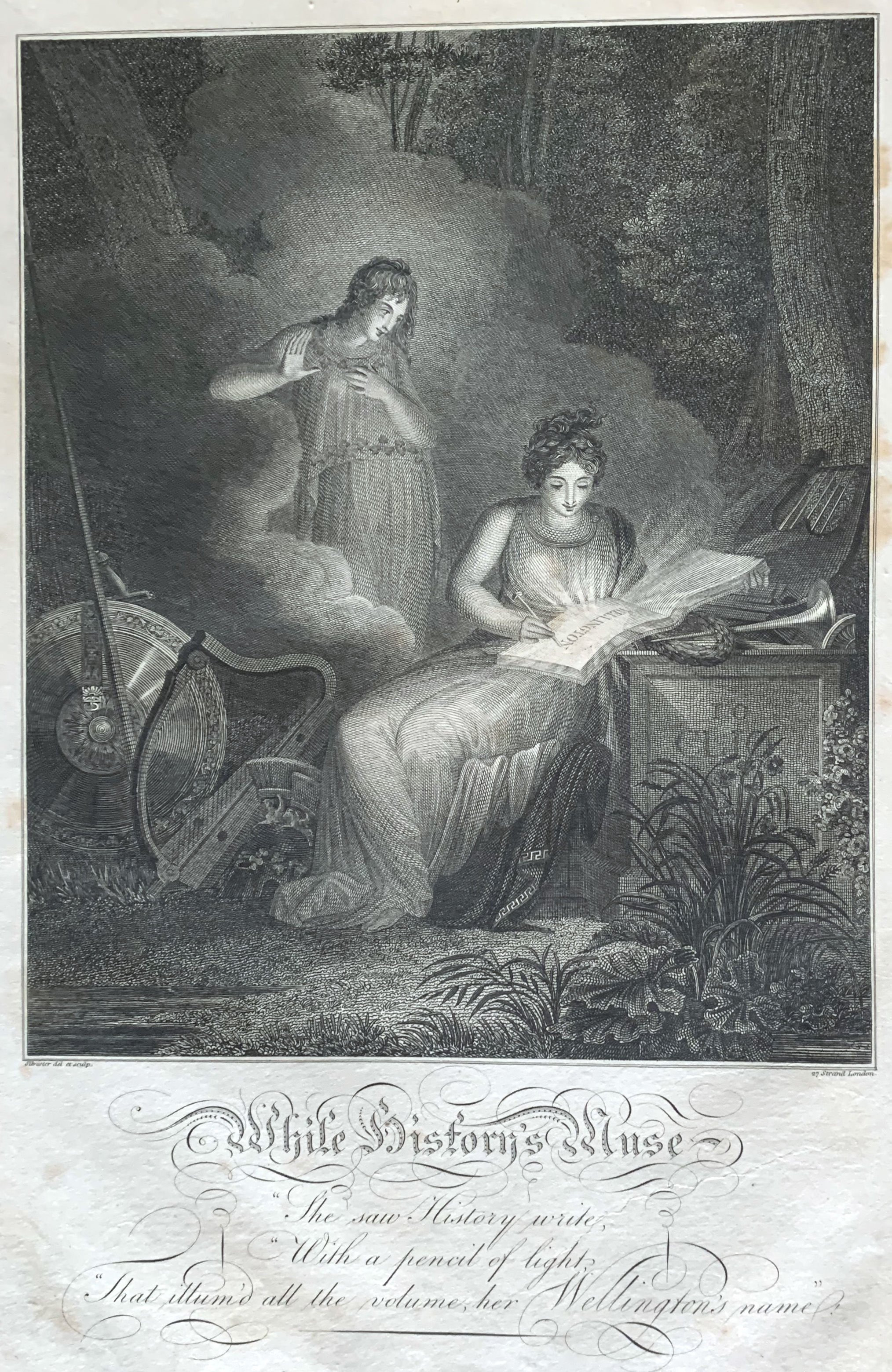
18th and 19th century. The compositions include pieces for the voice, piano, violin, and cello, and range from sonatas to airs to operas. The majority of the works, many with fine engravings, were printed in Britain from notable music publishers. The publication dates vary from the late eighteenth to the mid-nineteenth century. The collection contains works by classical composers like Mozart, Handel, and Beethoven as well as poets like Felicia Hemans, Lord Byron, and Robert Burns. Overall, the books offer an interesting survey in the history of British music publishing, the printing of classical compositions, and the collecting of music. A complete list of all compositions is available upon request.
I. Countess of Lonsdale Music Collection
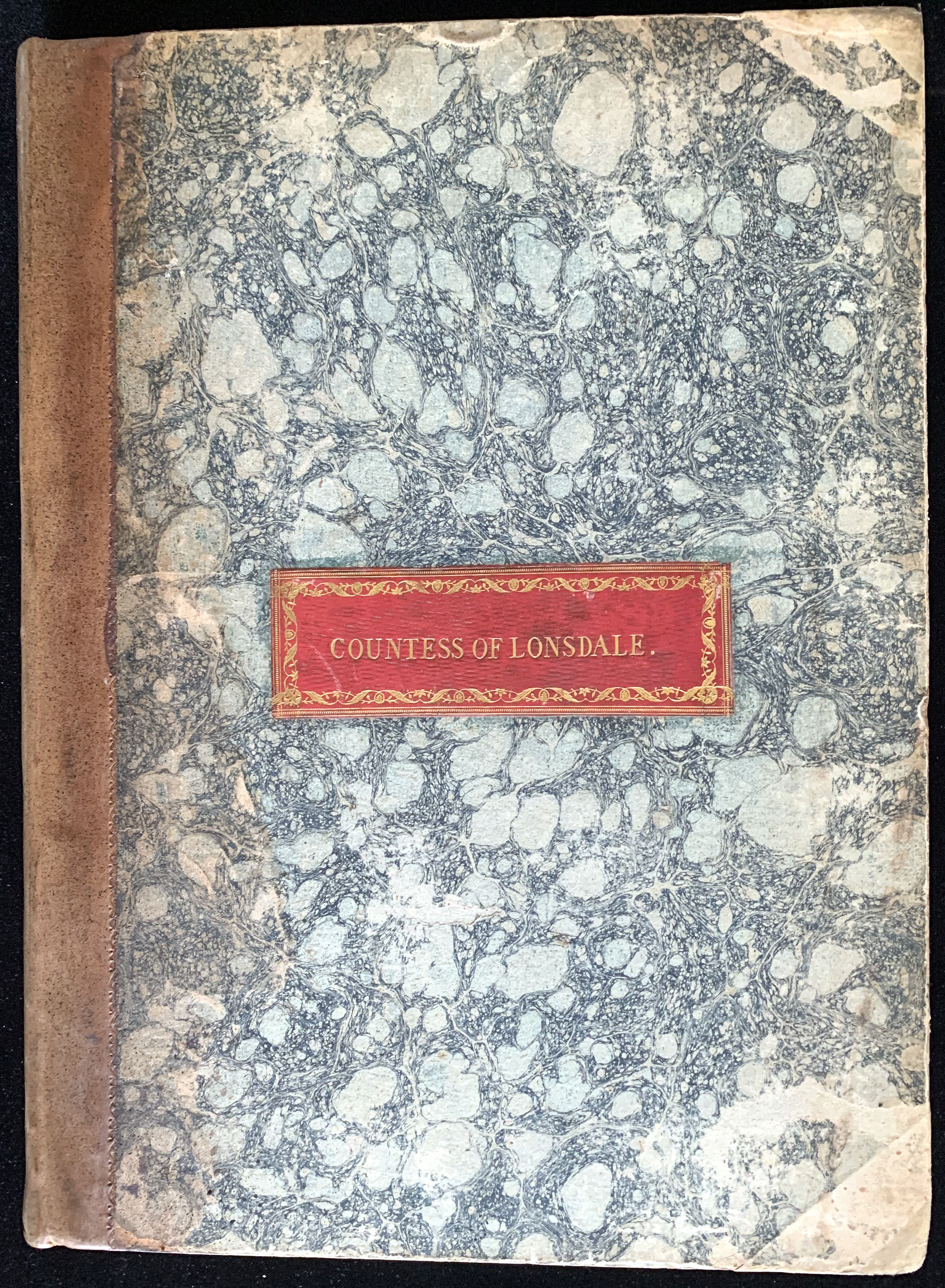
Two volumes bound for the library of Grace Cecile Lowther (née Gordon), Countess of Lonsdale (1854-1941), wife of 5th Earl of Lonsdale and daughter of 10th Marquess of Huntly. The first volume contains eight violin compositions for sonatas, and the second volume has the corresponding parts for the piano. The volumes contain the earliest imprints, mostly from the 1790s, and has works by Mozart, Haydn, and Pleyel among others.
II. STEVENSON, Sir John & Thomas MOORE
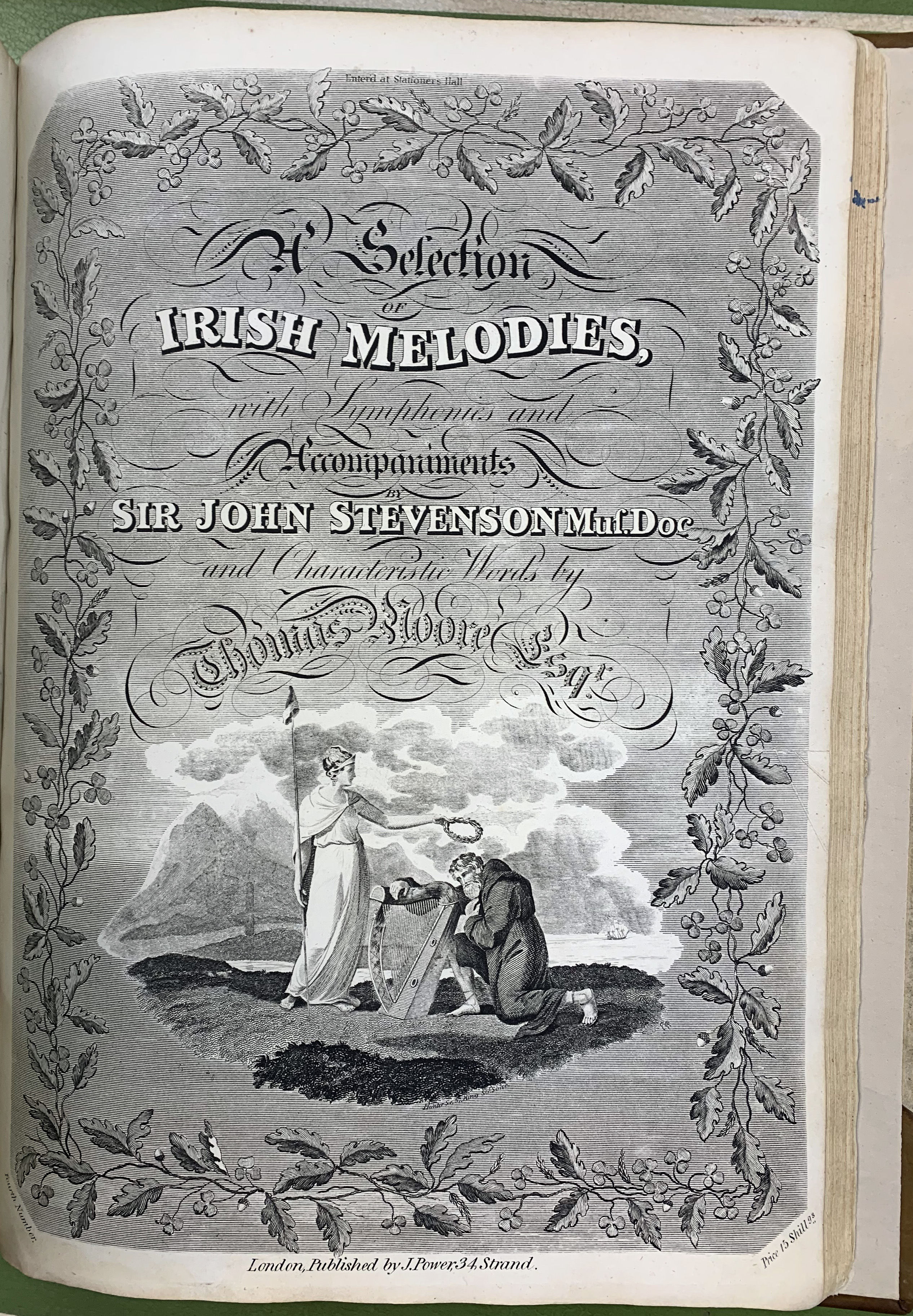
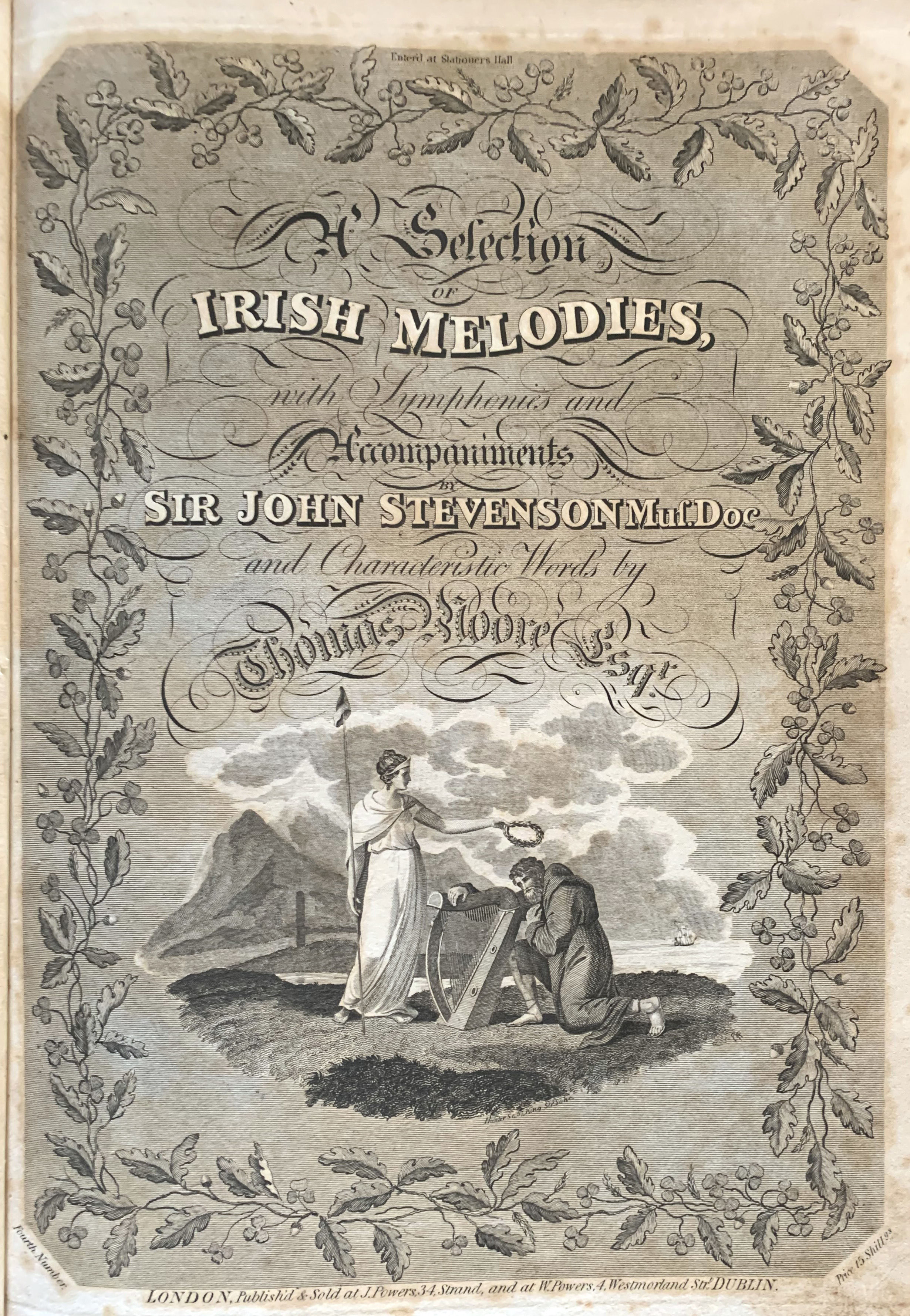
A selection of Irish melodies, with symphonies and accompaniments by Sir John Stevenson Mus. Doc. And characteristic words by Thomas Moore, Esq.r. London: Published & sold at W. Powers, [c. 1808-1810].
Two bound volumes of issues of Stevenson’s and Moore’s Irish Melodies (c. 1808-1834). The first book includes issues 1-4 (issue 1 is lacking the title-page). The second book includes issues 4-6 (issue 4 is a duplicate). There were 10 total issues printed. Stevenson (1761–1833) was an Irish composer, and Moore (1779–1852) was an Irish poet, singer and songwriter. Irish Melodies is Stevenson’s best known work, and he collaborated with Moore on several other projects.
III. Original Scottish and Welsh Airs
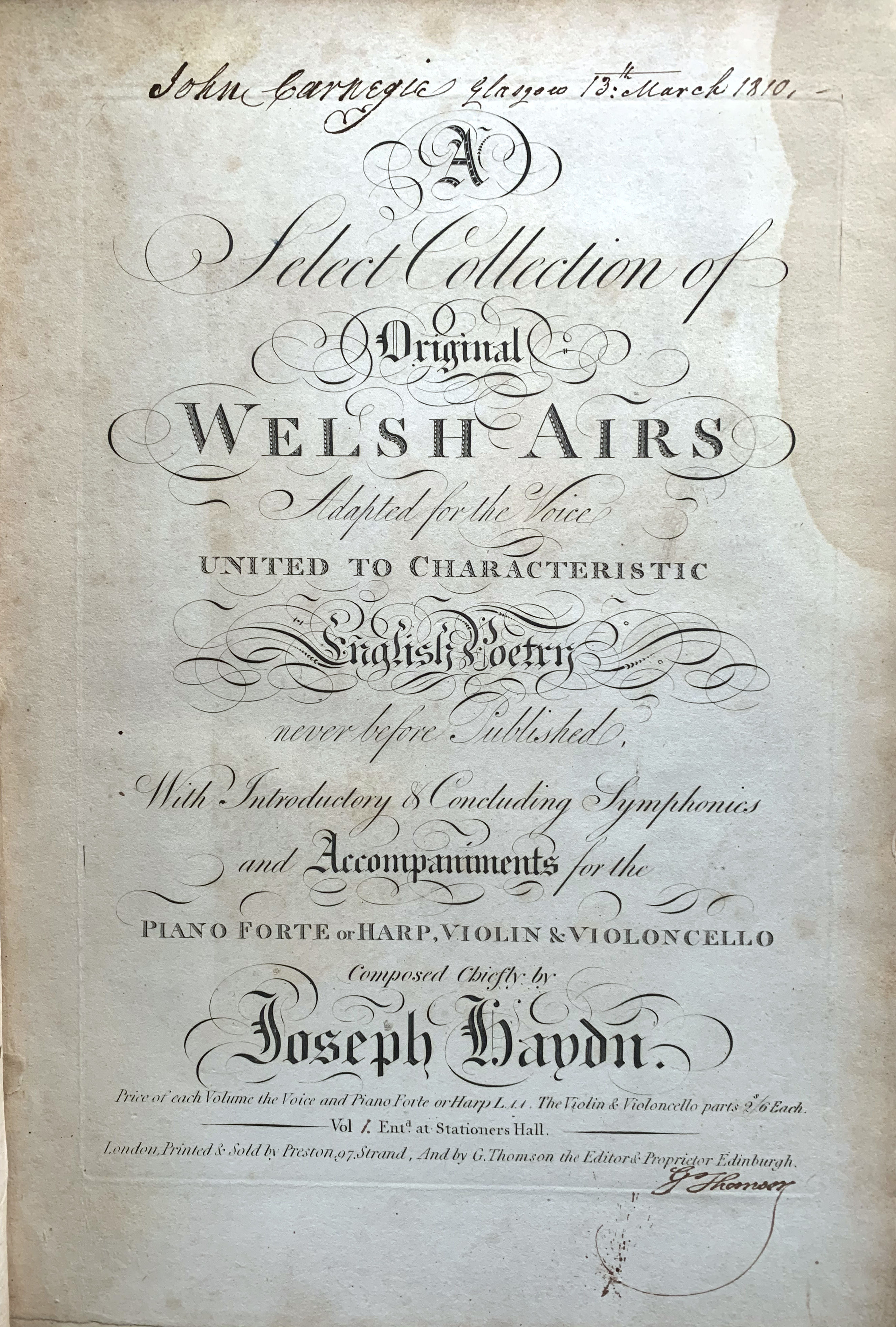
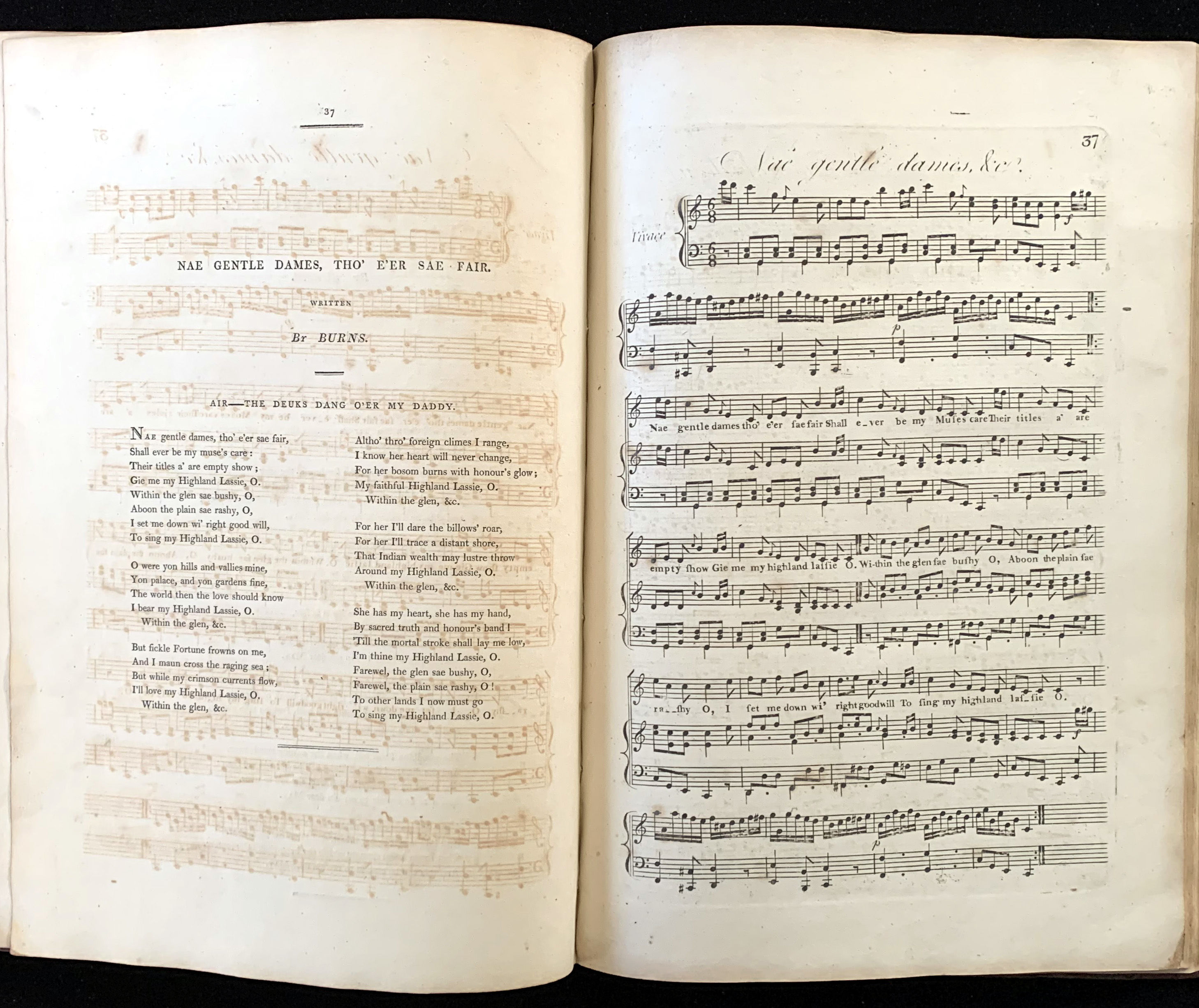
Three bound volumes that consist of Original Scottish airs and Orignal Welsh airs from the music publisher George Thomson with his signature. Between the three books there are early editions of four volumes of Original Scottish airs, four volumes of the rare violin parts for Scottish airs, and one volume of the Original Welsh airs and a volume of its optional violin part. Thomson employed composers like Pleyel and Haydn and the poet Robert Burns to produce his series of national airs. These volumes also contain many copperplate engravings in addition to the sheet music. Signature of John Carnegie, Glasgow, 1810, on all volumes.
IV. HANDEL, George Frederic
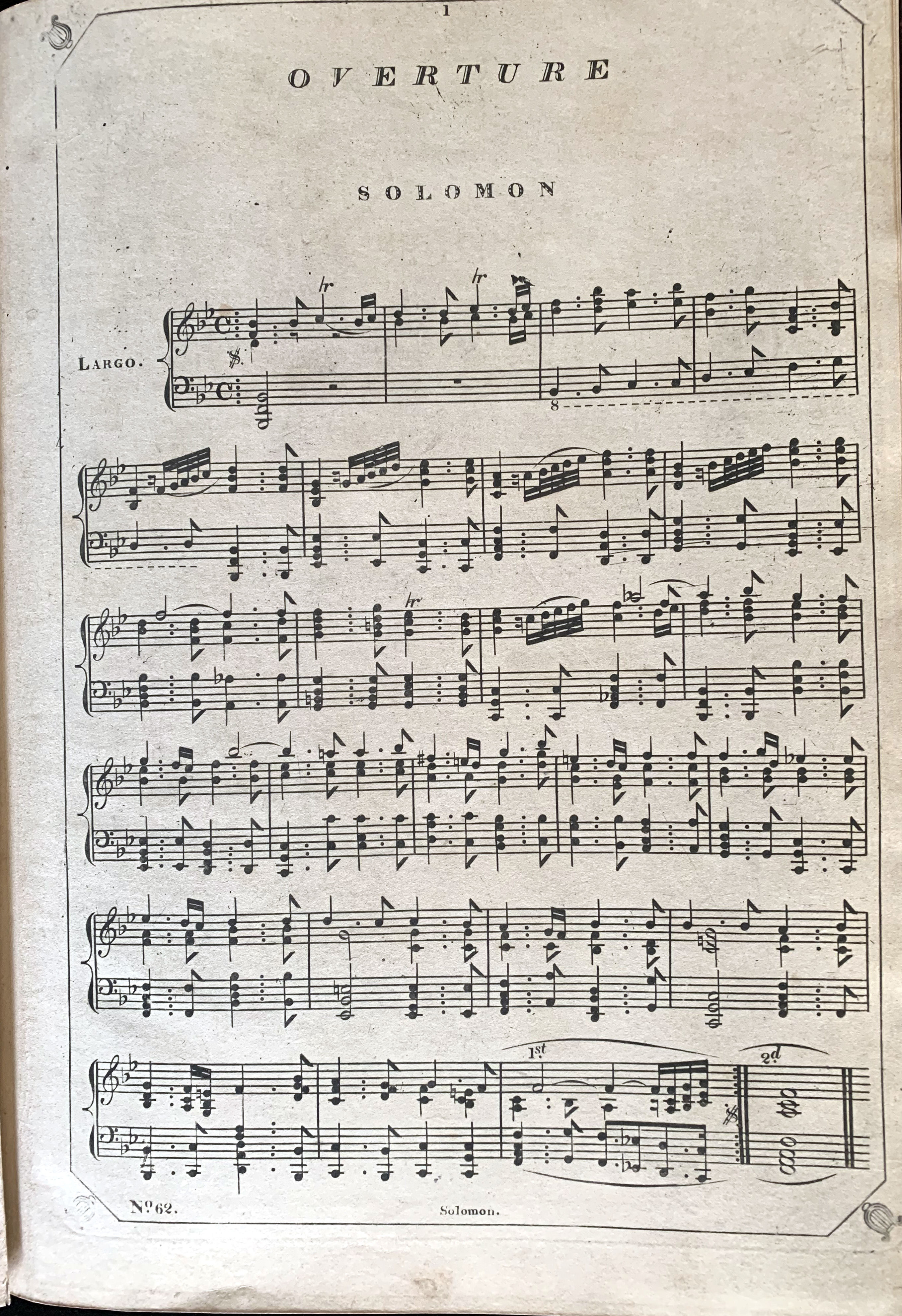
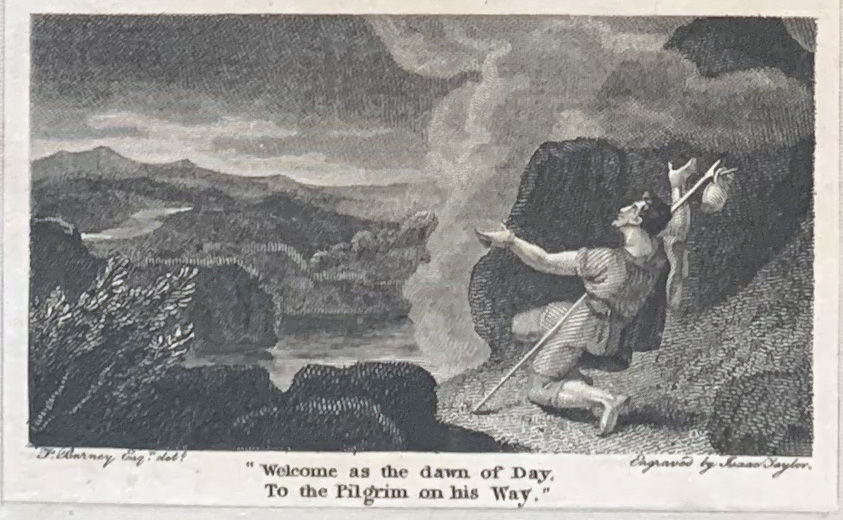
Solomon, composed by G.F. Handel, arranged for the organ or piano-forte, by Dr. John Clarke, Cambridge. London: Printed by Clementi, Collard, & Collard, [c. 1825]. Folio. [iii], 193, 1 pp. Engraved title with border design and vignette by Isaac Taylor; inscription in brown ink of Charles Severn.
Arrangement of the vocal score for Handel’s (1685–1759) oratorio, Solomon (HWV 67). Until recently, the librettist of Solomon was unknown. However, it is likely that the English/Jewish financier-poet, Moses Mendes (c. 1690–1758) provided the lyrics to Handel’s oratorio according to a new documentary source. The previous owner of this volume was Charles Severn (1806–1894), a musician and member of the Royal Society of Musicians in Great Britain.
V. ROSSINI, [Gioachino Antonio]
Mosè in Egitto, oratorio in tre atti, musica di Rossini, nuova edizione. Paris: Ou Magazin de Musique de Pacini, [c. 1825]. Folio. [ii], 1, [ii], 203 pp.
Rossini (1792–1868) was an Italian composer known for his comic operas including William Tell (1829). He composed Mosè in Egitto with the librettist, Andrea Leone Tottola, around 1818. Rossini later revised the opera, adding a fourth act and a ballet, in 1827 and renamed it Moïse et Pharaon. Both versions were highly successful and remain Rossini’s best known works.
VI. Voice and piano-forte
This volume contains 23 engraved pieces of music. The majority of works are romantic songs with lyrics for solos or duets. There are also works for the piano-forte. All entries, except four, are from British composers and/or poets. The exceptions are two songs from Italian composers (based in England), a duet from Mozart’s The Marriage of Figaro (printed by a British music firm), and a book of eight anonymous, Italian duets. Highlights include three songs from Lord Bryon’s and Isaac Nathan’s Hebrew Melodies, title-pages with lithographs from Maxim Gauci’s firm, and many works by women composers and poets like Felicia Hermans.
VII. Trios
Three volumes of trios for the piano, violin, and cello. There are six compositions in total with each volume containing the parts for each instrument. The sheet music comes from a variety of publishing firms with a date range of the early to mid-nineteenth century, and consists of works by Classical composers including Mendelssohn, Mozart, and Beethoven.
I. Countess of Lonsdale Music Collection
Two volumes bound for the library of Grace Cecile Lowther (née Gordon), Countess of Lonsdale (1854-1941), wife of 5th Earl of Lonsdale and daughter of 10th Marquess of Huntly. The first volume contains eight violin compositions for sonatas, and the second volume has the corresponding parts for the piano. The volumes contain the earliest imprints, mostly from the 1790s, and has works by Mozart, Haydn, and Pleyel among others.
II. STEVENSON, Sir John & Thomas MOORE
A selection of Irish melodies, with symphonies and accompaniments by Sir John Stevenson Mus. Doc. And characteristic words by Thomas Moore, Esq.r. London: Published & sold at W. Powers, [c. 1808-1810].
Two bound volumes of issues of Stevenson’s and Moore’s Irish Melodies (c. 1808-1834). The first book includes issues 1-4 (issue 1 is lacking the title-page). The second book includes issues 4-6 (issue 4 is a duplicate). There were 10 total issues printed. Stevenson (1761–1833) was an Irish composer, and Moore (1779–1852) was an Irish poet, singer and songwriter. Irish Melodies is Stevenson’s best known work, and he collaborated with Moore on several other projects.
III. Original Scottish and Welsh Airs
Three bound volumes that consist of Original Scottish airs and Orignal Welsh airs from the music publisher George Thomson with his signature. Between the three books there are early editions of four volumes of Original Scottish airs, four volumes of the rare violin parts for Scottish airs, and one volume of the Original Welsh airs and a volume of its optional violin part. Thomson employed composers like Pleyel and Haydn and the poet Robert Burns to produce his series of national airs. These volumes also contain many copperplate engravings in addition to the sheet music. Signature of John Carnegie, Glasgow, 1810, on all volumes.
IV. HANDEL, George Frederic
Solomon, composed by G.F. Handel, arranged for the organ or piano-forte, by Dr. John Clarke, Cambridge. London: Printed by Clementi, Collard, & Collard, [c. 1825]. Folio. [iii], 193, 1 pp. Engraved title with border design and vignette by Isaac Taylor; inscription in brown ink of Charles Severn.
Arrangement of the vocal score for Handel’s (1685–1759) oratorio, Solomon (HWV 67). Until recently, the librettist of Solomon was unknown. However, it is likely that the English/Jewish financier-poet, Moses Mendes (c. 1690–1758) provided the lyrics to Handel’s oratorio according to a new documentary source. The previous owner of this volume was Charles Severn (1806–1894), a musician and member of the Royal Society of Musicians in Great Britain.
V. ROSSINI, [Gioachino Antonio]
Mosè in Egitto, oratorio in tre atti, musica di Rossini, nuova edizione. Paris: Ou Magazin de Musique de Pacini, [c. 1825]. Folio. [ii], 1, [ii], 203 pp.
Rossini (1792–1868) was an Italian composer known for his comic operas including William Tell (1829). He composed Mosè in Egitto with the librettist, Andrea Leone Tottola, around 1818. Rossini later revised the opera, adding a fourth act and a ballet, in 1827 and renamed it Moïse et Pharaon. Both versions were highly successful and remain Rossini’s best known works.
VI. Voice and piano-forte
This volume contains 23 engraved pieces of music. The majority of works are romantic songs with lyrics for solos or duets. There are also works for the piano-forte. All entries, except four, are from British composers and/or poets. The exceptions are two songs from Italian composers (based in England), a duet from Mozart’s The Marriage of Figaro (printed by a British music firm), and a book of eight anonymous, Italian duets. Highlights include three songs from Lord Bryon’s and Isaac Nathan’s Hebrew Melodies, title-pages with lithographs from Maxim Gauci’s firm, and many works by women composers and poets like Felicia Hermans.
VII. Trios
Three volumes of trios for the piano, violin, and cello. There are six compositions in total with each volume containing the parts for each instrument. The sheet music comes from a variety of publishing firms with a date range of the early to mid-nineteenth century, and consists of works by Classical composers including Mendelssohn, Mozart, and Beethoven.
Details
Title
13 volumes of music with over 60 titles
Author
MUSIC COLLECTION
Condition
Unknown
Date
18th and 19th century