

Geological observations on the volcanic islands and parts of South America; Geological observations on South America. Being the third part of the geology of the voyage of the Beagle
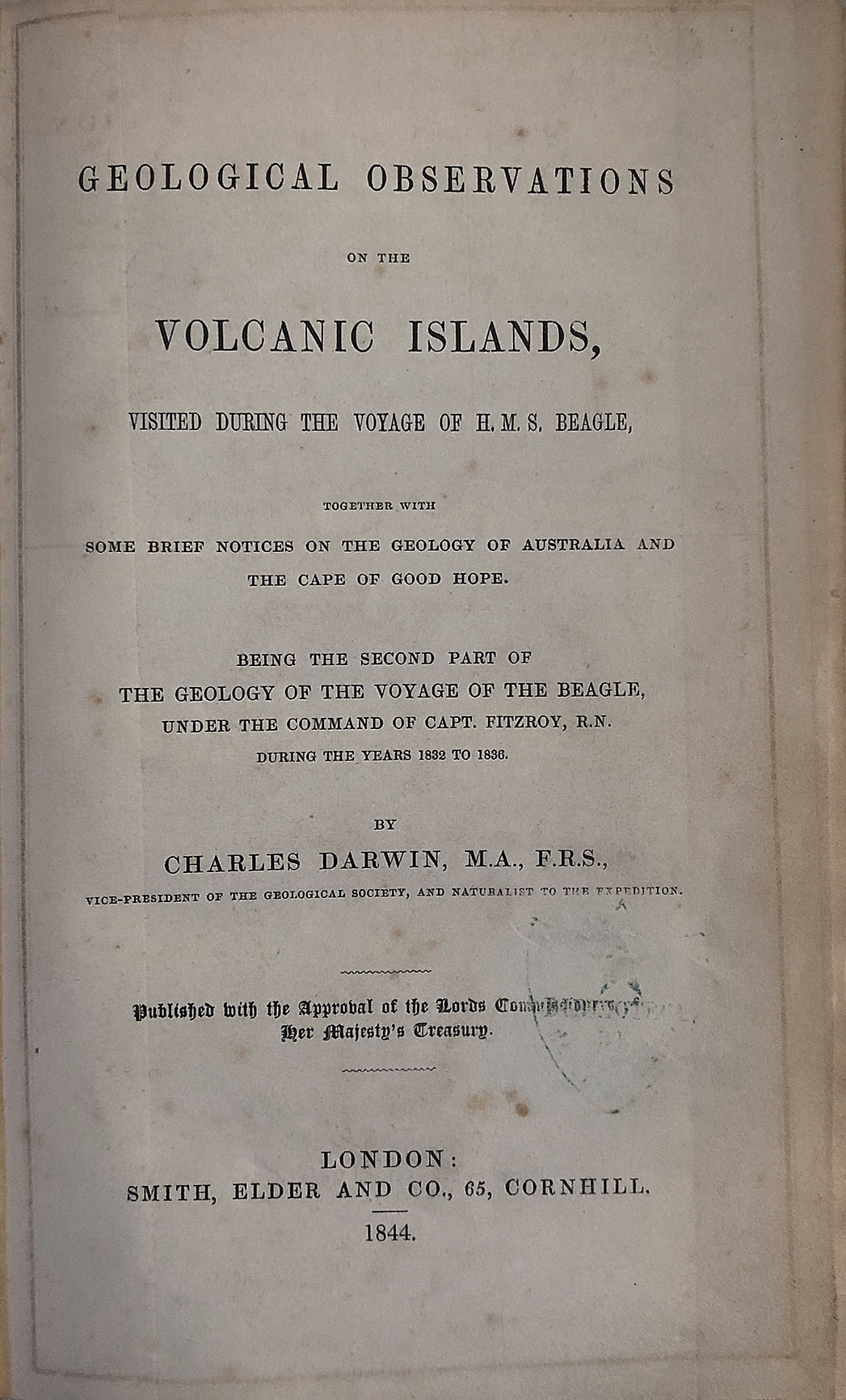
- London: Smith, Elder and Co, 1846
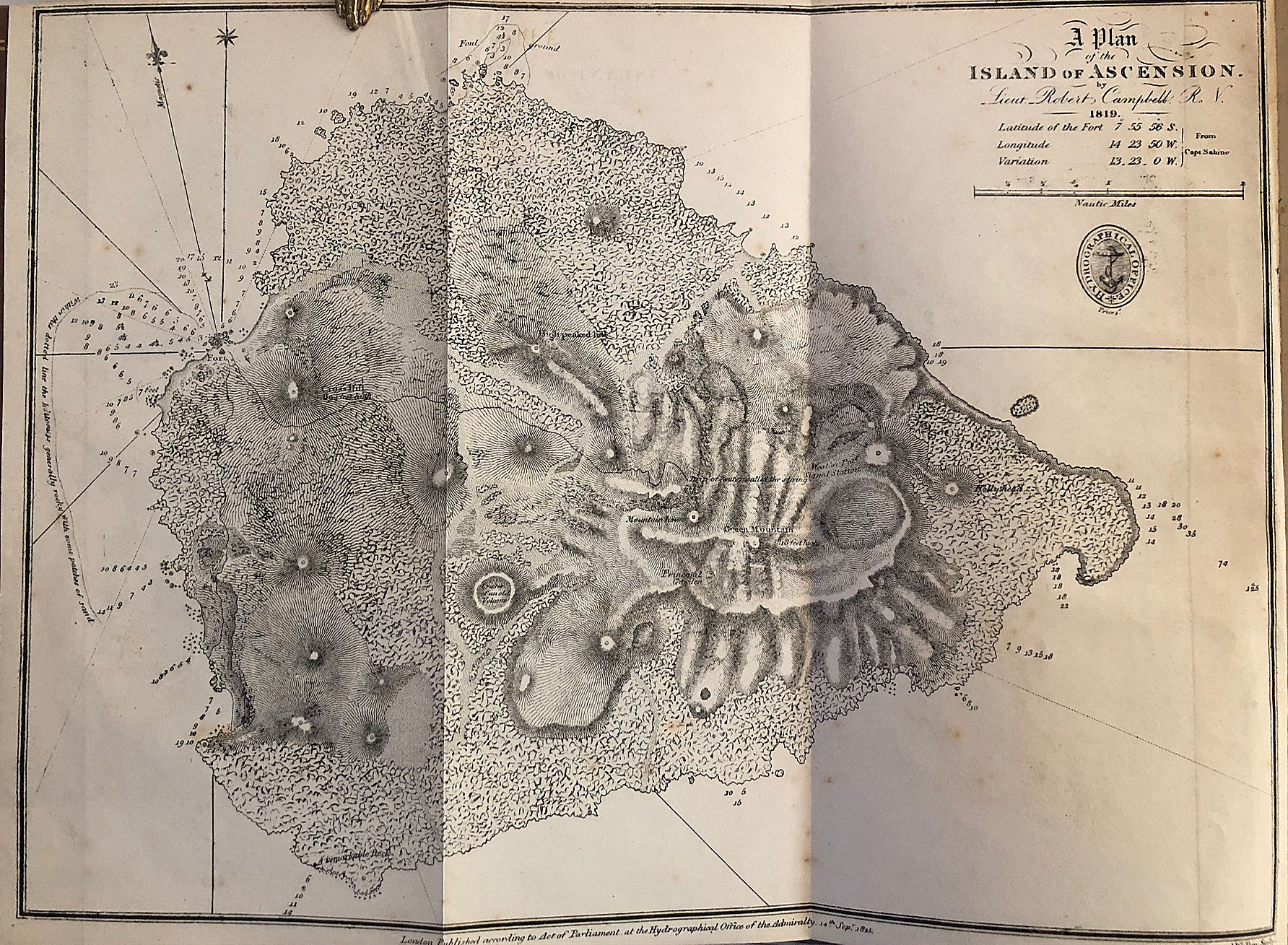
London: Smith, Elder and Co, 1846. I: First edition. Includes a description of six species of corals from the Palaeozoic formation of Van Diemen’s Land by W. Lonsdale. “Darwin’s published work during this period secured his position as one of Britain’s foremost naturalists. His study of the volcanic islands visited during the Beagle
voyage was based on a wide range of rock and mineral specimens, including his own, and considerable research into contemporary theories of volcanic activity, mountain formation, and the elevation of extensive tracts of land relative to the sea” (Correspondence, Vol. 3, p. 331).
II: First edition. When Darwin sailed on the Beagle, he had with him the first volume of Lyell’s Principles of geology, which advanced a gradualist theory of geological evolution through elevation, subsidence and erosion over an immense period of time, contrary to the dominant catastrophist theory of sudden upheaval. Darwin was able to interpret the geology of South America according to Lyell’s principles, and his book offered the first adequate geological investigation of the continent. His “demonstration of the origin of metamorphic rocks by deformation and of the distinction between cleavage and sedimentary bedding was a major contribution to geology” (DSB). He also worked out an accurate model for fossil formation, from which he demonstrated the erratic and incomplete nature of the fossil record.
Freeman, 272; 273.
voyage was based on a wide range of rock and mineral specimens, including his own, and considerable research into contemporary theories of volcanic activity, mountain formation, and the elevation of extensive tracts of land relative to the sea” (Correspondence, Vol. 3, p. 331).
II: First edition. When Darwin sailed on the Beagle, he had with him the first volume of Lyell’s Principles of geology, which advanced a gradualist theory of geological evolution through elevation, subsidence and erosion over an immense period of time, contrary to the dominant catastrophist theory of sudden upheaval. Darwin was able to interpret the geology of South America according to Lyell’s principles, and his book offered the first adequate geological investigation of the continent. His “demonstration of the origin of metamorphic rocks by deformation and of the distinction between cleavage and sedimentary bedding was a major contribution to geology” (DSB). He also worked out an accurate model for fossil formation, from which he demonstrated the erratic and incomplete nature of the fossil record.
Freeman, 272; 273.
Details
Title
Geological observations on the volcanic islands and parts of South America; Geological observations on South America. Being the third part of the geology of the voyage of the Beagle
Author
DARWIN, Charles
Condition
Unknown
Publisher
Smith, Elder and Co: London
Date
1846