

Catalogue Search Results for Les Enluminures, Ltd.
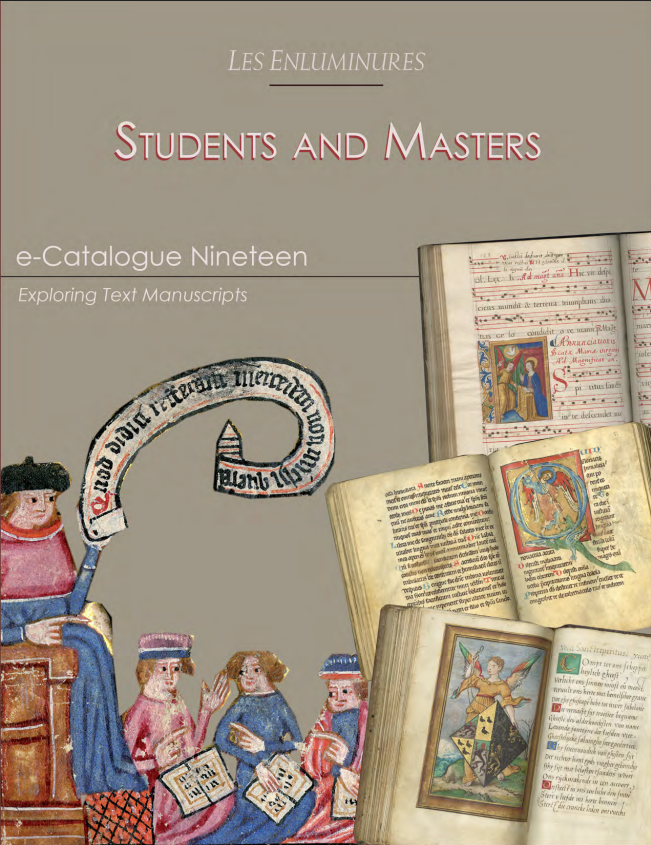
When was the last time you felt like you mastered something? What about the last time you learned something new? Everyone has been a student and a master at some skill during their life. Although the label "student" applies widely, at its core it speaks to self-improvement and a pursuit of knowledge. Whether you are an elementary schooler, a PhD candidate, or in culinary training, the title remains yours as long as need. "Master" covers a similarly broad range. Usually, the term indicates a teacher or expert in their field who trains students. The "Old Masters" refers to famous painters and sculptors, but the phrase comes from medieval and Renaissance artist guilds who made and interacted with these books were students and masters in their own ways. From a cheerfully painted Psalter where wee ones learned the alphabet to an eye-catching Choir Book with repurposed pictures, any of these books are perfectly suited for study themselves. Even if teaching and learning look a little different in the modern age, "Students and Masters" shows we are not so dissimilar from our predecesors.
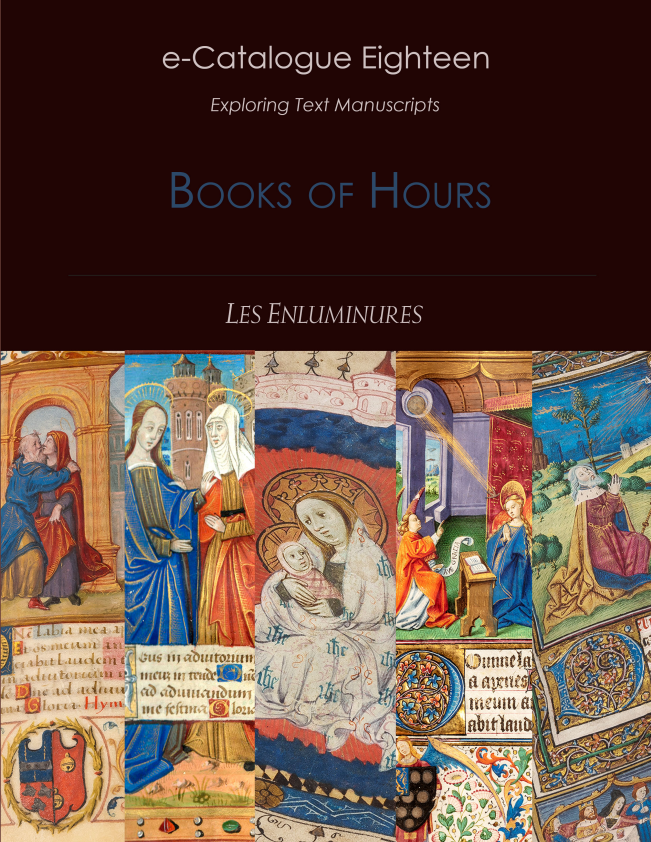
Omnipresent in the late Middle Ages and Renaissance, Books of Hours are often called the bestseller of the Middle Ages. Today they are one of the most common types of manuscript surviving from this era, found widely in public and private collections, and often reproduced.
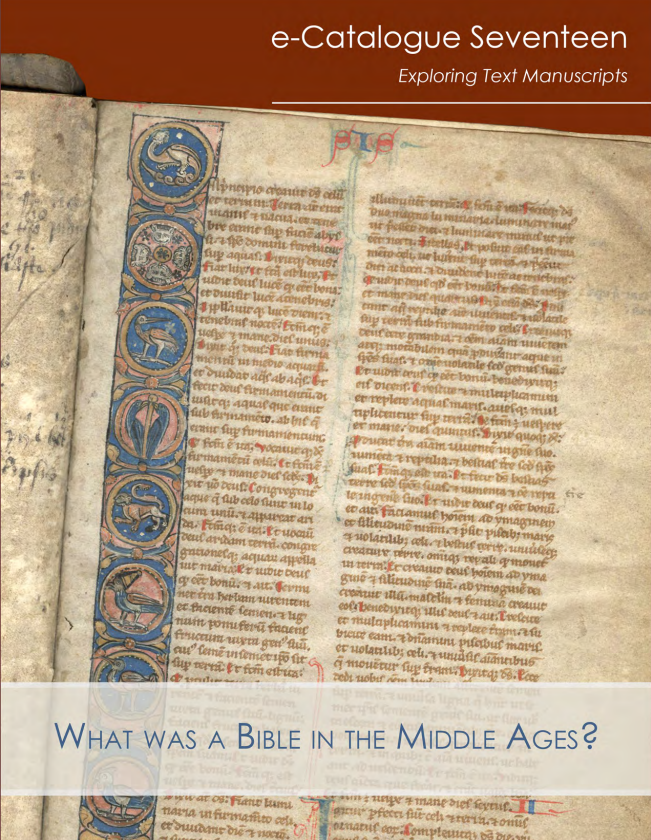
If you consult Webster’s dictionary, you will learn that “The Bible” is the texts that are considered sacred by Jews and Christians, and also the physical object that includes these texts. This e-catalogue explores selective aspects of the Bible in the Middle Ages, seen through the lens of 14 manuscripts.
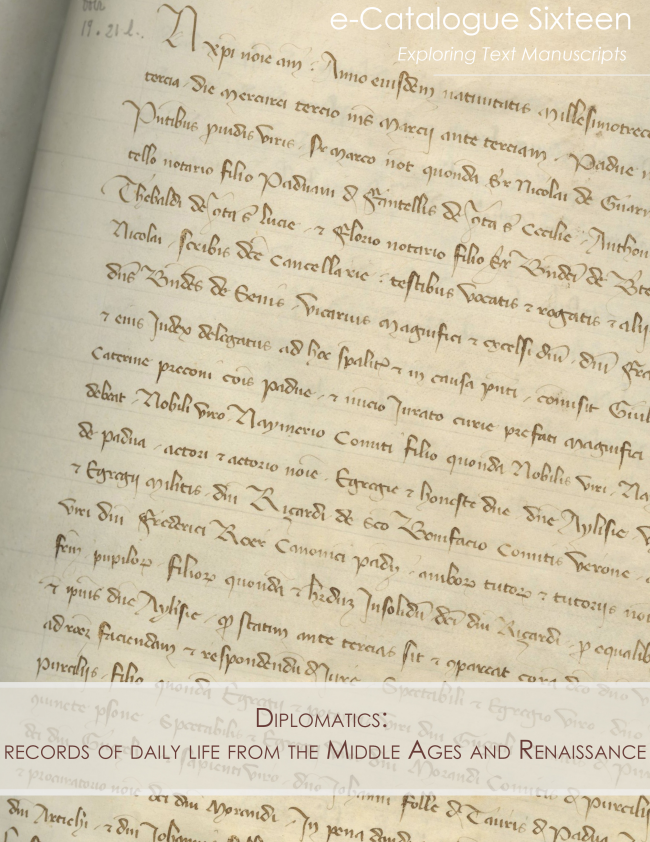
Legal and administrative records from public and private sources, or documents, might sound a little dry, or a little specialized. If that was your first thought, the items collected here in this short list will surprise you both with their immediacy (they all record things of real importance to everyone mentioned in their text) and, often, with their beauty, seen in their script, handsome notary marks, and even, at times, illumination.
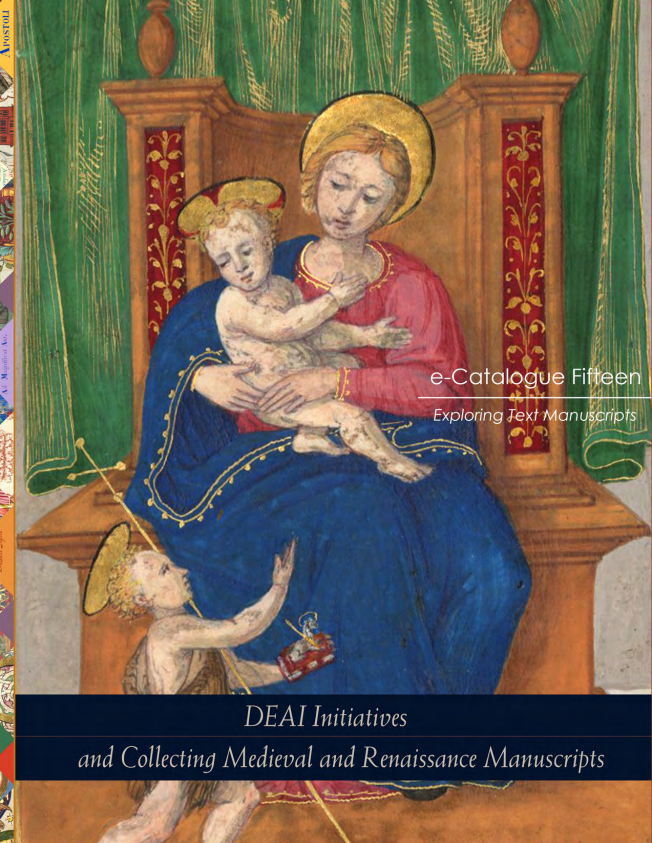
DEAI initiatives (Diversity, Equity, Access, and Inclusion) ask us to think differently about building collections, particularly collections in academic institutions. At Les Enluminures we recognize that the process can at first seem especially challenging for manuscripts from the Middle Ages and Renaissance. But if you dig a little deeper, nothing is further from the truth.
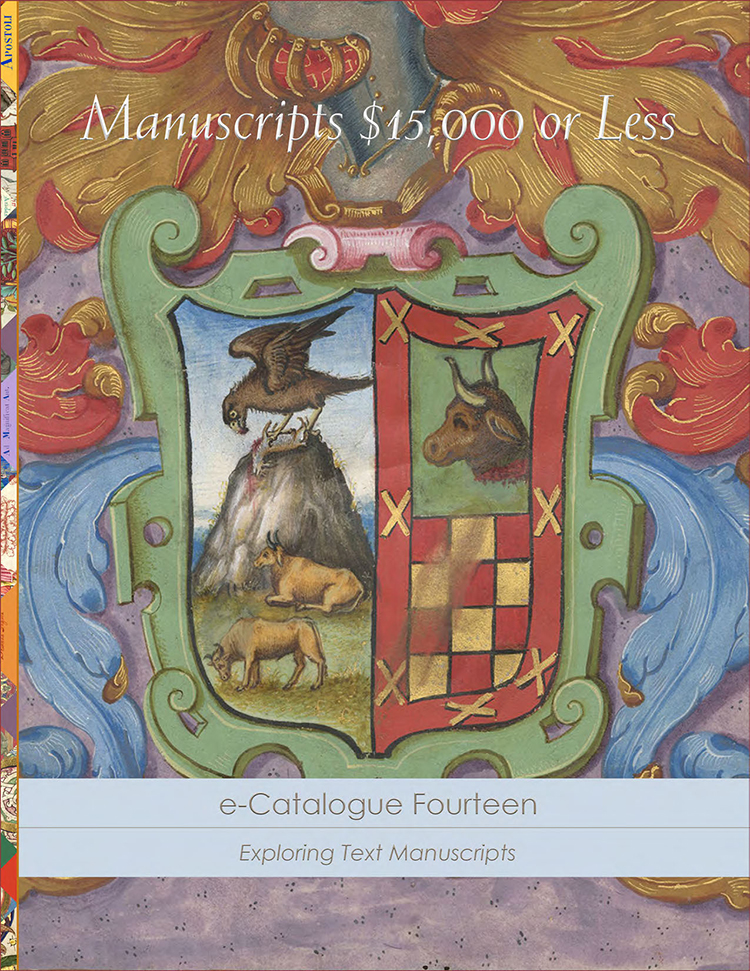
This is the second e-catalogue in our series, “Exploring Text Manuscripts,” that includes manuscripts chosen because of their price. All 13 manuscripts are $15,000 or less; eight are less than $10,000. We all know that price can be the determining factor in an acquisition. For collectors on a budget, this group of manuscripts illustrates two categories of manuscripts that are worth considering carefully.
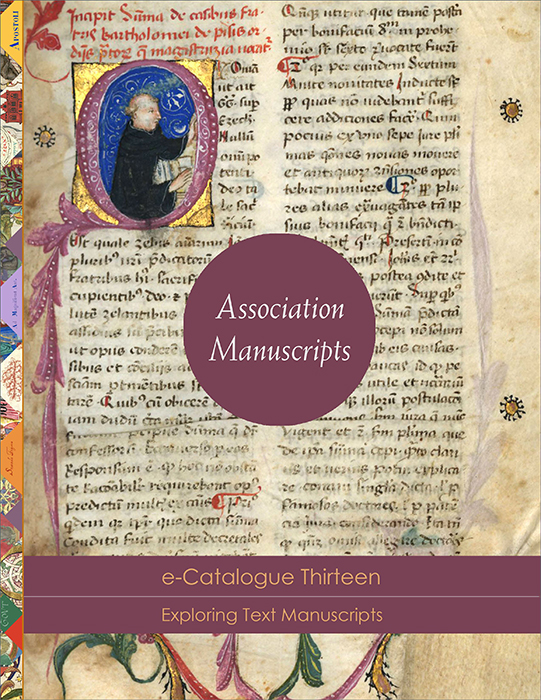
Association copies (books owned or annotated by their author, someone close to the author, or more broadly, by any notable individual) are prized by collectors of printed books. It is not ordinarily a term applied to medieval or Renaissance manuscripts, but we have recently been having fun with the concept, which underlines the fascination we all have with the people associated with every book, be it printed or copied by hand.
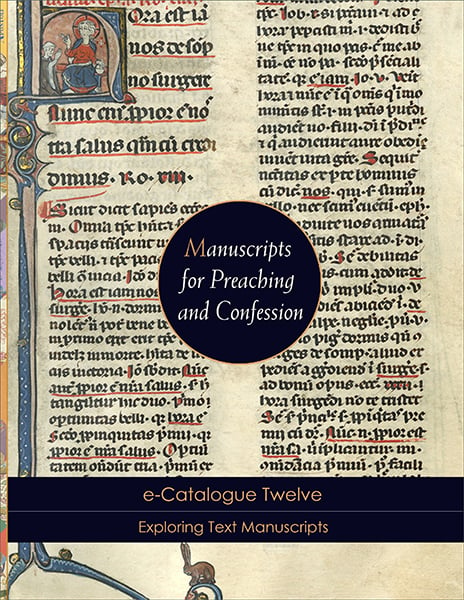
Manuscripts related to pastoral care (the church’s ministry for the spiritual welfare of the laity) were an important genre in the Middle Ages, serving the practical needs of the medieval clergy, and offering scholars and students today valuable insights into daily life in this period.
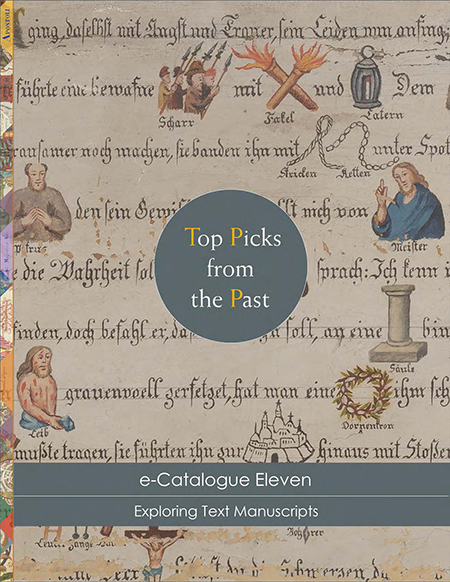
In this catalogue, we return to some of our favorite manuscripts from the extensive inventory on www.textmanuscripts.com to demonstrate how diverse, and often surprising, that inventory is.
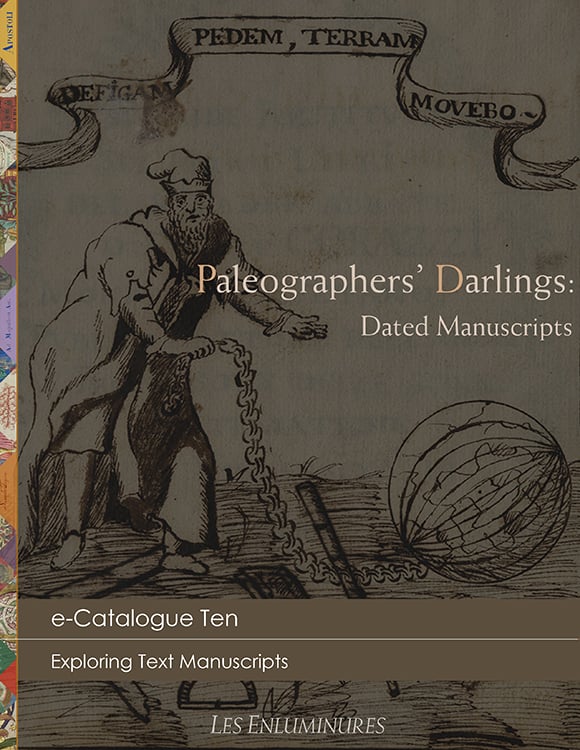
Medieval manuscripts don’t have title pages neatly listing when and where they were written. But descriptions of these manuscripts always begin with this information. Have you ever wondered how that is possible? The short answer to that question is dated manuscripts. Just as some scribes signed their names (see our e-catalogue, “The ‘I’ in Manuscript”), some recorded when, and sometimes also where, they copied their manuscript (commonly the date when they finished their task).

Manuscripts come in all sizes. Size is one of the most important clues to how a book was used. It is also the most difficult attribute of a book to convey by means of digital images. This list includes the six smallest and six largest manuscripts (including one early printed book) from our Text Manuscripts site.
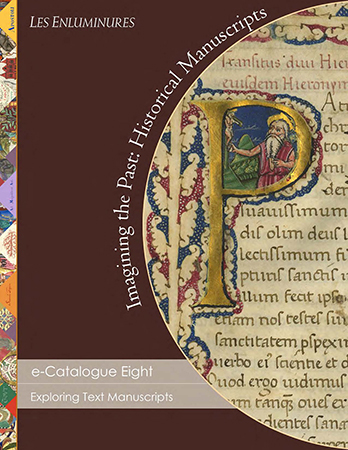
Historical writing in the Middle Ages and the Renaissance encompassed numerous genres; the eight manuscripts included here reflect this diversity. Carl Sagan has said, “You have to know the past to understand the present.” These manuscripts reveal that knowing how the past understood its own past, will allow us in turn to understand the past.
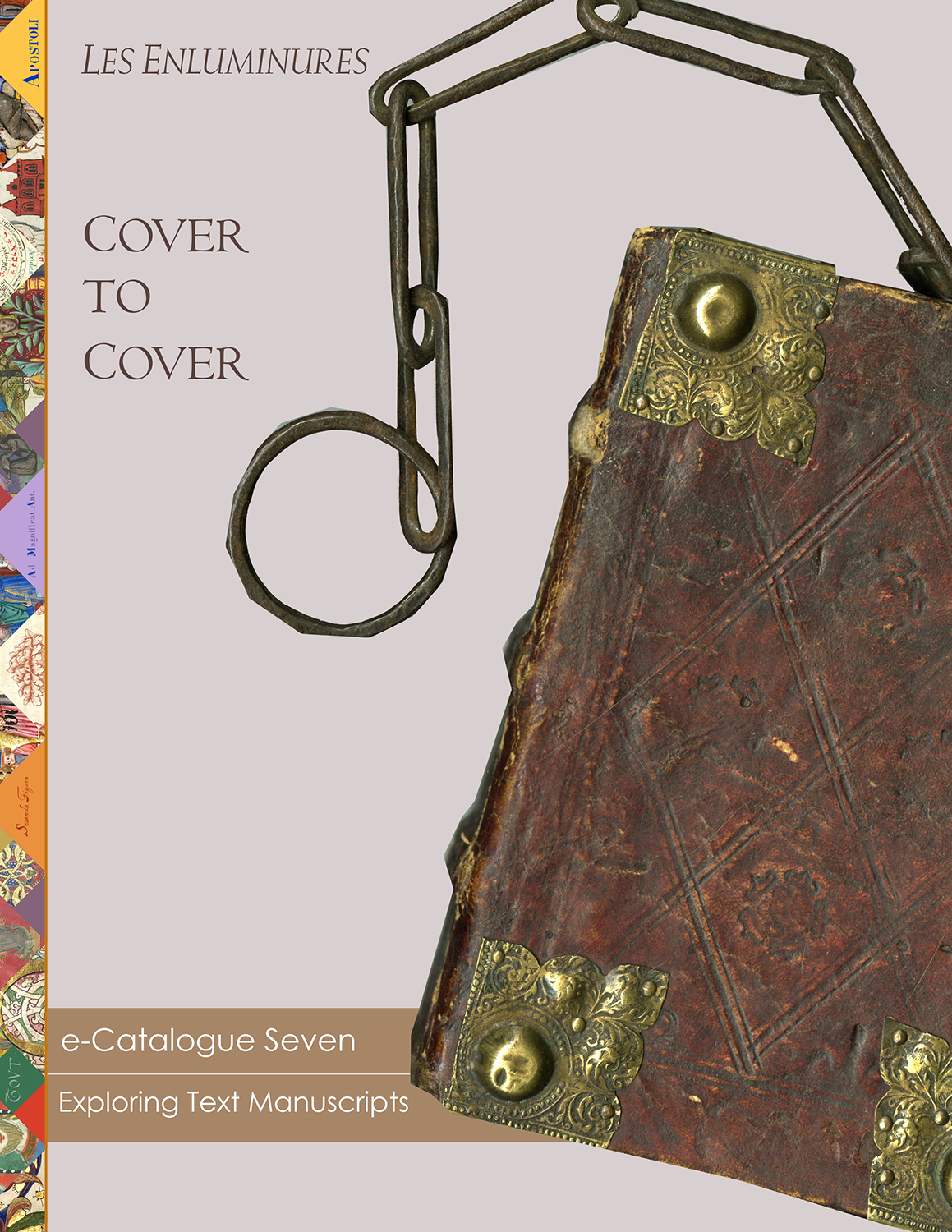
This short catalogue explores bindings as evidence of use and ownership through ten manuscripts, all in early bindings (seven in their original, or closely contemporary bindings). <br />

Six books and manuscripts; all are less than $20,000, and three are less than $10,000.
Ten books and manuscripts with figurative decoration.

Text by Matthew J. Westerby The Satellite Series enables us to explore topics at the edges of our core inventory, looking ath the big picture and connections across media. It is fitting that the first "satellite" is focused on neo-Gothic books woven with silk. Matthew J. Westerby excellent essay presents new findings on five books programmed with punch cards and produced with Jacquard looms in Lyon for submission to the 1889 World's Fair.
Manuscripts are, by definition, made by hand, and one of the thrills of studying them is connecting with the many people who made them, from the parchment or paper maker, to the scribe, the illuminator, and binder, and the many people who owned and read them down through the centuries. At times, though, these people can seem abstract and are often unnamed. It is thus exciting when the personal comes into focus and we meet the “I” in a manuscript, as it does in the case of each of the ten manuscripts in this varied list. Here we have scribes and original owners known by name, owner-produced books (or as we have called them, “selfie-books”), and biographies that by definition focus on the personal. For the collector and in the classroom, these manuscripts bring the Middle Ages and Renaissance alive.
In April 2019 we reached TM 1000 on our website www.textmanuscripts.com. The present publication was created to celebrate both this remarkable milestone and the success of our newest program, Manuscripts in the Curriculum. Sixteen manuscripts from our past inventory and sixteen manuscripts from our current inventory (on an insert of separate cards) together illustrate sixteen major categories of manuscripts for teaching.