

The latest catalogs of rare books and print ephemera from ABAA members...
Browse the latest catalogs, newsletters, and e-lists of rare books, fine bindings, incunabula, print ephemera, and much more from the members of the ABAA below. (Also includes podcasts, blog posts, and other digital formats.)
New indicates any catalogs brought to our attention since June 1, 2026.
- May Miscellany 2026 New
- Radical, Fringe & Extremist Miscellany (April 2026)
Featured item:
McCarthy, Senator Joe. McCarthyism: The Fight for America.
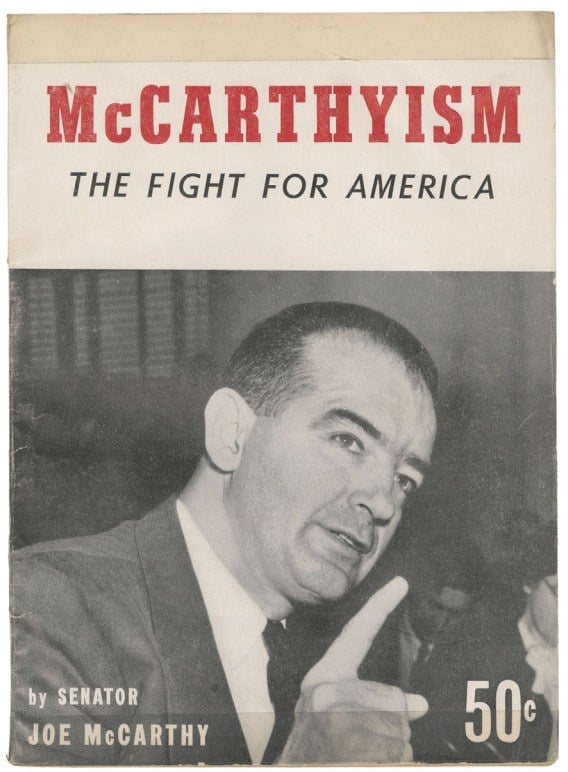
Documented answers to questions asked by friend and foe. New York: The Devin-Adair Company, 1952. First Edition.
A seminal primary document of the Red Scare, this 1952 manifesto serves as Senator Joseph McCarthy’s definitive
self-defense and an aggressive codification of the political movement that bears his name. Written at the height of his
influence—and shortly before his eventual censure—the work is structured as a series of “documented” answers to critics,
designed to provide a veneer of scholarly evidence for his allegations of Communist infiltration within the U.S. State
Department. The text famously defines the movement as “Americanism with its sleeves rolled up,” justifying “guilt by
association” and investigative aggression as essential tools for national survival. McCarthy’s record contains exhaustive
attacks on high-profile figures including George C. Marshall, Dean Acheson, and Owen Lattimore, alongside a combative
rebuttal of the Tydings Committee findings. The format utilizes quoted testimony, snippets of government reports, and
“case files,” offering a masterclass in the mid-century use of documentary-style propaganda to shape public perception.
An essential title for collections focusing on Cold War rhetoric, anti-Communist ephemera, or the history of American
populism.
Large trade paperback format (11 ¼” x 8”), viii, 101, [3] pp. Tape support has been added to the top and bottom covers,
else a very good copy of an elusive title
Offered by D. Anthem, Bookseller and found in "May Miscellany."
ANTIPODEAN BOOKS, MAPS, PRINTS
- E-list #44 ~ W.W.I., Americana, Australia, Photographs, Maps, Ephemera
- E-list #43 ~ Antipodean Books at the Brooklyn Virtual Book Fair
- American Maps & Views, February 2026
- Recent Acquisitions & Highlights in Americana, January 2026
W. C. BAKER RARE BOOKS & EPHEMERA
Featured item:
(DE PALMA, Brian, Sissy Spacek, John Travolta, Piper Laurie, Stephen King)
[Movie Poster]: Carrie

[Beverly Hills]: United Artists Corporation, 1976.
Unbound. Promotional movie poster. Measuring 27" x 41". Old folds, light general wear, several sets of staple holes, a small tear on the right image, very good. Published to promote Brian De Palma's 1976 film *Carrie* starring Sissy Spacek, John Travolta, and Piper Laurie. The film was adapted from Stephen King's 1974 novel of the same name.
Offered by Between the Covers Rare Books and found in "eList 285: Miscellany."
Featured item:
Connell, Richard
Variety
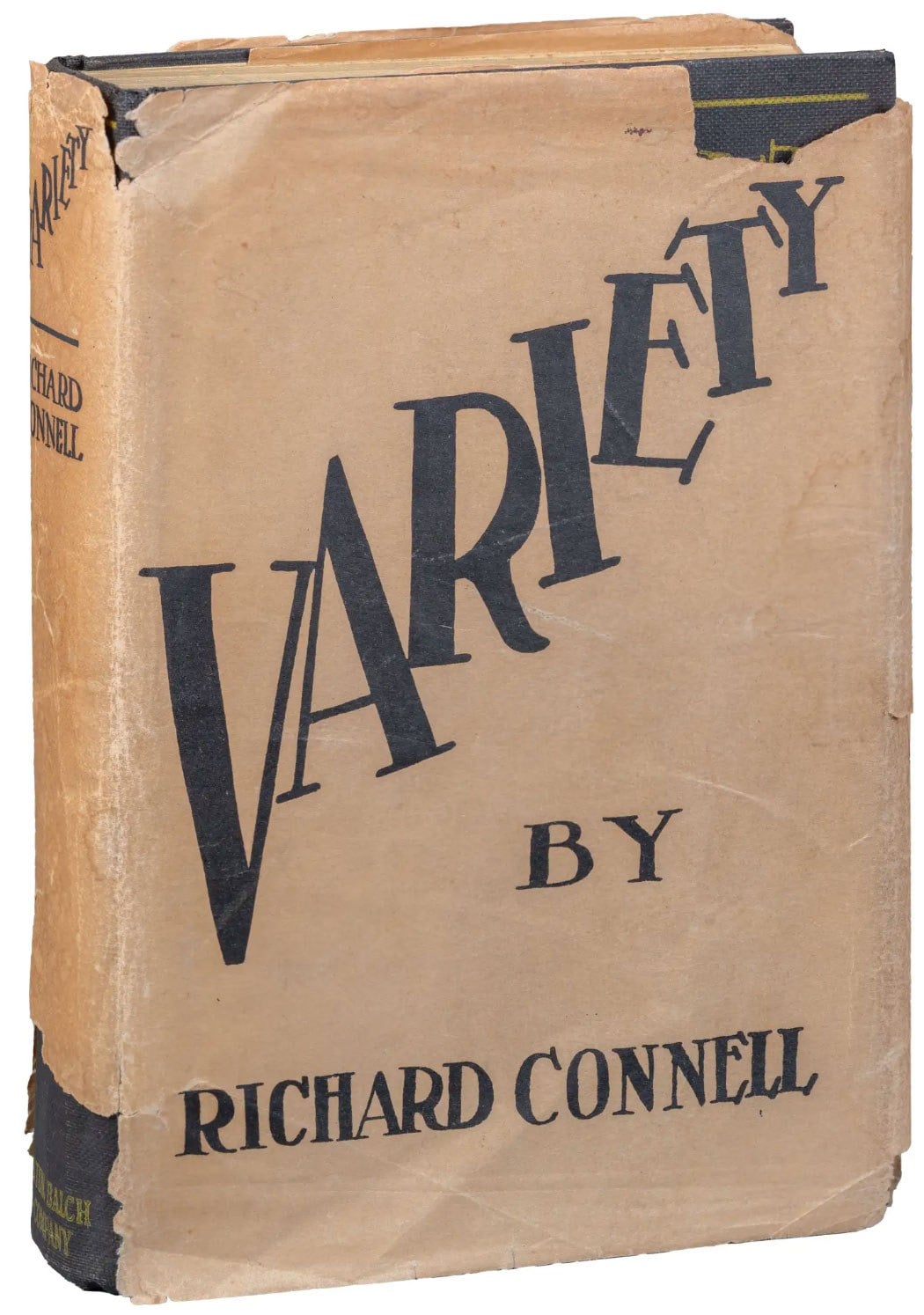
New York: Minton Balch & Co., 1939. First Edition. 8vo, pp. 322. Preceding the London edition of the same year. Inscribed by Connell on the front blank. Original black cloth (also seen in tan, with no priority), light rubbing, spine creases and a light stain to the gutter of the page block, very good, in a good dust jacket, with chips and an old tape repair to the spine fold. A scarce book in dust jacket. Item #1340
A collection of 13 short stories called Variety because the 13 stories are of 13 different types (business, sex, comic, sentiment, war, etc.) The most famous of which is “The Most Dangerous Game” is labeled a "mystery" though that isn’t quite accurate. The Most Dangerous Game became one of cinema's most adapted stories. The first film appeared in 1932, produced by RKO and directed by Merian C. Cooper and Ernest B. Schoedsack, who filmed it simultaneously with "King Kong" using the same elaborate jungle sets—a strategy that maximized RKO's investment in expensive tropical construction. Joel McCrea starred as the hunted man and Leslie Banks as the aristocratic General Zaroff. The rain forest sets (soon to become iconic in "King Kong") and intense chase sequences established the template for countless adaptations that followed: a 1943 version called "A Game of Death," the 1956 "Run for the Sun" starring Richard Widmark, and a 2022 film, among others. The premise—a wealthy hunter bored with animals who turns to hunting humans on his private island—has influenced everything from "Predator" to "Battle Royale" to "The Hunger Games."
Offered by Biblioctopus and found in "E-list: late Spring 2026: Don't Leave Town Yet."
Featured item:
THE COLOUR OF MAGIC
Terry Pratchett

New York: St. Martin’s Press, 1983.
Hard Cover. First U.S. Edition. Octavo; in the publisher’s green cloth binding, with dust jacket which has not been price-clipped; there is a remainder mark on the top edge of the textblock; there are marks from since-removed scotch tape on the boards.~~An ex-library copy with a pocket attached to the front endpaper; the pocket is stamped “Officially Withdrawn from the Hennpin Co. Library”; there are no other marks on the pocket; despite this being an ex-library copy the pocket is fresh and unused.~~Quite presentable for an ex-library copy, on one of Terry Pratchett’s early books.
Very Good binding / Very Good dust jacket.
Offered by Black Swan Books and found in "2026-18 The Hotch Potch."
Featured item:
Hanley, James (1901–1985)
Ebb and Flood [Author's Personal Copy from the Raeburn Archive]
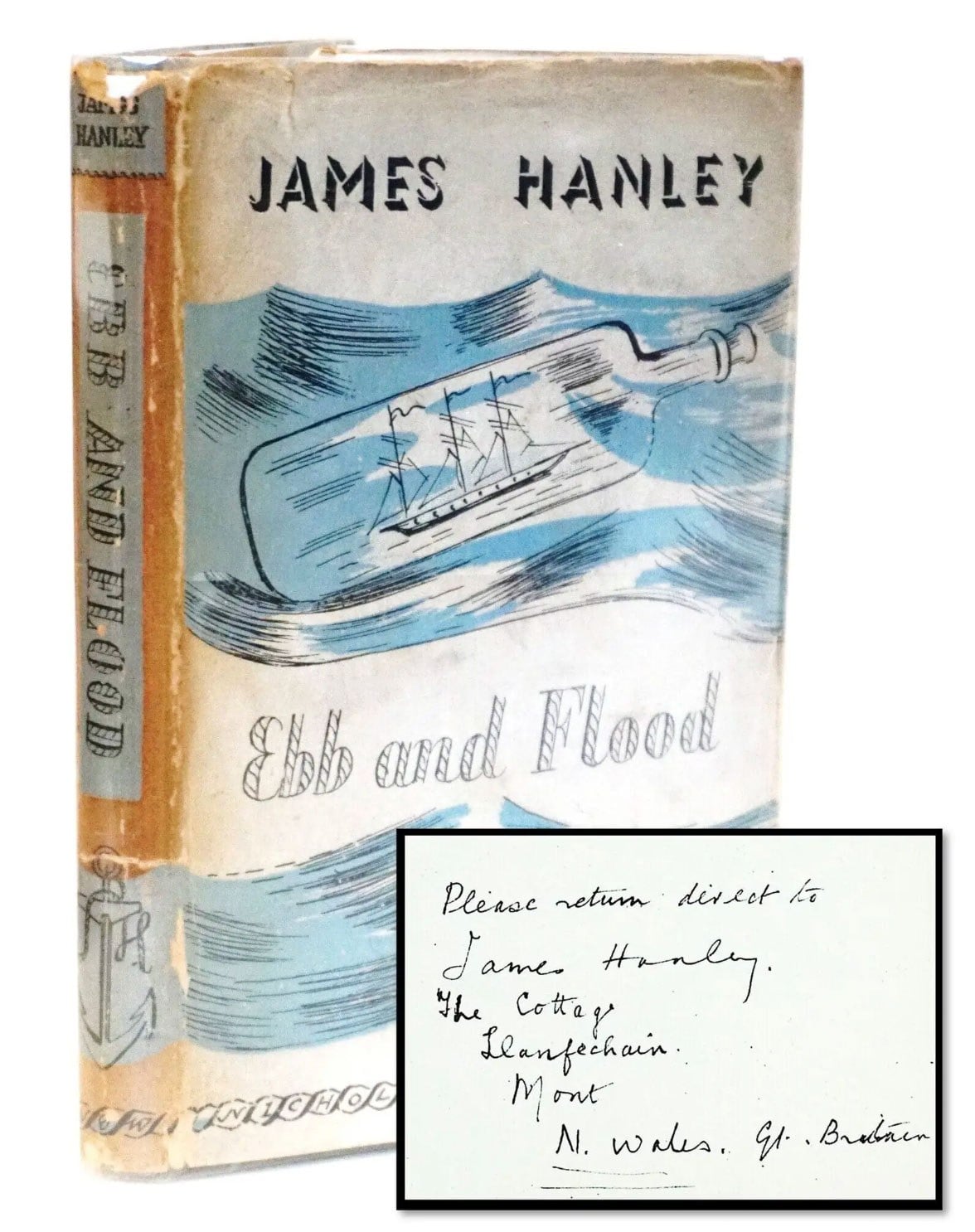
London: Nicholson & Watson, 1944.
A survivor from the author’s own shelf, documenting his personal address in Wales and subsequently preserved within the archive of his friend and publisher, Ben Raeburn of Horizon Press.
This volume features Hanley’s handwritten ownership and return instructions on the front flyleaf. This brutally realistic narrative, centered on the struggles of docker boys in Liverpool and a complex mother-son relationship, remains a definitive example of Hanley’s uncompromising working-class prose.
Good. The bindings are tight and square, holding the text block firmly. The green cloth shows handling wear and the spine is sun-faded, with some light rubbing to the extremities. The internal pages are clean and free of markings beyond the author’s ownership note, showing only light, even age-toning consistent with wartime paper stock. The dust jacket is age-toned with minor loss on the spine tips. Price is intact.
James Hanley was a monumental figure in the literature of the sea and the working man, often compared to Faulkner and Conrad for his psychological depth. Ebb and Flood is a primary example of his ability to weave the physical grime of the Liverpool docks with the internal silence of his characters—most notably the deaf-and-dumb mother of the protagonist.
This copy is of particular bibliographical interest. Linnea Gibbs noted in her 1980 bibliography that 'James Hanley, himself, is not a collector of his work.' The discovery of a personal copy, clearly marked for return to his home at 'The Cottage' in Llanfechain, suggests this was a working volume or a personal reference copy he deemed necessary to protect.
The presence of the Max Pfeffer Agency stamp and its descent through the Raeburn estate highlights the professional machinery that kept Hanley's voice alive in America. Raeburn was more than a publisher to Hanley; he was a steward of his legacy, making the survival of this personal copy in Raeburn's archive a significant moment for Hanley scholarship.
Offered by Blind Horse Books and found in "Irish Realism: The Raeburn-Hanley Archive."
BLUEMANGO BOOKS AND MANUSCRIPTS
- “The Extraordinary Lives of Everyday People!” With a focus on Pennsylvania
- December 2025: New Arrivals in Americana
Featured item:
Mary Rex’s 1818 Manuscript Tune Book
Early American Hand-Copied Music of Patriotic, Hymnal, and Social Melodies.
Great-Granddaughter of Alexander Schaeffer, founder of Schaefferstown, Pennsylvania.
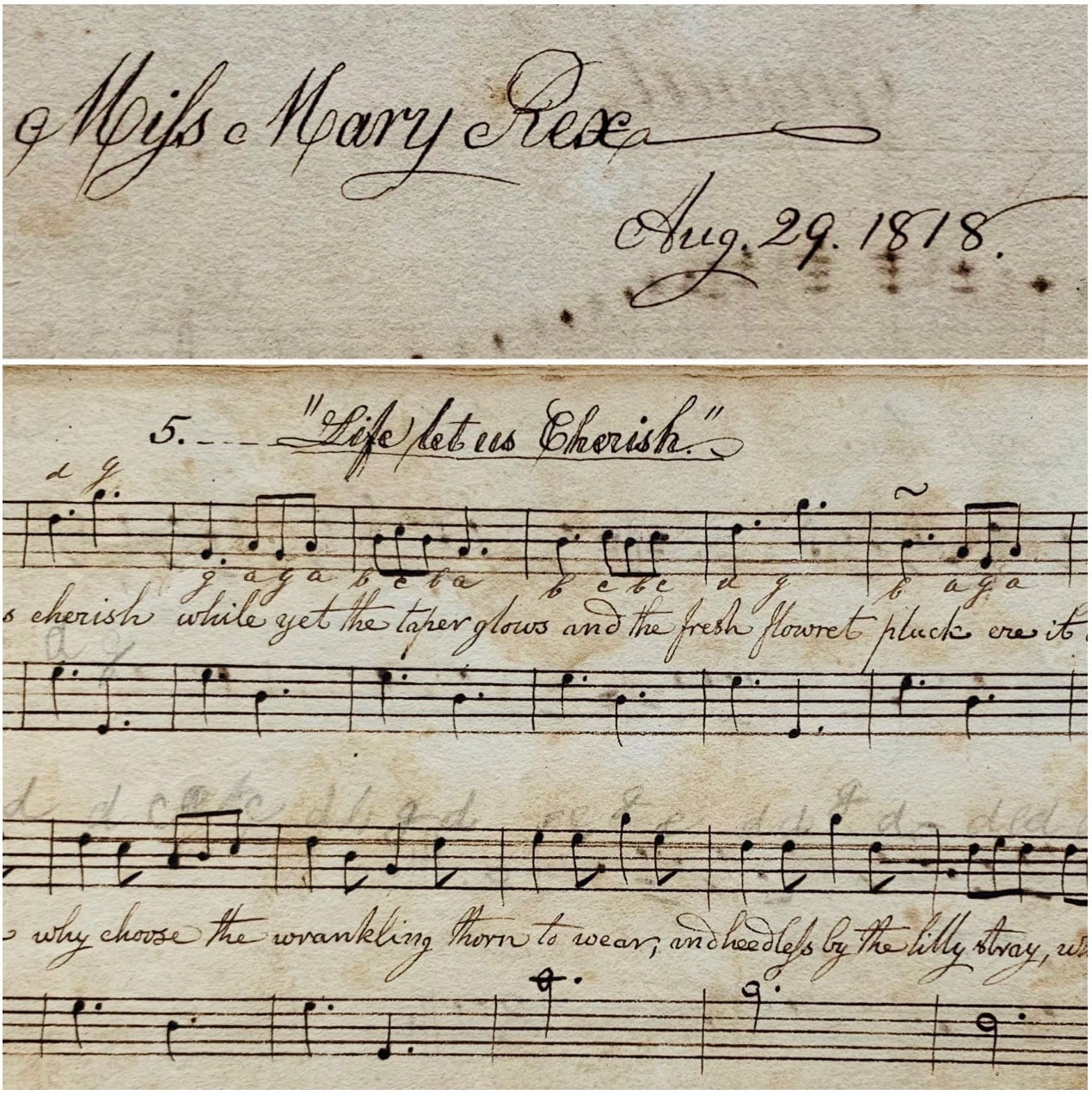
A charming early American manuscript compiled by Mary Rex (1804–1880), dated August 29, 1818. Born in Schaefferstown, Pennsylvania, she was a daughter of Abraham Rex (1778–1863) and Elizabeth Schaeffer (1776–1864).
The book preserves a hand-copied selection of patriotic airs, hymns, popular dance tunes, and contemporary melodies, reflecting the music education and social life of girls in the post-Revolutionary era in Pennsylvania. Later ownership passed to her daughter, Mary A. E. Zimmerman, on January 31, 1843. Mary’s manuscript contains 41 pages of music, including American and European-inspired pieces such as Gamut, Reel: Love in a Cottage, The Happy Soldier, The Freemason’s March, Life, Let Us Cherish, Drink to Me Only with Thine Eyes, The Rose Tree, Washington’s March,
Washer Woman, Yankee Doodle, Morning Star (with a closed tear), Bristol March, French Waltz, Sophia Waltz, LaBelle Waltz, The Indian Chief’s March, Copenhagen Waltz, General Gates March, Cotillions, March: Hail Columbia, Setting on a Rail, Jefferson’s March, and various country dances. A few tunes in German, reflecting her family heritage. Some include lyrics, though most are notation only.
Mary Rex married Peter Zimmerman (1802–1887) on March 11, 1827; the couple had six children. Mary’s maternal grandfather, Capt. Johann Heinrich “Henry” Schaeffer (1749–1803), was a Revolutionary War militia organizer, Justice of the Peace, distillery operator, and German Reformed church leader in Schaefferstown. He and many other members of the family are buried at the Schaefferstown Cemetery. Her great-grandfather, Alexander Schaeffer (1712-1786) immigrated from Germany in 1738 and by the time of his death, he had laid out the town he named Heidelberg (now Schaefferstown, and built The King George Hotel (the present day Franklin House). He was married to Anna Engel (1708-1772). Mary’s father Abraham Rex (1778–1863) born in Germantown, was a son of merchant Abraham Rex Sr (1735–1793) and Anna Bastian (1739-1824) who married in 1759, and was a private in the Revolutionary War, including service with the Philadelphia County Militia 8th Class. He worked as a hatter, managed
the Franklin House, and later entered the mercantile trade. Anna was born in Germantown a daughter of Christopher Bastian (1700-1755) and Anne Elizabeth Ulrich (1700-1752). Abraham and Anna are buried at Saint Michael’s Evangelical Lutheran Churchyard in Mount Airy. Mary’s paternal great-grandparents were George Rex (1682–1772) and Margaretha Rueger (1689-1762), who are believed to have been married in Germantown. He immigrated between 1710 and 1719, and later was a blacksmith by trade. They are buried in Heidelberg Township. Information on the Rex family was printed and appeared in The Allentown Democrat on June 30, 1915.
Condition and notes: Bound in contemporary marbled boards with leather spine and corner tips; moderately rubbed and showing somewhat heavy external wear. Approximately 10” x 5 ¾”, thin; pages age-toned with scattered foxing, stains, smudging, and a few loose leaves. One small closed tear; overall fragile but sound. 41 pages of music, primarily notation with some lyrics. {Mary’s birth and baptismal certificate is archived at the American Folk Art Museum, confirming provenance.}
A rare and highly desirable example of early American musical practice, reflecting the domestic education and cultural life
of young women in post-Revolutionary Pennsylvania, with significant Pennsylvania provenance.
Offered by Bluemango Books & Manuscripts and found in "The Extraordinary Lives of Everyday People."
Featured item:
Jump over the firewall! / 翻墙! (Fan qiang)

[screenprint poster]. n.p., [201-]. 14x23 inch screenprint, numbered 7/15 and signed in Chinese Li Huoran (almost certainty a pseudonym). Very good. Refers to getting around the internet censorship and surveillance system set up by the Chinese government.
Offered by Bolerium Books and found in "Censorship."
Featured item:
“The Rock Island-Frisco States of America”!
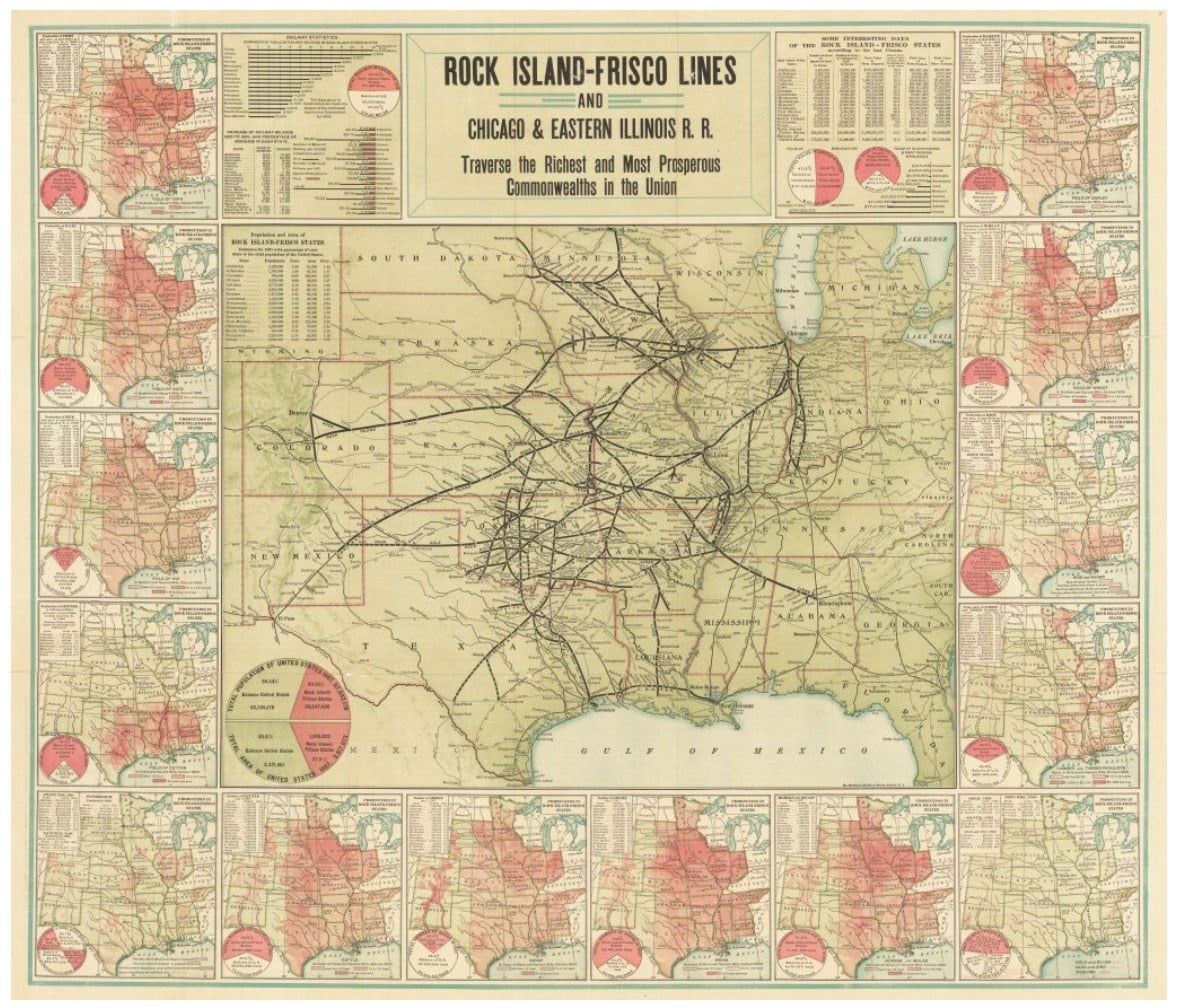
Matthews-Northrup Works, Buffalo, N. Y. (printer), Factors of Prosperity in the Rock Island-Frisco States of America. [and on opposite side:] ROCK ISLAND-FRISCO LINES AND CHICAGO & EASTERN ILLINOIS R. R. Traverse the Richest and Most Prosperous Commonwealths in the Union. Chicago and St. Louis: Passenger Department, [no date, but prob. 1907].
Broadsheet printed in five colors, 24”h x 28”w at sheet edge, folding to 8”h x 4”w. Evenly toned, with moderate soiling to outer panels and light scattered soiling elsewhere. Mends to several fold separations, tiny losses at a few intersections. About very good overall.
A terrific early 20th-century railroad promotional, boldly suggesting that the territory served by the Rock Island–Frisco Lines is a coherent national landscape organized around the system itself—the “Rock Island–Frisco States of America.”
Offered by Boston Rare Maps and found in "Infographics."
Featured item:
The Cole Porter Song Book (Inscribed)
by Cole Porter
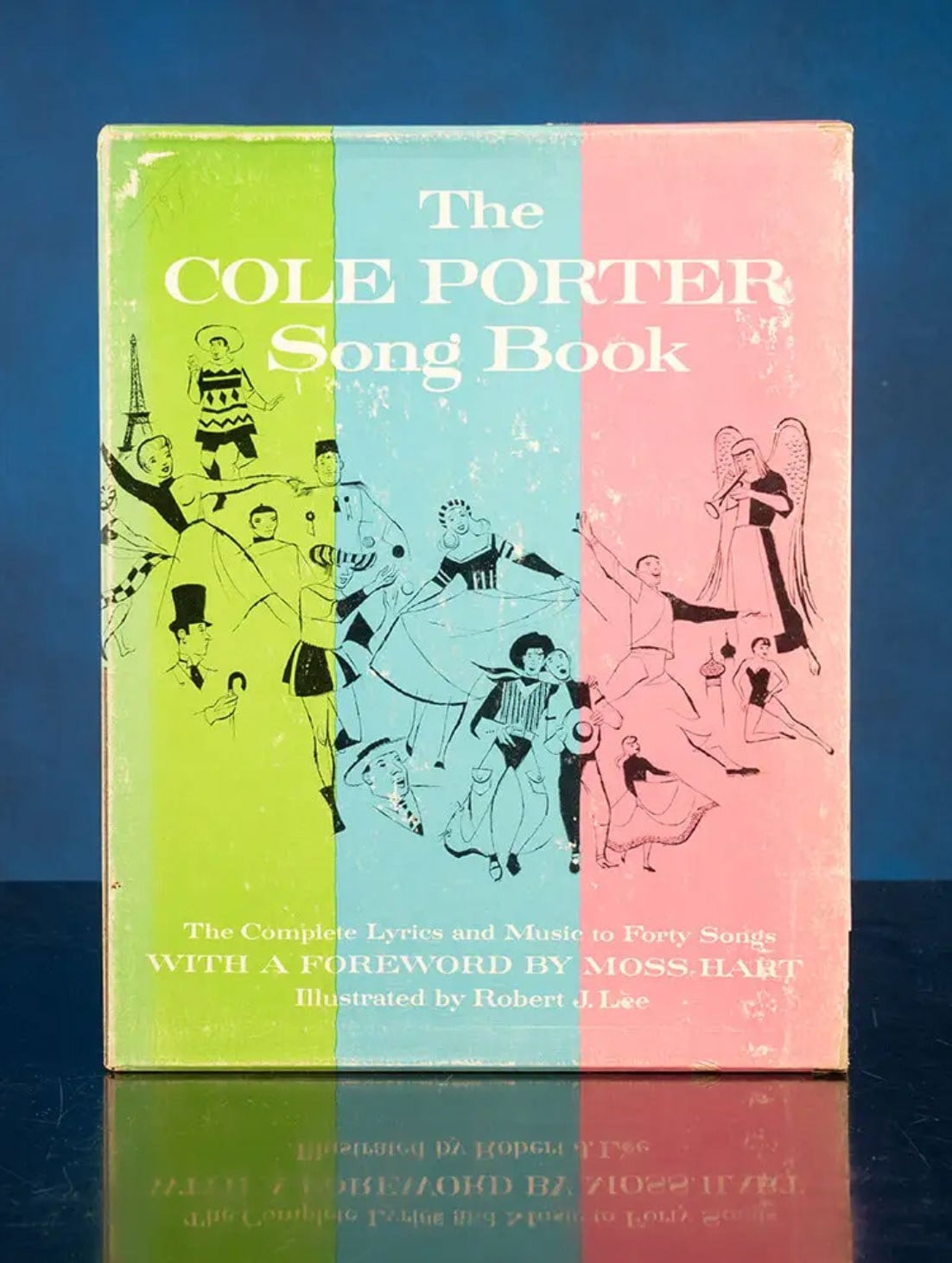
PORTER, Cole. The Cole Porter Song Book. The Complete Words and Music of Forty of Cole Porter’s Best Loved Songs. Foreword by Moss Hart. Illustrations by Robert J. Lee. Arrangements by Dr. Albert Sirmay. New York: Simon and Schuster, 1959.
First edition. Large quarto (12 x 9 inches; 305 x 229 mm.). viii, 215 pp. Hidden spiral binding. Color pictorial endpapers.
Publisher’s original light blue linen over boards, decoratively stamped in pink and blue, spine lettered in gilt. A near fine copy, housed in the original color pictorial slipcase, very slightly worn at the extremities. An unusually well-preserved example of this notoriously fragile production.
Presentation & Provenance:
Inscribed by Cole Porter on the verso of the front free endpaper:
“New York / 26th April 1961 / For Leslie / from Cole.”
With Leslie Bricusse’s ownership signature beneath a printed “EX LIBRIS” bookplate - a generic design of a medieval king facing left.
With:
An original copy of Time magazine (January 31, 1949), featuring Cole Porter on the front cover and including the article “The Theater” (pp. 40–44).
A particularly elegant association between two giants of 20th-century popular song. Porter - the supreme stylist of Broadway sophistication - inscribes his definitive collected songbook to Bricusse, who would go on to become one of the most successful lyricists of the postwar era (Stop the World, Willy Wonka, Doctor Dolittle).
The date of inscription - 1961 - places this at a moment when Bricusse was just emerging internationally, lending the presentation a subtle sense of artistic continuity: one master acknowledging another at the threshold.
The Song Book itself is among the most visually distinctive American music publications of the period, designed to lie flat at the piano with its concealed spiral binding and animated mid-century illustrations.
Association copies of Porter’s works are scarce; those linking him directly to another major songwriter are exceptional.
Offered by David Brass Rare Books and found in "New Arrivals."
Featured item:
BRAT’YA KARAMAZOVY [In Russian, Cyrillic]
Dostoevsky, Fyodor
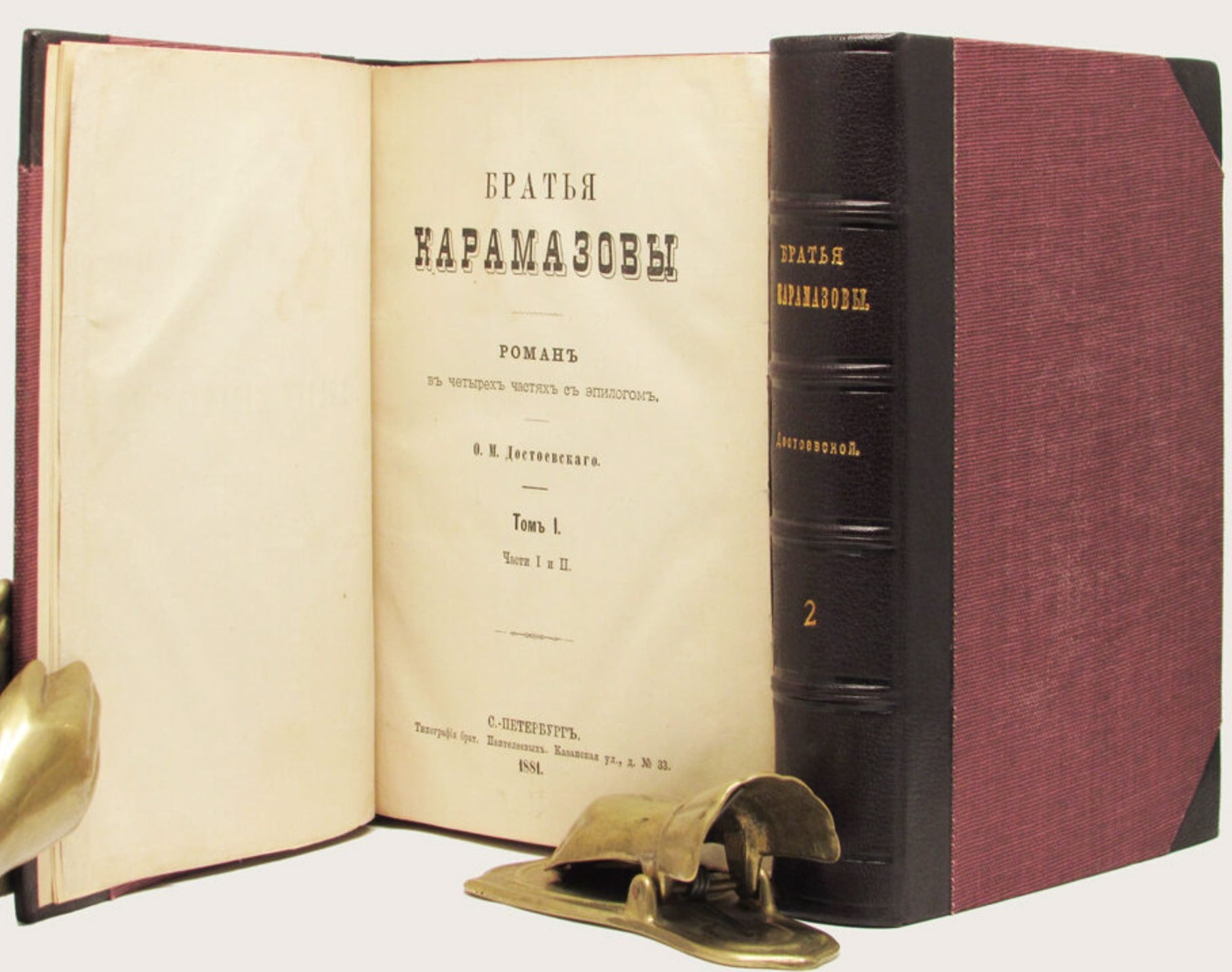
(St. Petersburg: Pateleevyi Brothers, 1881).
VERY RARE, THE TRUE FIRST EDITION OF DOSTOEVSKY’S THE BROTHERS KARAMAZOV, A MASTERPIECE OF RUSSIAN LITERATURE. THE BROTHERS KARAMAZOV was Dostoevsky’s final novel, on which he spent most of the last two years of his life writing. It is more then a classic of Russian Literature, it is a passionate philosophical novel that enters deeply into the ethical debates of God, free will, and morality. One of literatures greatest spiritual dramas, it has been acclaimed all over the world by thinkers as diverse as Sigmund Freud, Albert Einstein, Ludwig Wittgenstein, Martin Heidegger, Cormac McCarthy, Kurt Vonnegut and Pope Benedict XVI as one of the supreme achievements in literature.
2 volumes. RARE FIRST EDITION. Both half-titles present. 8vo, in later half brown morocco over brown boards, the spines with raised bands and gilt lettering in Cyrillic, edges marbled, now housed in a quarter morocco clamshell case. 509; 699 pp. An exceptionally well preserved and proper copy of this very rare edition, Vol. I lacking only the final blank, some very minor and expected spotting or blemishes, two leaves with minor and expert paper repairs, in all a very handsome and proper example of this rare world literary classic.
Offered by Buddenbrooks, Inc. and found in "Fine & Rare Books, Spring 2026."
ANDREW CAHAN, BOOKSELLER, LTD.
Featured item:
William Still

Philadelphia: William Still, Publisher, 1886. Revised Edition. Thick octavo; publisher's brown cloth stamped in black and gilt, beveled edges, brown coated endpapers; [7],8-21, [22],lxiv,[23],24-780,[6]pp. index and advertisement; frontispiece with tissue guard, plates and illustrations, lacking the Charles D. Cleveland plate as usual with this edition. Light wear and scuffing to boards; binding recently and expertly recased; pages unmarked; a Very Good and sound copy.
Revised Edition of "the only first person account of Black activities in the underground railroad written and self-published by an African-American" (Turner). William Still (1821-1902) was an agent in the Underground Railroad from the late 1840s; an active businessman as well, he financed several of Harriet Tubman's expeditions to the South to liberate "enslaved Africans," and after a forty-year search, found his brother Peter and helped him escape to freedom.
This edition is notable for the addition of James P. Boyd's biographical sketch of Still, not included in the original. Includes myriad stories, meticulously recorded, clearly revealing how the enslaved population was an active participant in the struggle for freedom. An important American work, called "a classic unrivalled by any previous firsthand account of the Underground Railroad" by Blockson.
Offered by Capitol Hill Books and found in "E-List 82."
- From the library of John Henry Nash -- list available on request from [email protected]...
- New Arrivals
BRIAN CASSIDY, BOOKSELLER AT TYPE PUNCH MATRIX
- Lovely, Dark and Deep, featuring 71 items signed or inscribed by Robert Frost
Featured item:
Gemini: Agena Spacecraft Aspect Indicator Instrument with Custom Carrying Case.

Gemini: Agena Spacecraft Aspect Indicator Instrument with Custom Carrying Case. This 6" diameter clear sphere containing an Agena spacecraft model has calibrated two-axis movement as well as movement along a semi-circular mounting frame and a tilt movement at the center of the base stand. The overall height is 18" and the base diameter is 8" and it bears a plaque reading: "Satellite Aspect Indicator/ Designed By T.S. Reynolds/ Aerospace Corp [with logo]".
NASA used the Agena as a docking target and high altitude propulsion system during the Gemini program. This instrument was designed as a visual aid relating to problems concerning aspect angles of maneuvering space vehicles. It provided NASA planners a means of measurement and interpretation from a given vehicle orientation. Included is a custom case and a photocopy of a scientific paper mentioning and picturing this device. A highly-detailed scientific instrument. Exceedingly rare and an incredible piece for display. Fine.
Provenance: Heritage Auctions, 11.3.2018., Space Exploration. where, including buyer's premium, this exact item brought $6,125. We have recently acquired a collection which includes Aviation and Space Exploration items. We will be adding items nearly every day.
Offered by Colophon Book Shop and found in "List 346."
- Bibliography Week Showcase 2026
- Fresh Finds (June 2025)
Featured item:
Signed Photo Portrait of Amelia Earhart
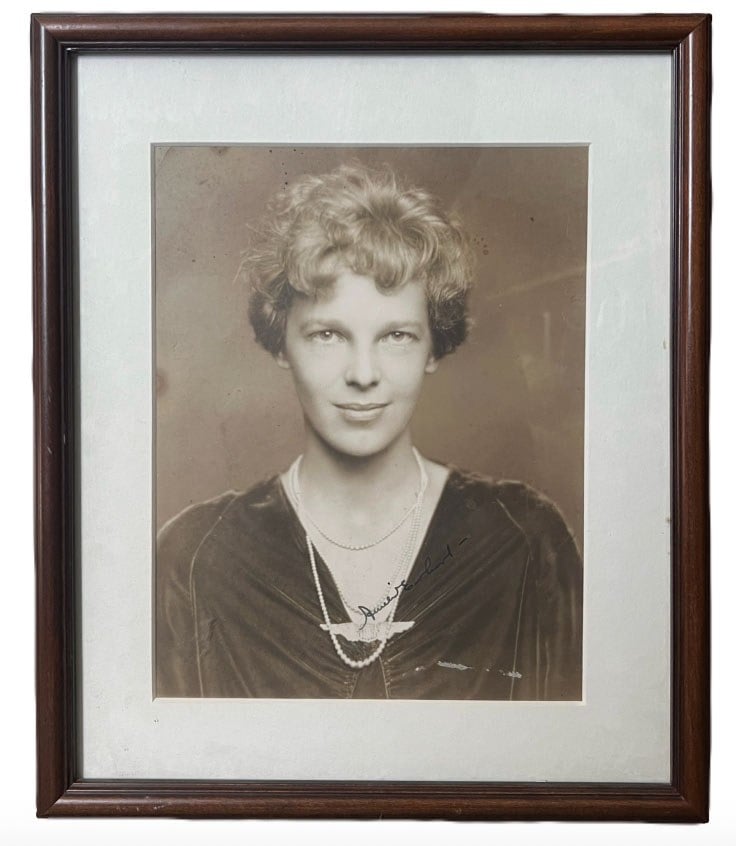
Black and white photograph of Amelia Earhart, framed and matted, sight size 9” x 7”, signed by Earhart in pen.
The original owner of the photograph was active in the Chatauqua lectures, and his granddaughter stated that he received it through that connection. Earhart landed on the fairway of the Chatauqua Golf Club in 1929 to give a speech. This portrait was used at the frontispiece of her 1932 book The Fun of It. Although she often used a rounded “A” in Amelia, the pointy “A” is consistent with a 1933 signed letter sold at Christie’s in 2026 for $10,795, and a 1932 signed photo sold at University Archives in 2022 for $3,000. Signature examined through a loupe, photo not examined outside of frame. Near fine condition with a few speckles to the background.
Amelia Earhart was perhaps the most famous aviation pioneer outside of the Wright Brothers. She first flew in 1920 and later remarked “As soon as I left the ground, I knew I myself had to fly.” She took flying lessons from another woman, Anita "Neta" Snook (the first woman to run an aviation business), and by 1922 she set the record for highest altitude by a female pilot. For the next fifteen years, she was either the first, or the first woman to set a host of records.
She also took time to promote aviation in general and for women in particular. She helped organize the 1929 All-Women’s Air Derby, which was the first air race across the country for women (Earhart came in third place.) She was an advocate for women in business, birth control, and the draft for women, to name a few. In 1937, on her second attempt to fly around the world, Earhart and her navigator disappeared.
Offered by Crooked House and found in "Rebels With Causes."
Featured item:
Portfolio of 40 lithographs of Civil War Union officers.
Ehrgott, Forbriger, & Company.

Cincinnati: Ehrgott, Forbriger, & Company, 1861-1862.
40 lithographed plates (2 hand colored). Folio. Contemporary half dark brown morocco and cloth covered boards, worn. Some foxing, a few plates with edge tears. Neely & Holzer, The Union Image, pp.39-49. Milton Kaplan, “Heads of States” in Winterthur Portfolio, Vol. 6 (1970), pp.135-50; Chris Lane, “The Case of the Hydra-Headed Stones” in Art as Image: Prints and Promotion in Cincinnati, Ohio (Ohio University Press, 2001).
The patriotism inspired by the Civil War, particularly in the urban centers of the north, engendered a dramatic growth in the production of various media, such as sheet music, prints, photographs, and other ephemera, marketed to individuals by enterprising printers, stationers, photographers, print sellers, and the like. Among these was the sale of portraits of famous Union politicians and soldiers. Most of these popular prints were sold by publishers, picture dealers, or itinerant street sellers as individual items, although at least one enterprising seller during the Civil War offered prints bound in albums. Although seldom encountered, the best known of these albums comprise Union portraits by the Cincinnati lithographic firm Ehrgott, Forbriger & Co., like this one.
Founded in 1856, the firm issued seventy-nine different prints of sixty-nine Union politicians and military officers between 1861 and 1864. The present collection represents nearly half of Ehrgott, Forbriger & Company’s entire series of Union portraiture and includes Lincoln, two cabinet members (Chase and Stanton), three governors (David Todd of Ohio, O.P. Morton of Indiana, and Andrew Johnson of Tennessee), twenty-three generals, six naval officers, Col. Elmer Ellsworth (the first high-ranking Union officer to die in the war) and more.
Offered by James Cummins Booksellers and found in "New Acquisitions, May 2026."
- E-list: Photographic Archives, Latin-Americana, African-Americana, Lincoln Conspirators, American Indian History, and More -- Joint catalog with Auger Down Books
DE SIMONE COMPANY, BOOKSELLERS
- List 66: Gastronomy: Italian Books & Broadsides
- List 65: Italian & French Books & manuscripts (California Book Fair)
- New Arrivals (June 8, 2026) New
- New Arrivals (May 18, 2026)
- New York Book Fair 2026
- e-111 Miscellany: Juvenile Delinquents, Hygeiaforms, Mrs. Brown Goes to War, Carol Lane goes Camping, & Of Course...
EDITIO ALTERA RARE BOOKS & MANUSCRIPTS
- Comic collection of William "Gatz" Hjortsberg -- Details available upon request from [email protected]...
- Highlights from the ABAA Virtual Book Fair
Featured item:
Maas, Sarah J.
A Court of Thorns and Roses
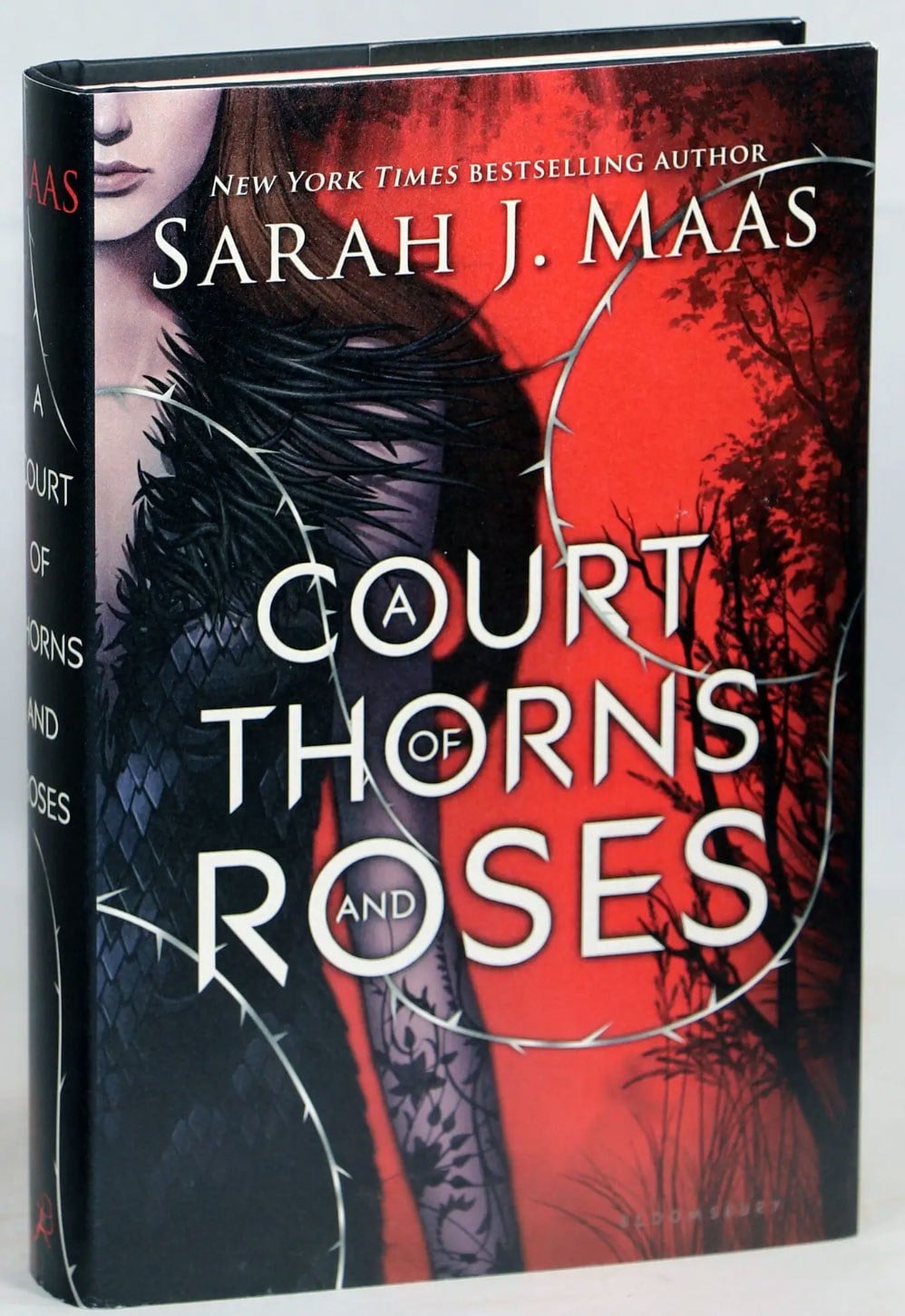
New York: Bloomsbury (2015), 2015. First American edition. Hardcover. 8vo. [11], 2-419, [3] pp. Black paper over boards with silver lettering and a silver decoration on the spine. Red endpapers and pastedowns. Price of $18.99 on the front flap of the dust jacket. Jacket design by Katie Everson. Two full-page maps and a few in-text illustrations, all in black and white. The first printing of the first American edition.
Signed by the author on the title page. The first book from Maas' second series, one of her most beloved works. A beautiful copy. Fine / very near Fine.
Offered by Evening Star Books and found in "May 2026."
RODGER FRIEDMAN RARE BOOK STUDIO
- [Mexican Avant-garde] Vicente Rojo & Imprenta Madero
- Catalog #4 - Insurrection, Reform, & Counterrevolution in Cold War Latin America
GEOGRAPHICUS RARE ANTIQUE MAPS
- Boston Book Fair 2025
- CartoCuriousity (Podcast) Latest episode: "Tolkien's Middle Earth" ( Apple / Website )
- OCCASIONAL LIST 22: A Miscellany: Original Art Work; Small Archive of Major English Watercolourist; Interesting Theatrical Pieces; Manuscript Material, Etc., Etc. -- available on request from [email protected]...
Join the ABAA-Public Google Group, a listserv where ABAA members announce select books for sale, share information on their participation in upcoming book fairs, and showcase their recent catalogs!
The ABAA-Public Google Group is a read-only email group, so email traffic is kept to a minimum and only ABAA members can announce books for sale — ensuring all items are in full compliance with our Code of Ethics.
.jpg)
Subscribers to the group can opt to receive emails individually, or have each day’s emails combined into a daily digest to limit the number of emails they receive.
THOMAS A. GOLDWASSER RARE BOOKS
- Mormon List 89 (February 2026)
- Hofmannia: Forty Years After the Bombings
DAVID A. HAMILTON AMERICANA BOOKS
JONATHAN A. HILL, BOOKSELLER, INC.
Featured item:
Raskin, Ellen
The Westing Game
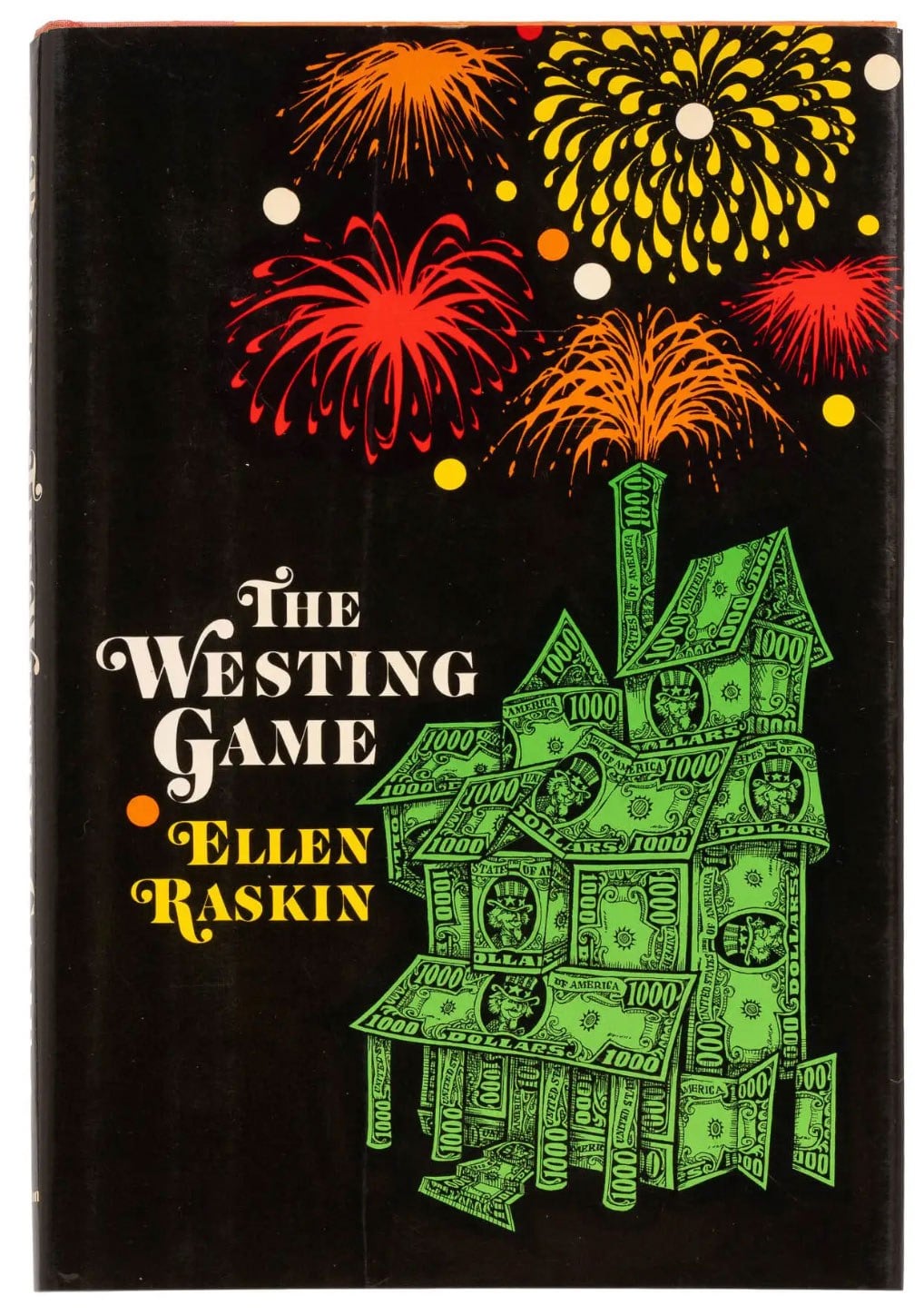
New York: E.P. Dutton, (1978). Single volume, measuring 9 x 6 inches: [6], 185, [1]. Original red cloth spine lettered in black, orange paper boards, red endpapers, original unclipped color pictorial dust jacket, with no Newbery medal affixed. Pinpoint spotting to edges of text block.
First edition of Ellen Raskin’s dizzying comic mystery, winner of the Newbery Medal for 1979. Samuel Westing, a reclusive millionaire, leaves an unconventional will, drawing an apparently random group of neighbors into a search for his own killer. “Who were these people, these specially selected tenants? They were mothers and fathers and children. A dressmaker, a secretary, an inventor, a doctor, a judge. And, oh yes, one was a bookie, one was a burglar, one was a bomber, and one was a mistake.” In 2025, forty years after Raskin’s death, her estate revealed the existence of an unfinished sequel to The Westing Game, which is expected to appear in time for the novel’s fiftieth anniversary in 2028. A very nearly fine copy, in the iconic dust jacket designed by Raskin herself.
Offered by Honey & Wax Booksellers and found in "Children's Classics."
JOSLIN HALL RARE BOOKS, EPHEMERA & PHOTOGRAPHY
- Catalogue 430: French Manuscripts
- Catalogue 429: American Cemetery Manuscript Design & Account Ledgers
- ABAA Virtual Book Fair: Autumn Edition
- Short List 35: 19th century Eastern American Newspapers 1803 -1892 from Maine to South Carolina
- Short List (June 2, 2026) New
- Short List (May 19, 2026)
Featured item:
Bell Ringers of Breslau look forward to the New Year. Unrecorded broadside.

[Bell Ringers] / [New Year]. St. Elisabet. Unvergeßlich bleibt dies Jahr 1807, was mit Seufzen ist verschwunden, Wegen Angst, Gefahr und Noth, die wir in ihm tief empfunden… S.l. [Breslau]: s.n., s.a. [late 1807]. [32.5 x 19.6 cm], [1] f. woodcut in contemporary hand-color, with letterpress text. Dustiness, wrinkles, stains, and toning, color still fresh.
An unusual, rather large hand-colored woodcut broadside issued by the Bell Ringers of the church of St. Elisabeth to celebrate the New Year 1808. Although not stated explicitly on the print, the item would seem to come from Breslau (Wrocław, Poland), where there was a special tradition for the Bell Ringers (‘Glockenläuter’) of the city’s various churches to issue such prints (see Heinrich Wendt, Katalog der druckschriften über die stadt Breslau, vol. 1, p. 244).
Depicted is a bell on which is the image of a Crucifix. Below it are verses referring to the city’s difficulties in 1807 (it was occupied by the Confederation of the Rhine during the Napoleonic Wars).
Offered by Marshall Kibbey Rare Books and found in "Short List (May 19)."
JOHN W. KNOTT, JR., BOOKSELLER
- Centipide Press
- Classic Science Fiction (Mid-February 2026)
GERARD KOSKOVICH QUEER ANTIQUARIAN BOOKS
- Catalog #74: 100 Rare Books -- with an emphasis on history and military affairs. Please request from [email protected]...
MICHAEL LAIRD RARE BOOKS & MANUSCRIPTS
- American Manuscripts, 1766-1959 (June 9, 2026) New
- Images of Law & Government, 1689–1984 (June 2, 2027) New
DAVID M. LESSER, FINE ANTIQUARIAN BOOKS
Featured item:
THE DRAFT RIOTS IN NEW YORK. JULY, 1863. THE METROPOLITAN POLICE: THEIR HONORABLE RECORD.
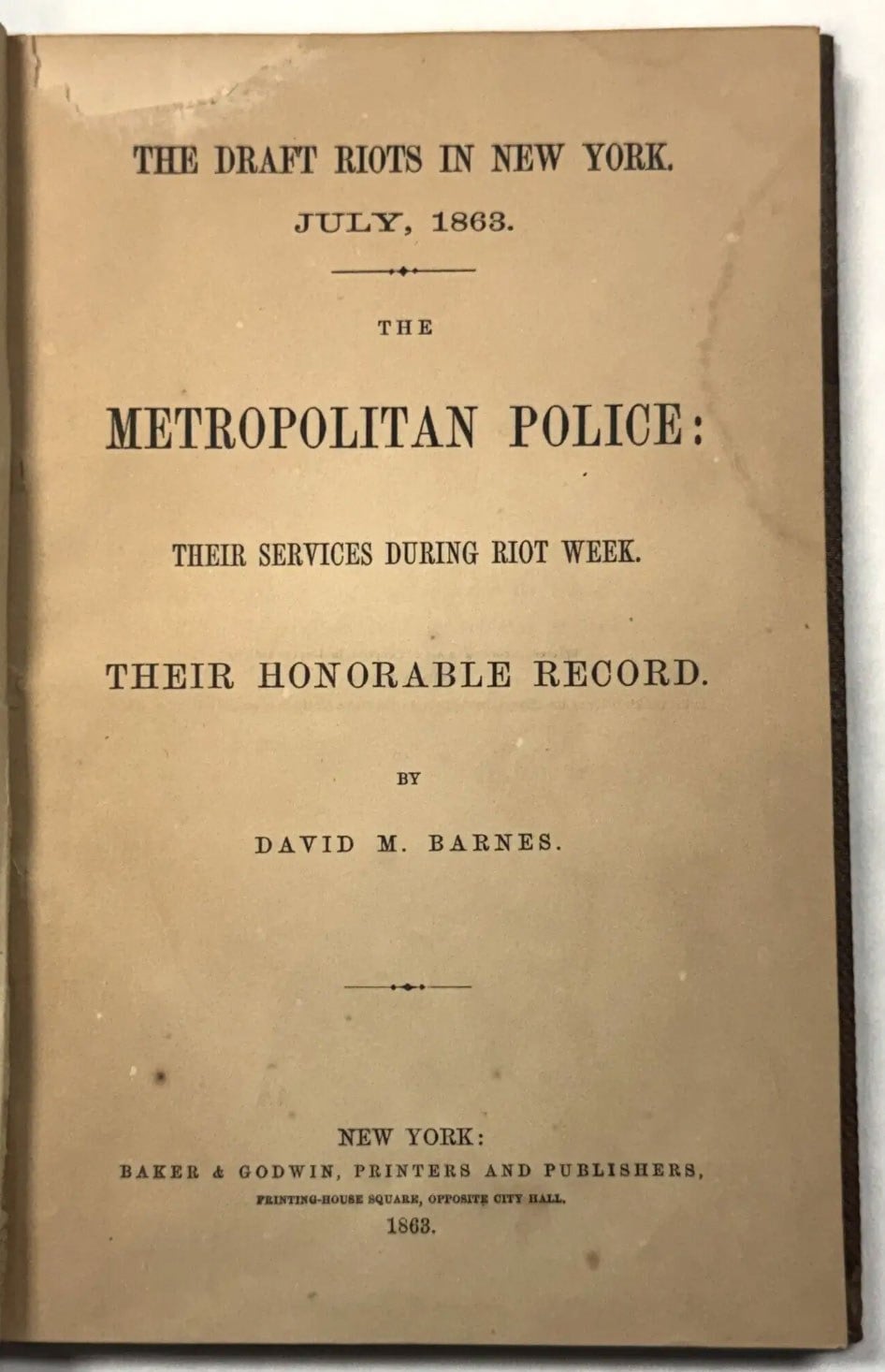
New York: Baker & Godwin, 1863. 117, [blank], [1], [1 blank] pp. In a presentation, gilt-decorated and gilt-lettered brown cloth binding to Hon. Philip S. Crooke [lightly sunned]. All edges gilt. With elegant presentation slip in typescript laid in: "Presented, with their compliments, by the Metropolitan Police of the City of New York." See Wikipedia for a biography of Philip Schuyler Crooke, New York politician [originally a Democrat, during the War a Republican]. Clean text, upper blank margin corner of title page with a chip [no text loss]. Very Good.
This book tells the story of the notorious Draft Riots of 1863, which occurred little more than a week after the Battle of Gettysburg. "One of the first studies to appear on the riots" [Nevins].
The author, David Barnes, dedicates the book to the New York Police Department. His text praises numerous bureaus and individuals of the Department. Stimulated by the Lincoln Administration's new Conscription Law and New York's first draft lottery, the rioters-- mostly working class Irish Americans-- began to attack military facilities. But other targets soon caught their eye. In a city with a long history of riots and other civil disturbances, this one stands out for its brutal assault on New York's black residents.
Barnes says the riots were "ostensibly in opposition to" the Draft, "but early took the character of an outbreak for the purposes of pillage, and also of outrage upon the colored population." The Detective force was "occupied in giving information to the negroes in quarters threatened by the mob, and directing them where to find safety."
A precinct-by-precinct description of the riot is printed. The burning of the Colored Orphan Asylum, and the deaths of "colored victims," are described in detail.
Offered by David M. Lesser, Fine Antiquarian Books and found in "African Americana, New Acquisitions."
LIBER ANTIQUUS, EARLY PRINTED BOOKS & MANUSCRIPTS
J. & J. LUBRANO MUSIC ANTIQUARIANS
- Catalogue 118: New Acquisitions (May 2026)
- Music Miscellany (Spring 2026)
STUART LUTZ HISTORIC DOCUMENTS
Featured item:
PENN, William.
No Cross, No Crown. A Discourse Shewing the Nature and Discipline of the Holy Cross of Christ.
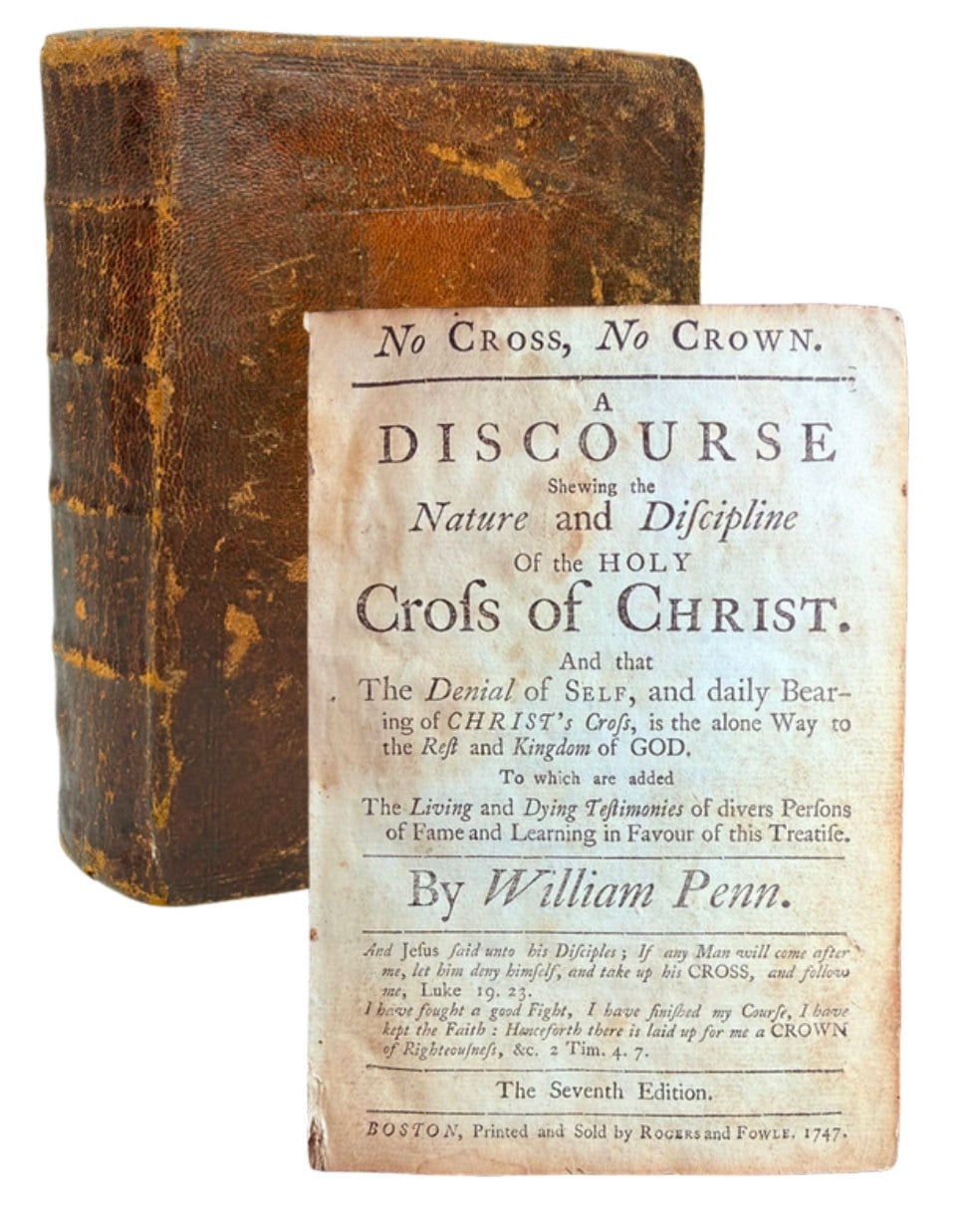
Boston: Rogers and Fowle, 1747. 8vo. [24], 287, [1]; [4], 184, [4]pp. 2 parts in 1, with separate title for the second part. First American edition.
Contemporary panelled calf, tooled in blind, a bit worn, later paper adhered at edges of the pastedowns. Minor foxing and staining. Very good.
“The seventh edition,” per the title page, but the first American printing of this important Quaker tract from William Penn. A popular examination of the Christian character, targeting pride, avarice, and luxury as “three capital lusts,” and encouraging Quakers towards introspection as a way of carrying Christ’s cross. “The 1682 [first] edition is ranked with Fox’s Journal and Robert Barclay’s Apology as the most widely printed and read work in Quaker literature” – Bronner & Fraser.
Offered by George S. MacManus Company and found in "The American Revolution."
MAIN STREET FINE BOOKS & MANUSCRIPTS
- A Melancholy of Miscellany
- Dealer's Choice: Ken's Selections from the Latest Acquisitions (Sept. 9, 2025)
- Second Winter Miscellany
- Miscellany Rare Books (16th to 18th Century) - Winter 2025-26
- New Arrivals New
- Ten New Arrivals (May 19, 2026)
- MEXICAN ILLUSTRATED BOOKS. 50 YEARS OF ILLUSTRATED BOOKS PUBLISHED IN MEXICO -- catalog available to institutional buyers by request from [email protected]
- Illustrated Catalog on Carlos Merida (1891–1984) -- Mexican painter, sculptor, writer and graphic designer -- available by request from [email protected]
Featured item:
First Edition of the First Printed Book Devoted to the Cathedral of St. Stephen in Vienna
CHOLER, Ignatius. Memorabilia de templo, ac turri ad S. Stephanum Viennae Austriae. Fide summa e veteribus documentis eruta laureatis honoribus….
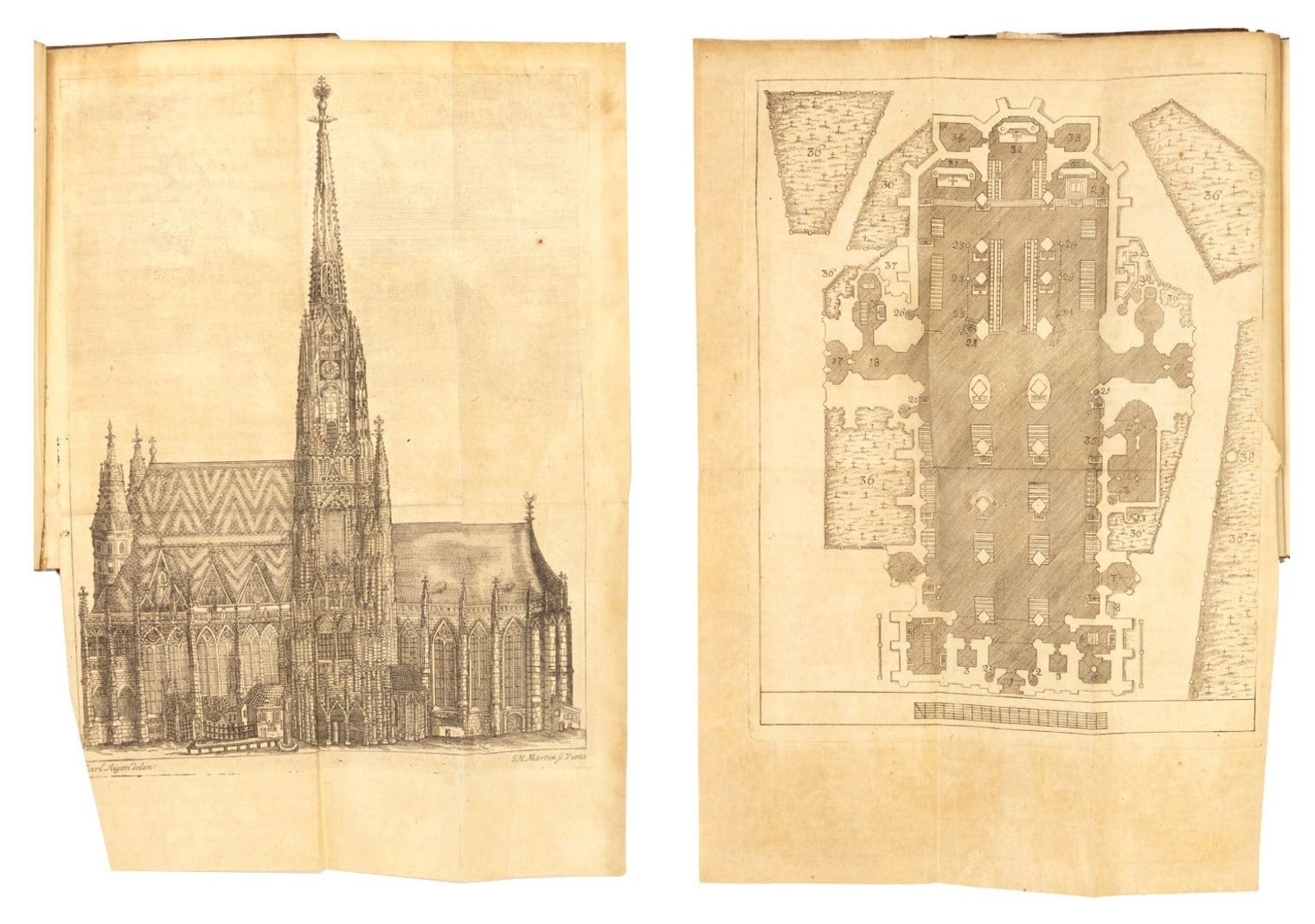
Vienna, Andreas Heyinger, 1721. 8vo (16 x 9 cm). [4] (including title-page), 142, [2] pp., with two folding plates depicting the exterior and architectural plan of St. Stephen’s. Toning to both plates and some leaves. Bound in contemporary sheep, with spine stamped into compartments; corners of covers worn, joints a bit weak, manuscript notes scratched from title-page. Generally good.
First edition of the first printed work devoted to the Cathedral of St. Stephen, the most historically important medieval building in Vienna. St. Stephen’s Cathedral had its origins as a Roman basilica (dedicated in 1147). Repeatedly burnt and rebuilt, it was enlarged in the 14th century by Duke Rudolf IV (1358-65), who also began the tradition of interring Habsburg monarchs in the cathedral’s crypt.
This illustrated work provides a detailed history of the cathedral as well as a minute description of its interior, with transcriptions of the Latin plaques and explanations of their origin. The first plate, an exterior view of the cathedral, is signed by Carl Aigen and engraved by J. H. Märtin. The second, a floor plan, is unsigned; both were reused for the 1722 German edition. One chapter discusses the church tower (137 m), another describes a tower that was planned but not built. Choler also enumerates the sacred treasures housed within the church, devoting a chapter to the silver and gold vessels, and a second to the paintings, altars and organ.
The author, Ignatius Choler (i.e., Ignaz Koller), was a Jesuit professor of theology, polemics, philosophy and mathematics at the University of Vienna, later General Prefect of Studies and confessor to Emperor Charles VI.
A German edition of the work, Außerlesene Denckwürdigkeiten von der sowohl uralten als kunstreichen St. Stephans Dom-Kirchen, was printed by Heyinger in 1722, the same year the Diocese of Vienna was raised to the rank of archdiocese by Pope Innocent XIII at the request of Emperor Charles VI.
OCLC records two U.S. copies, at Harvard and the University of Chicago.
Offered by Martayan Lan, Inc. and found in "The Jesuits."
BRUCE MCKITTRICK RARE BOOKS, INC.
Featured item:
[San Quentin Six]. [Norling, Jane - artist]. Free the San Quentin 6. [Drop title].
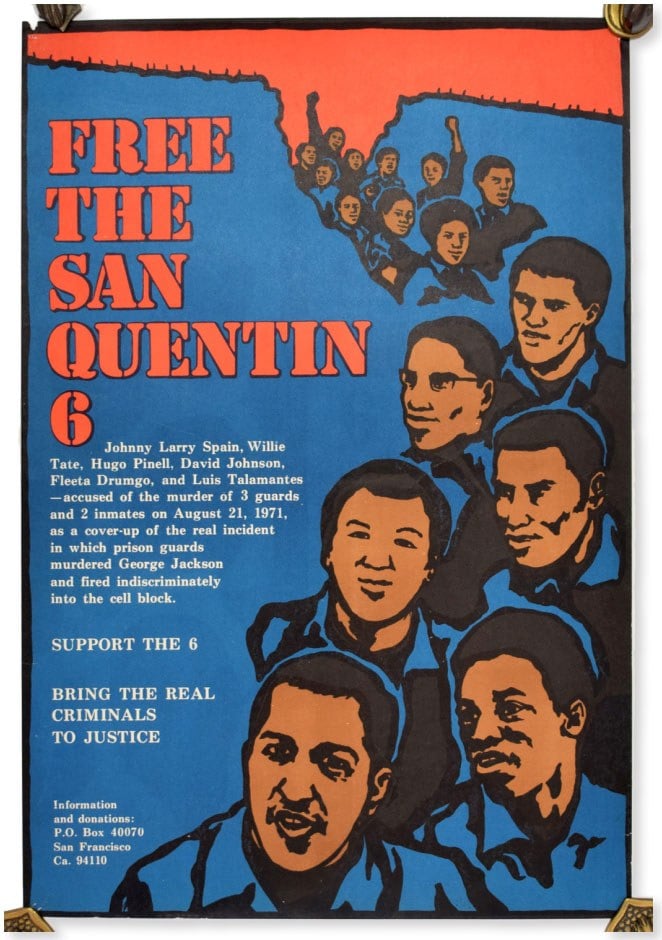
San Francisco: [Peoples Press] / [Prison Solidarity Committee], (n. d.), circa 1972. 18-1/2 x 12-1/2 inches. Broadside. White stock printed in blue, red and black. Multiple pinholes with some loss to corners; light rubbing to bottom edge. Good.
An uncommon poster designed by Bay Area artist and activist Jane Norling, likely at Peoples Press, featuring an image of the San Quentin Six outside a partially torn down prison wall, with cheering prisoners streaming out of the opening behind them. A Spanish-language version of the poster was also issued, which was signed in the print by Norling. Both versions of the poster were advertised in From Soledad to San Quentin,
a pamphlet issued circa 1972 by the Prison Solidarity Committee (who had the same address as that printed in the poster); a b&w version of the
poster is the centerfold for the pamphlet, and a note on the inside cover states, “Color posters of the San Quentin Six, in Spanish and English, are
available at 50 cents apiece. All donations are welcome and needed.” The text reads: “Johnny Larry Spain, Willie Tate, Hugo Pinell, David
Johnson, Fleeta Drumgo, and Luis Talamantes -- accused of the murder of 3 guards and 2 inmates on August 21, 1971, as a cover-up of the real incident in which prison guards murdered George Jackson and fired indiscriminately into the cell block. Support the 6. Bring the Real Criminals to Justice.”
San Francisco’s Peoples Press, founded by Terry Cannon, Frank Cieciorca and Robert Gabriner, published, among numerous other social and en-
vironmental justice works, the North American edition of Tricontinental; Norling, a member of Peoples Press at the time of this publication, is one
of eight women who designed posters for the Organization of Solidarity with the People of Asia, Africa and Latin America (OSPAAAL), the Cuban
publisher of Tricontinental.
OCLC locates two probable holdings, at Northwestern and the International Institute of Social History in the Netherlands, and we find others at OMCA, the Roz Payne archive, and one likely candidate at the Bancroft.
Offered by Kate Mitas, Bookseller and found in "Prisoner's Rights Movement."
- Louis M. Jason's book Literary (and Other) Celebrity Doodles II is now available. Contact the store at [email protected] to order...
- Father's Day Gift Offerings
Featured item:
With the proto-State of Franklin and the colony of New Iberia (Morgania)!
The United States of North America: with the British Territories and Those of Spain.
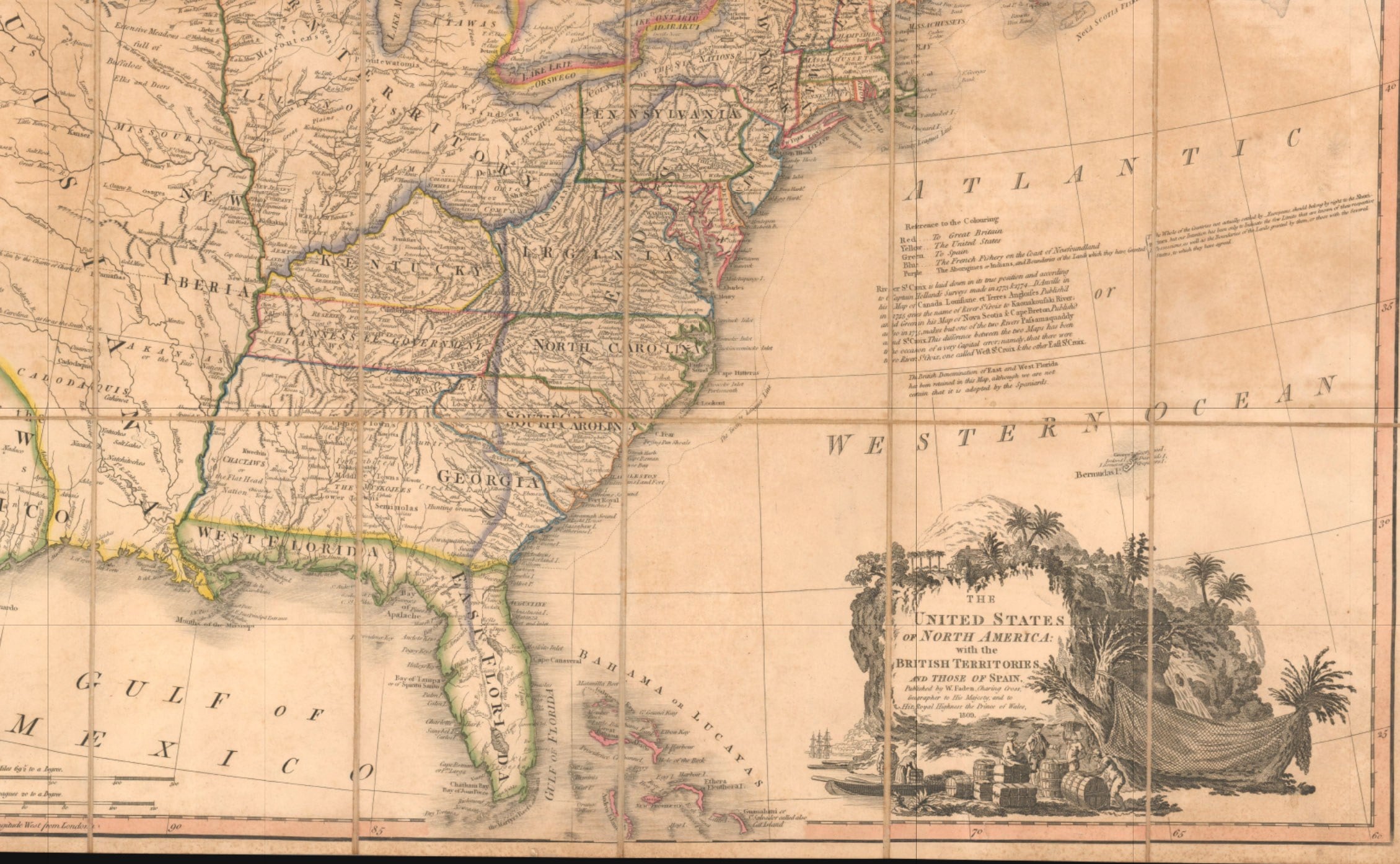
Faden’s 1808 map of the United States offers a detailed depiction of the fledgling nation during a time of complex political challenges. These challenges included disputes over state vs. federal sovereignty, land rights, relations with American Indian nations, domestic and foreign land speculation, and frontier expansion. Notably, the map features the short-lived proto-state of Franklinia and the colony of New Iberia.
Scope
The map’s coverage extends across the United States shortly after the 1803 Louisiana Purchase, stretching from Galveston Bay and Lake Winnipeg in the west to the Eastern Seaboard and from James Bay and Labrador in the north to Florida and the Bahamas in the south. It reflects a time of opportunity, where ambitious individuals sought to establish settlements and trade empires along the loosely regulated frontiers. Among the notable land schemes and settlements represented are the Ohio Company, the Illinois Company, Colonel Simms Donation Lands, the Seven Ranges, and troop reservations for North Carolina and Virginia soldiers. Additionally, the map provides detailed documentation of the ongoing conflicts with various American Indian Nations throughout the region.
The proposed state of Franklinia
Franklinia was located in what is now eastern Tennessee. North Carolina offered it to the U.S. Congress as partial payment for its Revolutionary War debt. Franklinia was expected to become the 14th state, with its capital in Jonesborough, leading to the establishment of a provisional government in 1785. However, the government of Franklinia ran parallel to North Carolina’s, with neither recognizing the other’s legitimacy. Franklinia was unique because it resulted from a “cession” by North Carolina and a “secession” when North Carolina withdrew its offer after Congress failed to act.
Arthur Campbell and John Sevier spearheaded the creation of Franklinia, hoping to gain Benjamin Franklin’s support by naming the state after him. Unfortunately, Franklin was in Europe at the time and could not support the new state. Without sufficient congressional backing, Franklinia could not secure the required two-thirds vote under the Articles of Confederation to achieve statehood. After a series of conflicts, Franklinia was absorbed into the new state of Tennessee, which achieved statehood in 1796.
Native American Soverignty
Faden’s map highlights the political and territorial claims of American Indian nations. Borders, drawn in purple, represent the boundaries agreed upon in a series of treaties between Britain, the United States, and various American Indian nations from 1765 to 1798, collectively known as the “Convention of 1798.” Among the treaties referenced are the 1798 First Treaty of Tellico with the Cherokee, the 1798 Convention Between New York and the Oneida Indians, the 1798 Cherokee Treaty, and a 1765 British treaty with the Florida Creek. Faden expresses a form of “cartographic advocacy” for American Indian rights, suggesting that lands not settled by Europeans should belong to the indigenous peoples.
However, this advocacy likely reflects not British sympathy but anti-American sentiment following the Louisiana Purchase. While Britain supported the weakening of French influence in America, some British policymakers viewed U.S. expansion as a threat to British colonies in North America. This view contributed to the tensions leading to the War of 1812. The purple boundaries on the map represent what many British viewed as the rightful western limit of U.S. expansion despite the map showing settlements as far west as the Mississippi River.
Offered by Neatline Antique Maps and found in "Recently Added Maps."
- Catalog 53 -- featuring Fine Books and Manuscripts from 1641 to 1930, with special emphasis on High Spots in English and American Literature, Fine Bindings, Illustrated Books, 1890’s, Press Books and early, scarce children’s books.
- Catalog 52
- Catalog 72, April 2026 -- by subscription only. Contact [email protected] for details about obtaining a copy.
Featured item:
Grosz, George (artist), Hermynia zur Mühlen (author), and Tomoyoshi Murayama (cover design).
[MAVO: DADA IN JAPAN] Chīsai Pētā [Little Peter]. Translated by Hayashi Fusao.
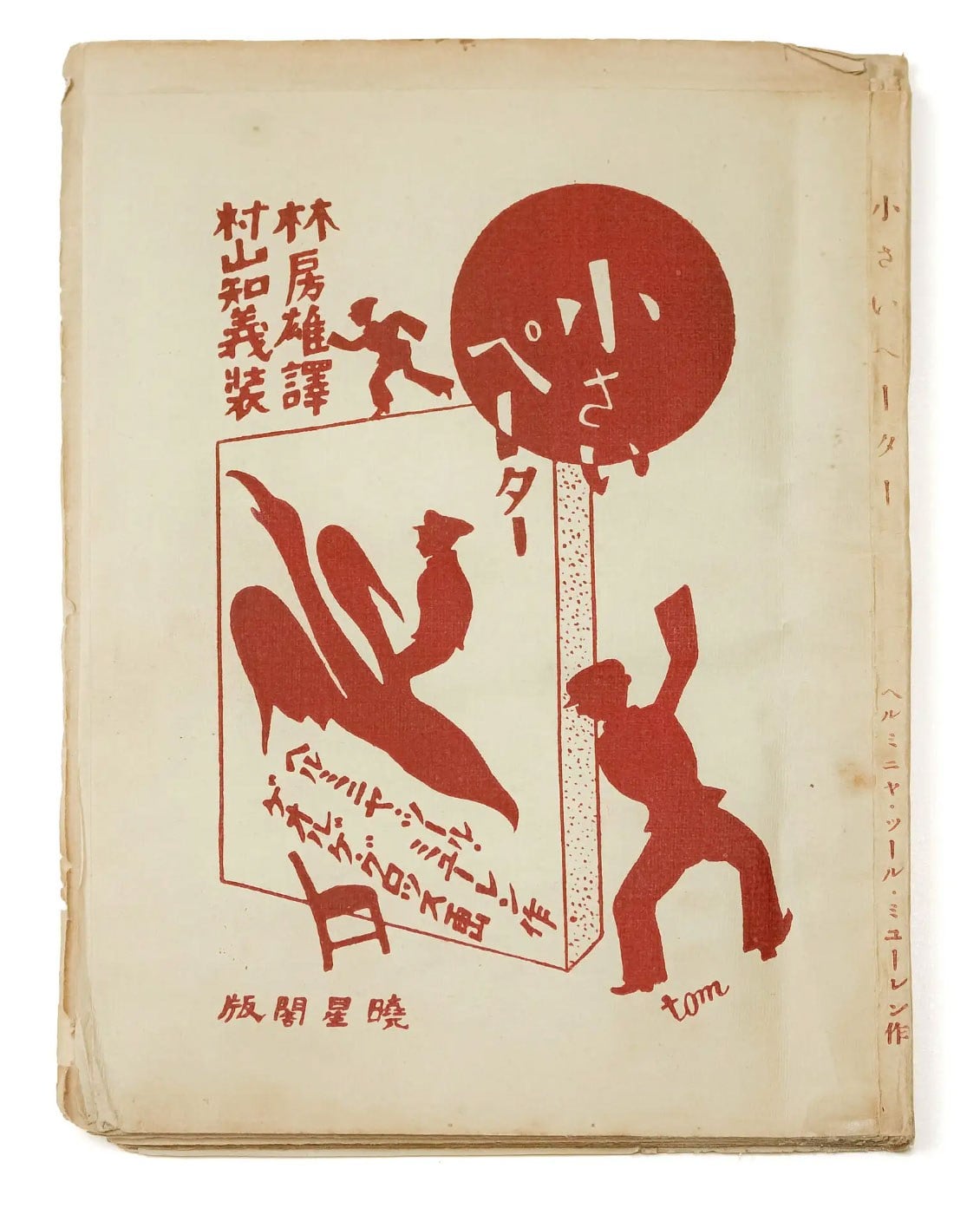
Tokyo: Gyoseikaku, 1927. Small octavo (16.5 × 12.5 cm). Original pictorial wrappers illustrated by Tomoyoshi Murayama; [4]; 89, [5] pp. with 6 plates of illustrations by George Grosz. An uncut copy with wide margins; wrappers and margins somewhat dust-stained and toned; good or better.
Rare first Japanese edition of the children’s book with illustrations by George Grosz and cover design by Mavo founder Tomoyoshi Murayama. It was first published in 1921 under the title "Was Peterchens Freunde erzählen" (What Little Peter's Friends Talk About) in 1921 as the first volume in the book series "Märchen der Armen" (Fairy Tales of the Poor), published by Malik-Verlag, which had been founded by John Heartfield and Wieland Herzfelde for the Berlin Dada movement. The little volume was to become one of the most successful proletarian children’s books worldwide. In it, the “Red Countess,” as the communist noblewoman was also known, describes how the objects in Peter’s room begin to speak while he lies sick and bored in bed. The coals in the stove tell of the miners’ hard work, the water bottle of the glassblowers, and the matchbox of the trees and forest workers.
The Japanese translation by Hayashi Fusao, featuring illustrations by Grosz, played a key role in making Grosz known in China. Surprisingly, it was the Japanese edition (published between the two wars with Japan and approximately two years after the suspension of the Chinese Civil War between Nationalists and Communists in favor of a united front against Japan) that served as the basis for Lu Xun’s first Chinese translation in 1929, titled “Xiao Bide.” Remarkably, Grosz had been known in the Japanese Empire for many years before his illustrations in this book also gained circulation in China, which, unlike Japan, had extensive Communist Party structures. (Cf. Paul Bevan. A Modern Miscellany: Shanghai Cartoon Artists, Shao Xunmei’s Circle and the Travels of Jack Chen, 1926–1938, Berlin 2018, pp. 135ff.)
It was mainly thanks to Tomoyoshi Murayama that the Berlin Dadaist Grosz became known in Japan; Murayama studied in Berlin from 1921 to 1923 and joined the circle associated with the “Der Sturm” gallery run by the communist Herwarth Walden. There he met, among others, Grosz and Schwitters. He also took part in the Düsseldorf Congress of “Progressive Artists,” where Dadaists and Constructivists joined forces. Upon returning to Tokyo, he founded “Mavo” as, so to speak, the Japanese branch of Dada. Like the Berlin group, “Mavo’s” art actions were not least political protests directed against the military government in Tokyo. (Cf. Hanne Bergius, Das Lachen Dadas: Die Berliner Dadaisten und ihre Aktionen, Berlin 1989, p. 300.) It was also Murayama who introduced Mavo member Yanase Masamu to the work of Grosz. The illustrator and cartoonist was also a member of the “Japanese Proletarian Artists’ Association,” for which he designed several journals, posters, and books. Furthermore, he had been employed as a cartoonist and comic artist at the daily newspaper “Yomiuri Shimbun” since 1920. In 1929, Yanase published a comprehensive monograph on Grosz’s work titled "Musan kaikyu no gaka Georuge Gurossu" [George Grosz: Painter of the Proletariat]. (See Bevan, ibid.)
As of March 2026, KVK, OCLC lists no copy worldwide.
Offered by Penka Rare Books & Archives and found in "Illustrated List of New Arrivals."
PHILLIP J. PIRAGES FINE BOOKS & MEDIEVAL MANUSCRIPTS
Featured item:
MISCELLANEA
POPE, ALEXANDER. [and] JOHNATHAN SWIFT, et al.
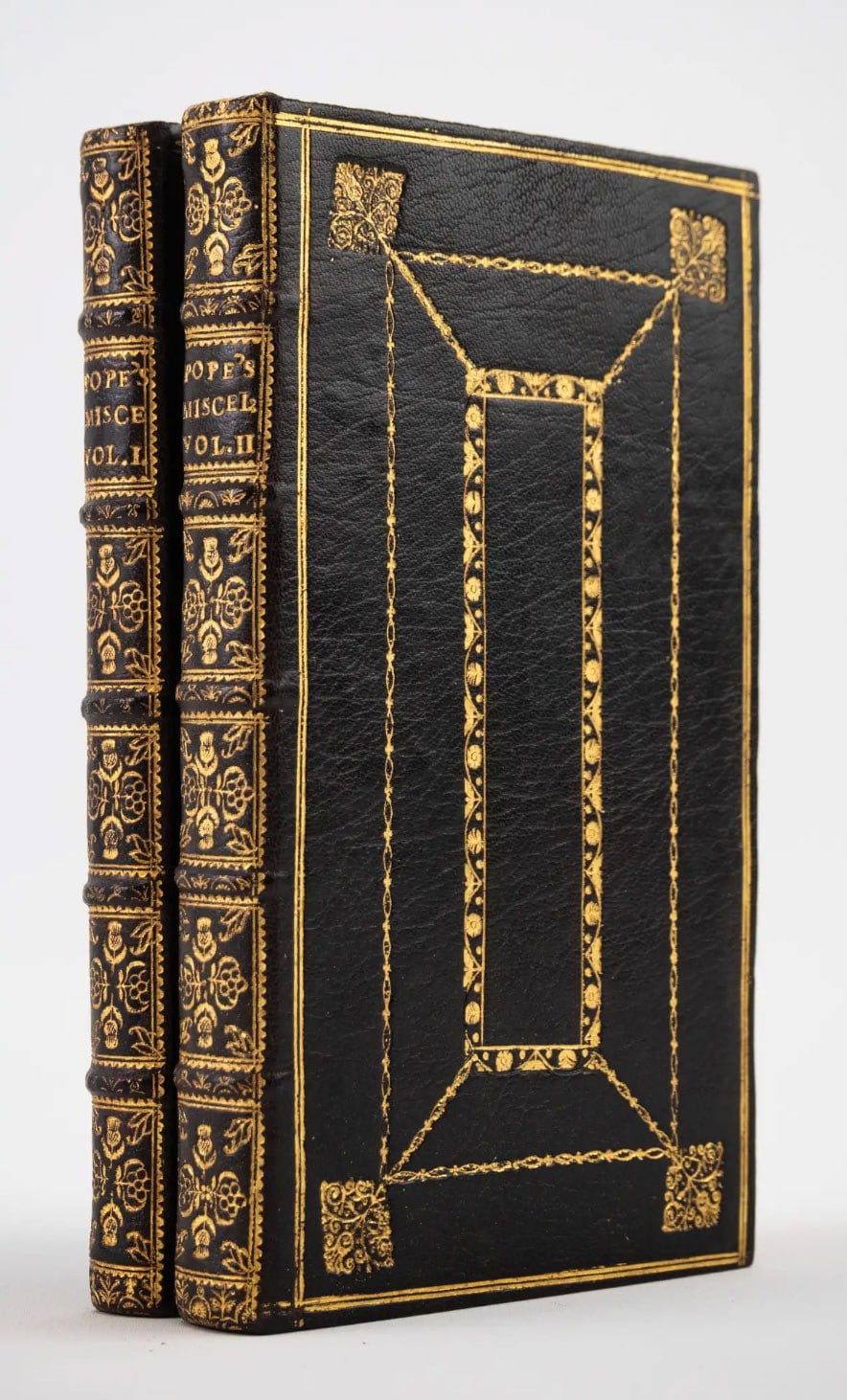
(London: [for E. Curll], printed in the year, 1727 [i.e., 1726]). 161 x 98 mm. (6 3/8 x 3 3/4"). Two volumes. FIRST EDITION.
Attractive retrospective gilt-panelled dark brown morocco by Philip Dusel, spines gilt in panels incorporating thistle motifs, gilt lettering, all edges gilt. Each volume with engraved frontispiece, second volume with small engraving on verso of title to "Laus Ululae," head- and tail-pieces. First volume with early ink ownership inscription of Isabela Eyre on title. Griffith 177-78. Paper of "Laus Ululae" in vol. II slightly toned, a couple of negligible imperfections to margins elsewhere, but IN FINE CONDITION, bright, clean, and crisp throughout, in pristine bindings.
This is a very appealing copy of a publication that marks the reignition of one of the most dramatic literary feuds of the early 18th century. The trouble between Alexander Pope, the literary giant of the age, and bookseller Edmund Curll (d. 1747) had started 10 years previously, when Curll had acquired the manuscript of one of Pope's poems and published it without permission. Pope, incensed, called a meeting with Curll, where he dosed the bookseller's drink with an emetic, causing a violent illness. Not satisfied, Pope proceeded to release two pamphlets vilifying Curll. DNB tells us that "Pope planned the attack quite well, for the childish and vicious nature of the emetic trick was palliated by the wit of the pamphlets, and Curll appeared not as a victim but as a most deserving villain." Curll took to the role of Pope's public enemy with apparent glee, releasing works mocking Pope's Catholic religion and calling him a traitor. The conflict cooled for a number of years, but in 1726, Curll purchased a group of personal letters Pope had written to fellow poet Henry Cromwell (1659-1728) early in his career. These youthful missives paint both men in a poor light, more strongly because Curll had acquired them from a former mistress of Cromwell, Elizabeth Thomas, who was facing financial difficulties. Curll released the letters as part of the present miscellany, which also included six previously unpublished poems by Pope alongside works by Jonathan Swift and others, presumably all published without the authors' permission. The two volumes open with passive-aggressive dedications to Cromwell and Pope, respectively. Pope responded by attacking Curll and Thomas in his 1728 "Dunciad," and this set off a volley of defamatory publications on both sides. Finally, in 1733, Pope ended the whole petty feud with a complicated scheme to discredit Curll and the publication of his own (more flattering) correspondence. The "Miscellanea" is quite scarce in the marketplace, and our remarkably fresh and bright copy would stand out even among commonly available copies.
Offered by Phillip J. Pirages Fine Books & Medieval Manuscripts and found in "2026 New Acquisitions List #14."
PRIMARY SOURCES, UNCHARTED AMERICANA
Featured item:
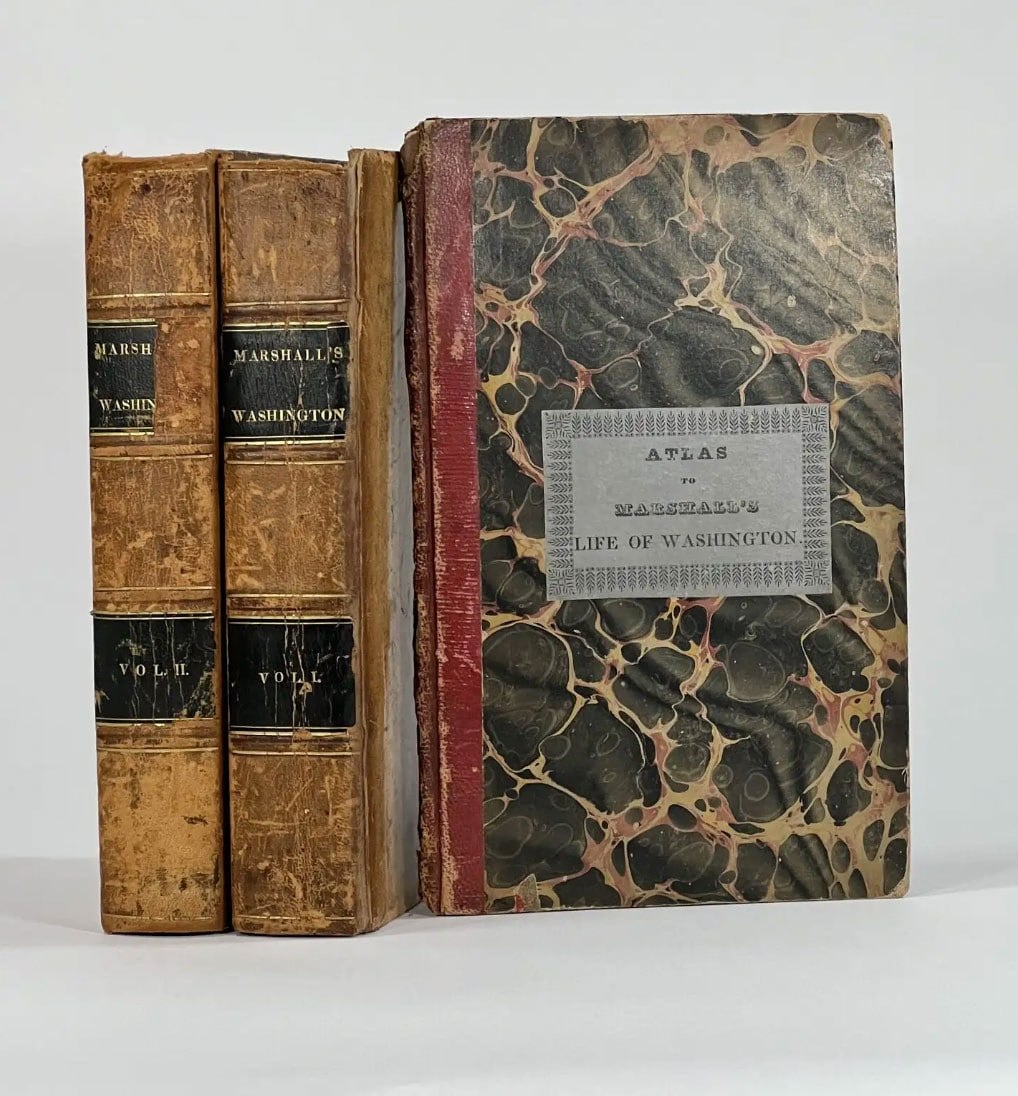
Philadelphia: James Crissy, 1832. Full Leather. Good binding.
Octavo. iv, 460, 42 (notes), viii (index); 448, 32 (notes), v (index), [1] pp., frontis. Atlas: engraved title and 10 bifolium maps, hand-colored. Second edition. In original speckled sheep with morocco title labels with publisher's stamp on the front turn-in of Vol. I; Atlas in marbled paper over boards backed in morocco; printed title label on the front cover. Bindings with minor wear to the edges; the front board of Volume I has been discreetly reattached; half of the title label of Volume II is lost; light and scattered foxing, but generally, quite clean; contemporary penciled owner name at the top of the title page of Vol. I; very discreet evidence of a bookplate having been removed from the front pastedown of both volumes at some point in the past. Atlas has wear to the leather at the spine, but the binding is fairly stable. engraved title page and ten bifolium maps are in very nice condition with only minor age toning and some trivial offsetting from the hand-coloring.
An attractive copy of the second edition of this indispensable biography. Sabin, in his entry for the first edition, quotes Jared Sparks, "After the able, accurate, and comprehensive work of Chief Justice Marshall, it would be presumptuous to attempt a historical biography of Washington" (Sabin 44788).
Offered by Michael Pyron, Bookseller and found in "Americana and the Civil War."
- Inspired by History (Podcast) Latest episode: "Thomas Jefferson Bids Farewell to Europe... Forever" (Apple / Spotify)
- The Raab Collection Celebrates 35 Years
RABELAIS BOOKS ON FOOD & DRINK
RICHARD C. RAMER, OLD & RARE BOOKS
- Catalog 57 (January 2026)
- Catalog 56 (October 2025)
ROOTENBERG RARE BOOKS & MANUSCRIPTS
- Spring Miscellany New
- Recent Acquisitions (May 26, 2026)
Featured item:
Empésé, Émile de [Émile Marco de Saint-Hilaire]
L'art de mettre sa cravate de toutes les manières connues et usitèes
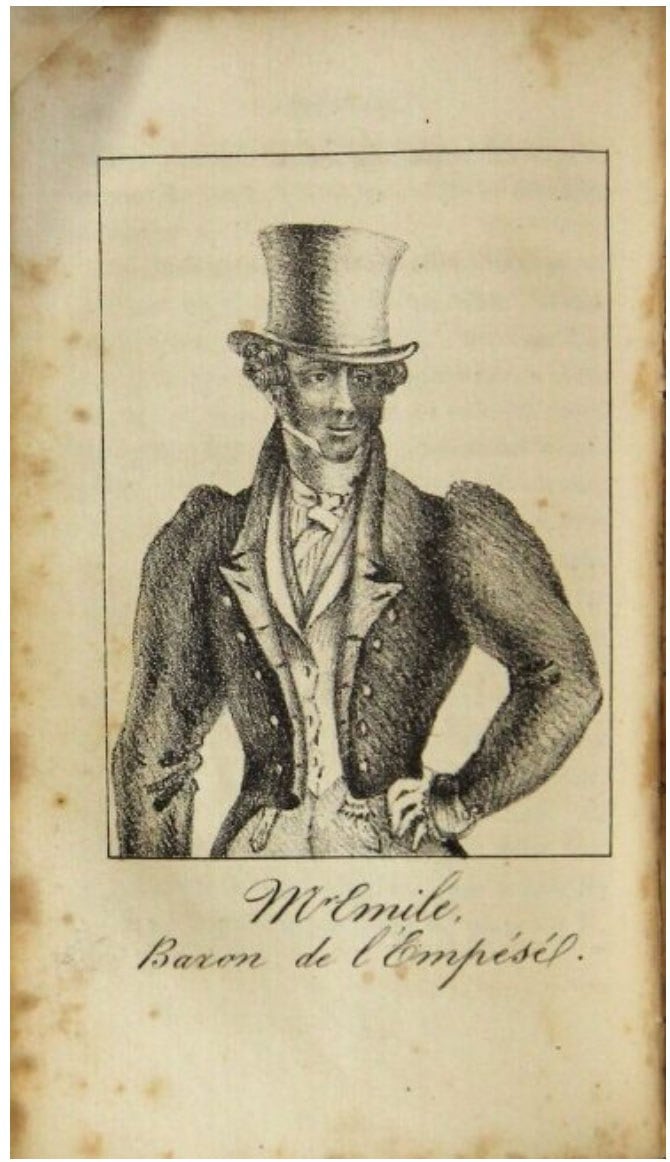
Paris: La Librairie Universelle de H. Balzac, 1827. First edition, 16mo, pp. 122; full page portrait of the author and 4 folding plates showing 31 figures; contemporary calf backed marbled boards, gilt-ruled spine, gilt title, boards lightly worn, plates a bit foxed.
For a time, the celebrated French novelist Honore de Balzac (1799-1850) set up a printing establishment in Paris. Among the works that issued from his press - the whole number likely not more than three dozen before bankruptcy set in – is the present title on the history of cravats, the different methods of use around the world, their proper knots and the tying thereof. Included in both the text and the illustrations is the method of tying the Byron, named for the British poet, Lord Byron.
Offered by Rulon-Miller Books and found in "Spring Miscellany."
PHILIP SALMON & COMPANY RARE BOOKS
- Works on and in paper by Richard J. Wolfe New
- Fresh Catch: World War I and the Sinking of the Lusitania
Featured item:
Richard J. Wolfe
Stencil Marbling Sheet of a Horse with Groom, c. 1985. (Signed by Wolfe in the lower right margin.)
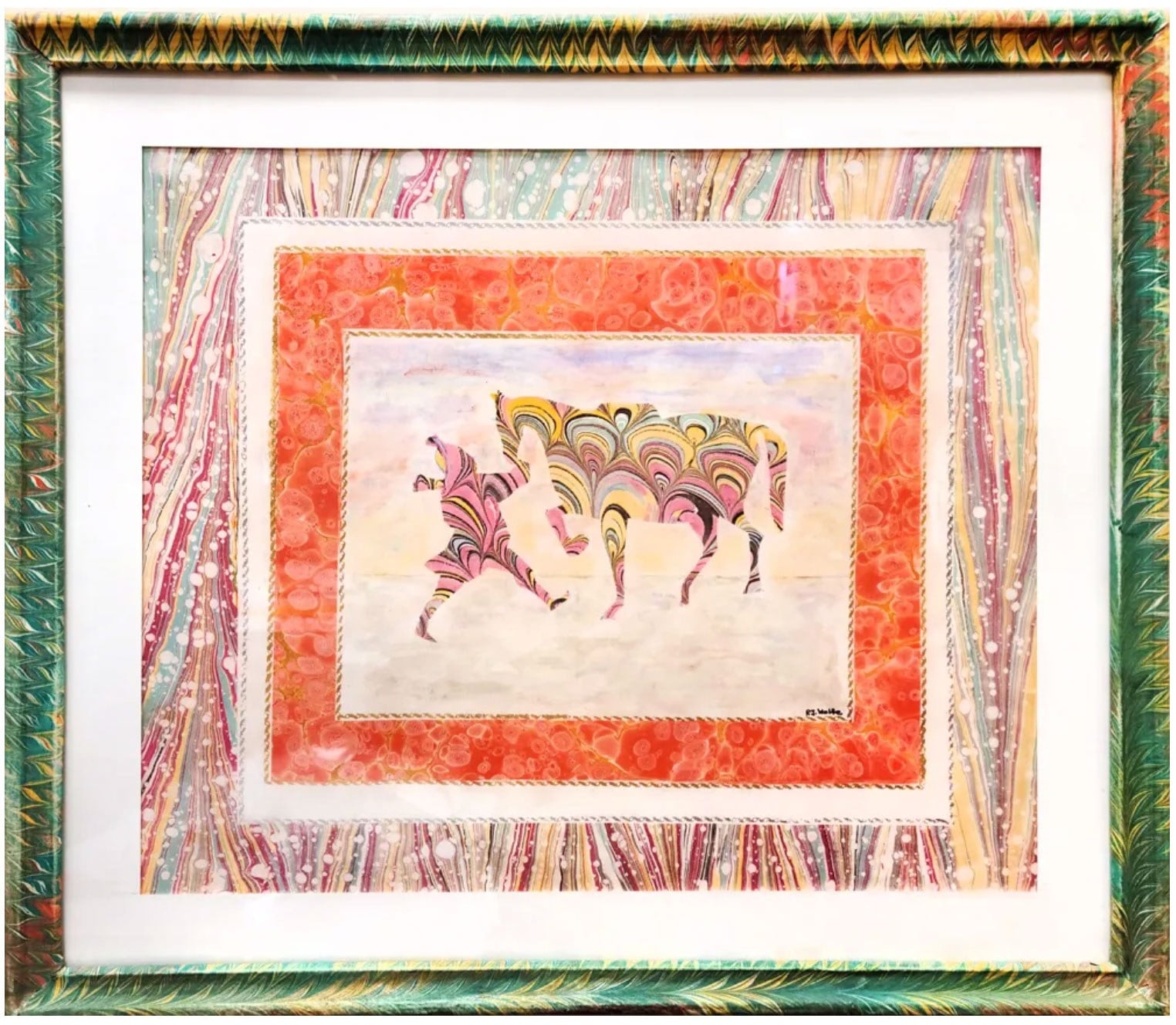
Single sheet, with visible image size measuring 13 1/2 by 11 7/16 inches (not examined out of frame). Glazed, matted, and framed. Using stencils and multiple rounds of marbling different patterns, Wolfe here has created an image of a horse and (presumably) its groom against a watercolor wash background, and surrounded by two marbled frames, each bordered in gilt. This forming of an image from composite marbled patterns within a sheet with other marbled patters represents a technically complex variant on the traditional Ebru process often seen in Turkish marbling, which found what many consider its finest expression in the work of Christopher Weimann. According to Sid Berger, to whom we owe a debt of gratitude for his kind assistance with this description, Wolfe mostly presented his own efforts in this technique as gifts for friends, which may partly explain their relative scarcity on the market. This is a lovely example, in a frame covered in complimentary colored marbled paper, presumably also by Wolfe.
Offered by Philip Salmon & Company Rare Books and found in "Works on and in paper by Richard J. Wolfe."
- Pacific Northwest Poetry & The Port Townsend Scene: 3 small archives from the library of poet & artist Cheryl Van Dyke
- The Complete Works of Cormac McCarthy
- List: 150th Anniversary of Mendeleev's Periodic System
- California Book Fair 2019: 130 Items on Science and Medicine is now available on request from [email protected]...
- Occasional List 93: "The Jungles of an Untutored Mind"
- Occasional List 92: "I Should Expect to have a Knock Down."
Featured item:
[Bennett, William True, (1836-1910)].
Original carbon copy of typescript, with corrections and emendations, recounting Bennett’s time as the American Red Cross general eld agent in Manila during the Philippine-American War and his subsequent travel in China during the Boxer Rebellion.
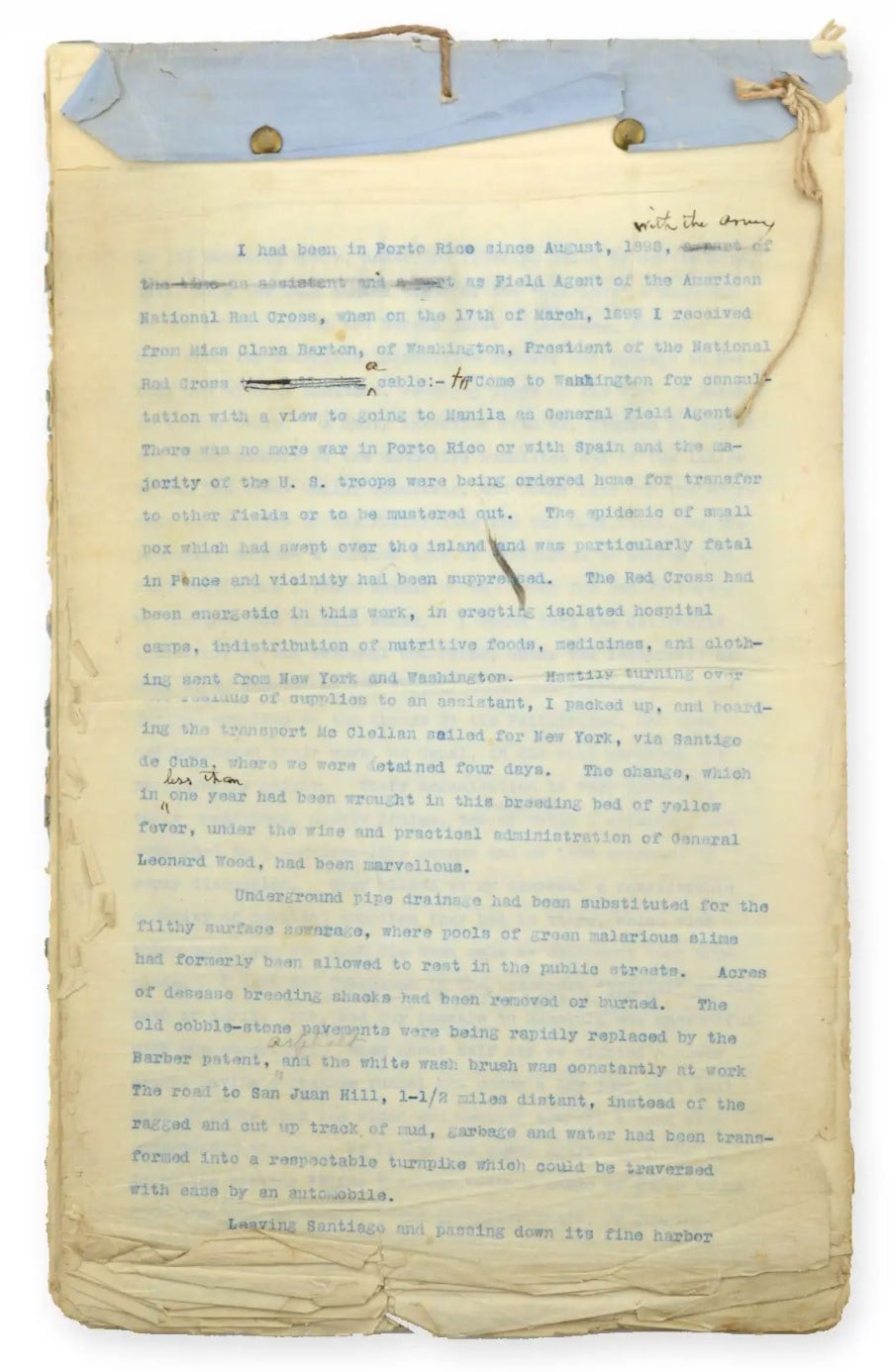
[N. p., but Los Angeles? ca. 1902-1909?]. 35 pages, rectos only on onionskin fastened along the upper edge, with over 200 additions, corrections, and deletions in pencil and ink, likely in the author’s hand. Some edge wear, in good condition.
A detailed and seemingly unpublished article or lecture from an agent of the American Red Cross, with accounts of conditions in Cuba, his call by Clara Barton to the Philippines, travel to Manila, accounts of the rebels (along with other local color and war news), and finally a brief report from China and the Boxer Rebellion. Bennett’s prose shows an accomplished photographer’s eye for incident.
The irony of this colorful account is that Bennett had been sent home in disgrace from Manila, a late instance of a recurring theme in the life of this American rogue, William True Bennett (1836-1910)—a Michigan native, pioneering Australian photographer, Civil War officer for Black troops, corrupt carpetbagger in Reconstruction North Carolina, an embezzler in Iowa, sometime traveling lecturer and/or mining speculator, and eventual bibulous Red Cross field agent—this account perhaps written with an eye to an exculpatory magazine publication or for rostrum performance. Though unsigned, the dates, details, provenance, and situations coincide with known historical accounts of Bennett’s movements.
Offered by Garrett Scott, Bookseller and found in "The Jungles of an Untutored Mind."
- Catalogue 350: Women: Books from the 16th Centiury to the Present (Summer 2025)
- Catalogue 462: Winter 2025, New Arrivals
MARC SELVAGGIO, BOOKS & EPHEMERA
Featured item:
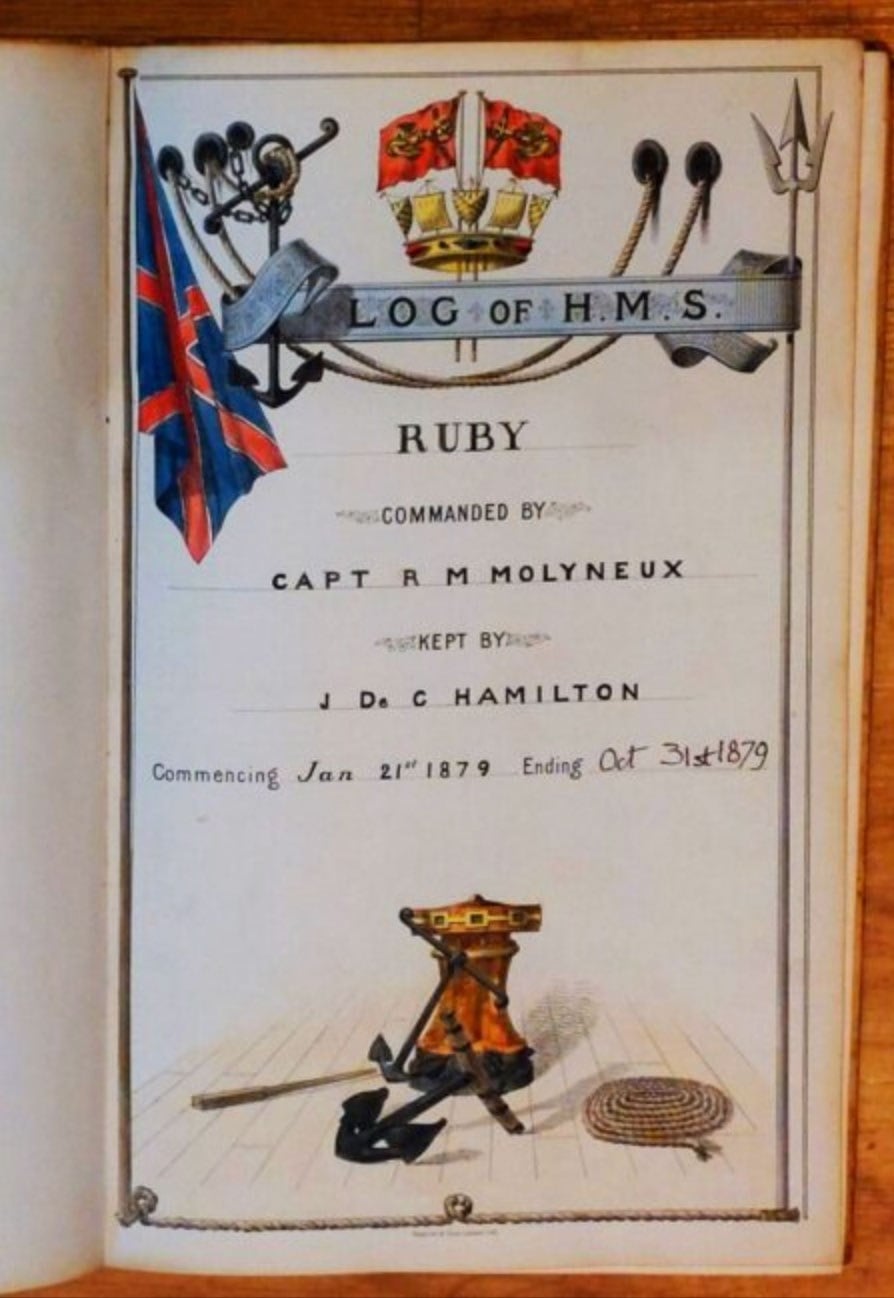
Folio journal, 33 cm. Unpaginated, about 100 pp. manuscript entries. With 11 b/w and colored charts and drawings.
Launched in 1876, HMS Ruby was a composite screw corvette commissioned to the East Indies Station, serving between Burma, Ceylon, Madras and other important parts of the British Empire. Transferred to operating in the Mediterranean Sea, the vessel supported humanitarian efforts during the 1878 Macedonian rebellion and then the British forces during the Anglo-Egyptian War of 1882. She went on to serve in the South East Coast of America Station from 1885, retiring in 1904. After a period as a coal hulk she was sold in 1921 to be broken up.
Her captain on this 1879 cruise, Robert Henry More-Molyneux, eventually made Admiral and became President of the Royal Naval College, Greenwich. Bound in full vellum with leather spine label. In the nine months covered here, Ruby sailed between Calcutta and Rangoon, touching at Akyab (Sittwe, in Burma) and Madras before reaching Rangoon (Yangon), where she spent the rest of the year. The daily entries cover weather conditions, sail handling and navigation, and events onboard and ashore. Though mostly perfunctory, they reveal interesting aspects of life in the Royal Navy. For example, the afternoon of January 30 was spent "Making and mending clothes." Rifle instruction and drills were daily occurrences for the first month of Ruby’s cruise and weekly thereafter. Indeed, this seems to have been mostly a placid training cruise, an interval between Ruby's participation in the Macedonian Rebellion of 1878 and the Anglo-Egyptian War of 1882, each day being taken up with rifle, cutlass, pistol, and landing party drills, as well as general training sessions devoted to basic seamanship. There were a few minor disciplinary actions for such offences as failure to obey orders, and on March 19 they crossed paths with Ulysses Grant, on his world cruise.
Three course charts and a recognition view outline Ruby's progress from Calcutta to Rangoon. These are accompanied, at the back of the book, by b/w and hand-colored drawings of methods of raising a replacement bowsprit and recovering an anchor, and several interesting detailed drawings of mechanical functions, including a cutaway illustration of "A plan of lightning conductors from the heel of mast fore & main." All are executed with typical skill, as Royal Navy officers were far better trained in draftsmanship than their American counterparts.
Bound in full vellum with leather spine label. With bookplate of and brief research notes by Rollin Miles Warner Jr. former employee of the Matson Shipping and Navigation Company and assistant director of development at Stanford. All entries clean and legible. Bound in full vellum with leather spine label.
Offered by Ten Pound Island Book Company and found in "Maritime List 374."
MICHAEL R. THOMPSON RARE BOOKS
- Hogarth Press & SoCal Fine Printing
- Archives & Ephemera, Fashion, textiles, Froebel, dentistry, fine printing, women in wartime, and more
- Catalog #26.3 - Assata Shakur, National Black Theatre, Ginsberg, Literary Activism & Radical Ephemera
- Paper Witnesses — From the Black Belt to the Gay South
Featured item:
Pequod Press Collection
Printed, bound, and largely written by John Ruyle, 1972-2001
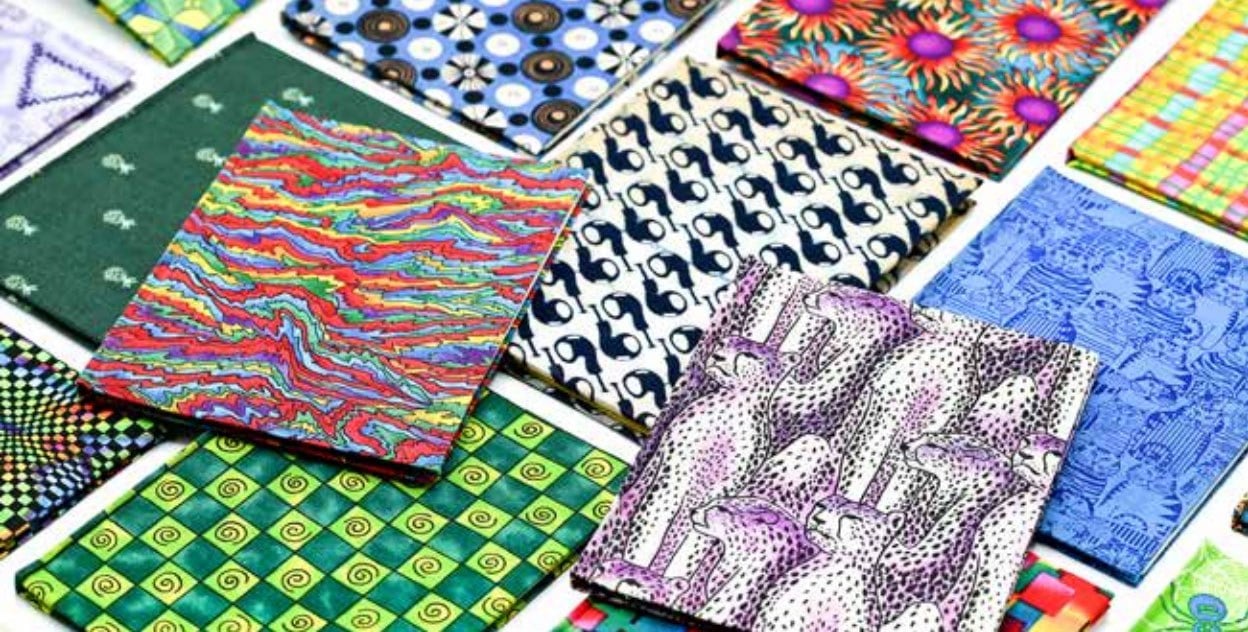
Extensive collection of nearly 200 self-published Sherlock Holmes pastiches, printed over nearly 30 years, from the Berkeley-based Pequod Press.
The Pequod Press was the decades-long small press project of John Ruyle, who worked as an editor and then manager of the publications office at UC Berkeley, as well as a sometime casual scout for Peter Howard of Serendipity Books. He adapted the lowest level of his multi-story house into a pressroom, where he kept multiple presses and fonts. According to OCLC, his earliest publication dates to 1970 and his latest to 2001, with approximately 129 titles issued over its lifetime (as well as further ephemera).
The collection gathered here contains 192 individual copies of 99 titles, about 77% of his total output, with most copies represented in both their wrappers and cloth-bound issues. It was acquired by noted Sherlockian, BSI member since 1973, and retired US magistrate judge Andrew Peck, who patronized the press for nearly three decades, and to whom nearly every copy is inscribed by Ruyle.
The vast majority of Pequod Press productions were Ruyle’s own writings, which tended to the parodic. A self-published John Kendrick Bangs, Ruyle’s work was rough and tumble but undeniably distinctive. Oddly sized according to the limitations of his small presses (and often oblong), filled with tales and verse that betrayed a love for obsolete words, absurd situations, and coy bawdiness, they sometimes ring with echos of Edward Gorey. The vast majority are of a Sherlockian nature, verses filled with references to The Great Detective or the adventures of Ruyle’s own Holmesian hero, Turlock Loams.
According to the inscriptions in this collection, Ruyle clearly found Peck’s support meaningful. In addition to more conventional notes of appreciation, Ruyle wrote his regulars into his works: the inscription in THE ADVENTURE OF THE FERAL BARONET records, “Your note prompted the inclusion of ‘Peck’s Mad Boy’ in this yarn,” a cheeky homage to Peck. In fact, from a book history perspective, the inscriptions are far richer than typical. Ruyle would use inscriptions to explain why he chose a certain binding cloth, complain when an experiment didn’t work, or mark design changes: “I sometimes wonder if anyone notices my minor design changes in this now ‘uniform’ series. For example, no ‘running heads,’
as with the ‘Six Nixons’ too, to accommodate more text” (ALUMINUM CROTCH inscription).
The presswork is consistently crisp and clean. Ruyle’s bookbinding skills were far inferior, but their folk simplicity is an especially compelling case study for book design at the amateur level: how did an untrained guy bind books in his basement in Berkeley in the ‘70s? For instance, he often used what he called “allusive” cloth for his bindings when opportunity arose: “Andy: sorry about the slight glue ‘seep-through’ on the cloth, but I had trouble binding with the loose weave of the batik, which I had to use because of its allusive gastropodal design!” (GASTROPODS inscription). In some cases, the choice of cloth inspired content in the books, as in WATSON FURIOSO’s poem “Purple Leopards,” which Ruyle notes in his inscription was inspired by the cloth pattern of the binding with...purple leopards. The amateur nature of the press led to a rich idiosyncrasy of bibliographical traits, reflecting the personality of the man behind it.
Institutional holdings are exceptionally uncommon, with most of the titles represented at only three institutions (the two Conan Doyle / Sherlockian collections at Toronto Public Library and University of Minnesota, and Ruyle’s alma mater, Berkeley). While individual titles appear regularly on the market, there are few opportunities to acquire a single collection of this size. A quirky, vibrant dialogue, via the book arts, with one of the great characters of English literature.
Offered by Type Punch Matrix and found in "Print Catalog 10."
Featured item:
Sinister Wisdom, 22 Issues
Dyekwomon, Elana (Ed.); Onada-Sikwoia, Akiba (Ed.) Uccella, Michaela (Ed.); Kaye/Kantrowitz, Melanie (Ed.); Biren, Joan E. JEB (photo.); Pratt, Minnie Bruce. 1984-1998
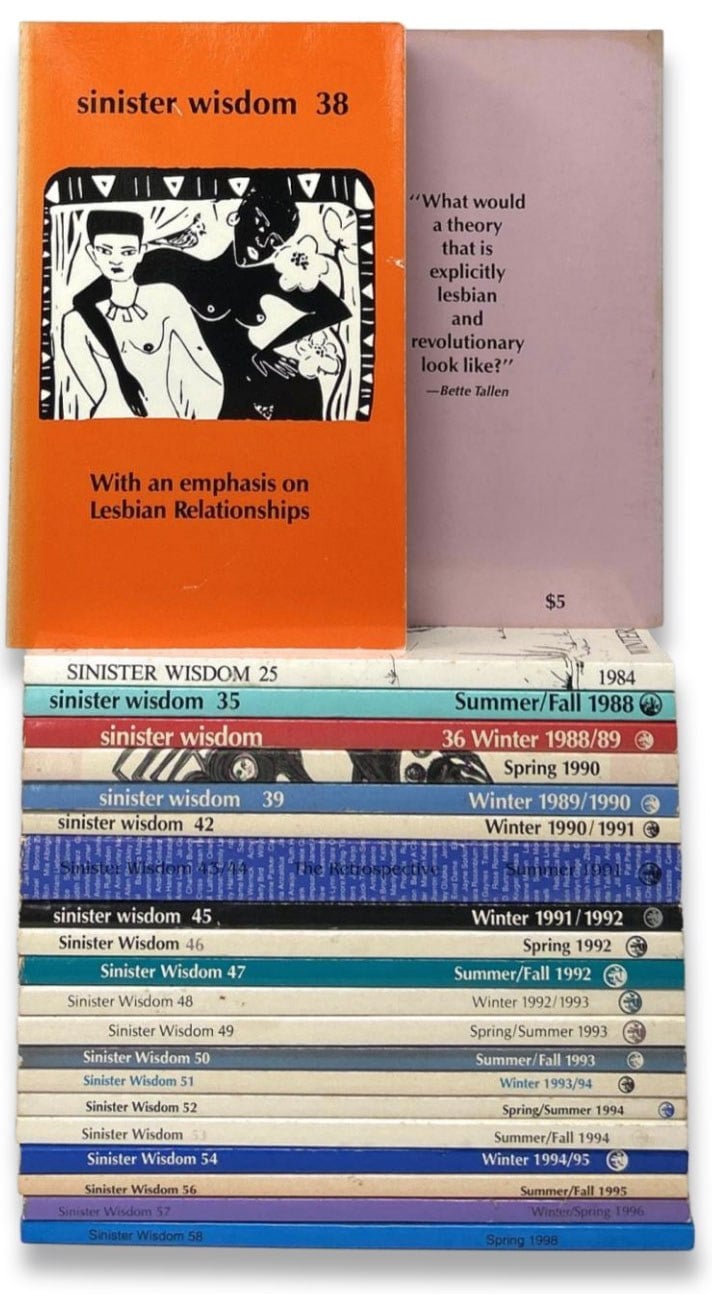
A solid collection of these 22 issues of the foundational feminist, oldest surviving, and longest operating lesbian journal to date. Founded in 1976 by Catherine Nicholson and Harriet Ellenberger (Desmoines), Sinister Wisdom has spanned eras, waves, and genres with issues currently numbering over a hundred, a body of work forming a vital historical resource of American lesbian art and writing from the late 1970s to today. The magazine has featured work by notable contributors including writer and civil rights activist Audre Lorde, poet Adrienne Rich, poet Joy Harjo, science fiction
novelist Joanna Russ, photographer Joan E. Biren (JEB), poet and novelist Gloria E. Anzaldúa, novelist Michelle Cliff, poet Toi Dericotte, writer and activist Elana Dykewomon, poet and novelist Sapphire, and poet and essayist Minnie Bruce Pratt, all of whom are represented in these 22 issues, spanning 1984 to 1998, all from the library of contributor Bette Tallen.
Offered by Underground Books and found in "From the Bookshelf of Dr. Bette S. Tallen."
Featured item:
Typophiles. Frederic Goudy.
Spinach from Many Gardens. Gathered by the Typophiles and Fed to Frederic Goudy on his Seventieth Birthday 1935.
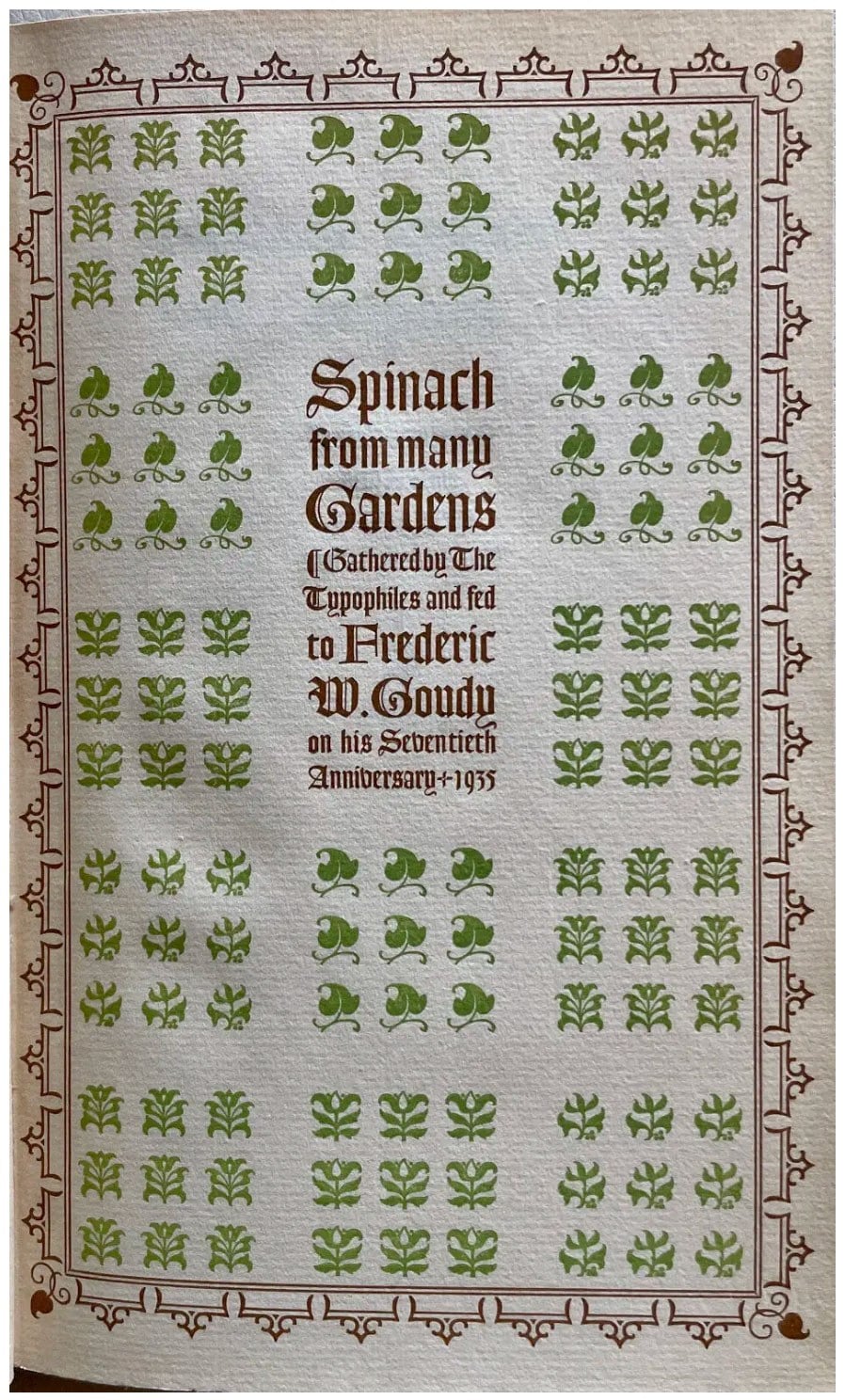
(NY, 1935). 5 1/4 x 8 1/2. 85 leaves, large foldout broadside by Albert Schiller. Cloth with leather title labels on upper cover and spine. Spine label worn, wear to spine ends, spine darkened. The end papers bear an acidic stain from newspaper article laid in. Very good copy of a rare book.
Twenty-one Typophiles have signed inside the front cover, including Bruce Rogers, John Fass, Paul Bennett, Peter Beilenson, Albert Schiller, Melbert Cary, Otto Fuhrmann. Several more have signed their contributions. Bently Raak's copy, inscribed to him by Goudy. Item #18998
No. 26 of 60 copies. Over 30 designers & printers, using various Goudy types, contributed. Presses include Golden Hind, Harbor, Marchbanks, Spiral, and Woolly Whale. "Garden" title page designed by Bruce Rogers with ornaments in green and brown. There is a signed woodcut of the Village Press house by Charles W. Smith. There are checklists of Goudy's writings, and books designed with his type faces. This was the first Typophile book.
Raak was a type designer, professor of typographic design at Syracuse University, and inventor of the Vari-Typer, a type composing machine for the office.
Offered by The Veatchs Arts of the Book and found in "List 107."
Featured item:
LANGLEY, Noel (written and illustrated by). The Tale of the Land of Green Ginger.

London: Arthur Baker Limited, 1937. 24.5x19cm: 143pp. First Edition, First Printing of the Small Paper Issue, with 20 gorgeous color illustrations by the author, including the frontispiece. Original green cloth-covered boards, with black lettering on spine. Minor sunning to spine ends and along a small section of the bottom edge of the front board. Some faint foxing to contents and textblock edges, with offsetting to rear free endpaper. Boards slightly bowed. In the original, unrestored, price-clipped pictorial dust jacket. Dust jacket faintly foxed and lightly soiled. Spine panel a tad darkened, though lettering remains bright. Small chip at head of spine with short closed tear along top edge of rear panel. Better than Very Good in a Very Good dust jacket. A nicely preserved copy of this scarce title, especially so in the dust jacket. This edition not in Cotsen.
In The Tale of the Land of Green Ginger, Langley blends fairytale adventure, satire, and playful language into a witty, whimsical children’s classic following the exploits of Abu Ali, the son of Emperor Aladdin. It was largely due to the success of this book that Langley was selected as one of the screenwriters to adapt L. Frank Baum’s The Wonderful Wizard of Oz into the 1939 film The Wizard of Oz.
Offered by Walnut Street Paper and found in "E-List #4 2026."
- Catalogue 344: Scrambles Amongst the Fore-edges
- Catalogue 343: Percival Lowell and the History of Astronomy
Featured item:
COWPER, William (1731-1800).

Third edition. London: William Tegg and co., 1851. Thick 8vo. xx, 736 pp. Engraved frontispiece, half-title, illustrated. Original full red blind- and gilt-stamped morocco, all edges gilt, gilt dentelles; rubbed. Former ownership inscription. To Captain Hayward, With – Cowan’s best regards . . . of his courtesy + kindness in the memorable cruise of the [ship] Pembroke Castle Sept. 1883 – Beeslack, 25 Sept. 1883”. Very good.
With two fore-edge paintings in the form of a two-way “double” fore-edge paintings. Facing either direction are scenes of old golfing scenes.
Offered by Jeff Weber Rare Books and found in "Catalogue 344: Scrambles Among the Fore-edges."
Featured item:
Jane Austen

London: Printed for T. Egerton, 1814. First edition. Three volumes, duodecimo (180 x 110 mm), bound without half-titles. A Very Good copy.
Contemporary diced russia, rebacked with the original spines laid down, spines lettered and decorated in gilt, twin gilt border to covers, marbled
sides and endpapers. Occasional light foxing and finger-soiling to contents, leaf N6 of vol. I chipped with loss to a dozen letters and a few more
slightly grazed, a couple of gatherings in vol. III slightly proud. A very appealing copy in a handsome contemporary binding.
Begun in early 1811, around the same time as Sense and Sensibility was accepted for publication, Mansfield Park was published in May 1814 in an
edition of 1,250 copies. The publisher John Murray later “expressed astonishment that so small an edition of such a work should have been sent into the world”; he took over publication of the second edition and of Austen’s subsequent novels.
Mansfield Park was not widely lauded by critics upon its publication; in fact, it proved quite controversial, in particular for its heroine Fanny Price.
Contemporary readers praised the novel, however. Lady Anne Romilly wrote to Maria Edgeworth in November 1814, “Have you read Mansfield Park?
It has been pretty generally admired [in London], and I think all novels must be that are true to life which this is, with a good strong vein of principle
running thro’ the whole.” The next month, Edgeworth herself wrote, “We have been much entertained with Mansfield Park” (quoted in Gilson). In
the two hundred years since its publication, Mansfield Park has rightfully ascended to canonical status alongside Austen’s other novels, and is now
recognized as a complex analysis of class, a young woman’s inner world, and the relationship between person, place and rural England.
Offered by Whitmore Rare Books and found in "Catalogue 29."
JOHN WINDLE ANTIQUARIAN BOOKSELLER
- Recent Acquisitions (June 2, 2026) New
- New York Book Fair 2026
Featured item:
LeRoux, Gaston
Le Fantome de l'Opèra
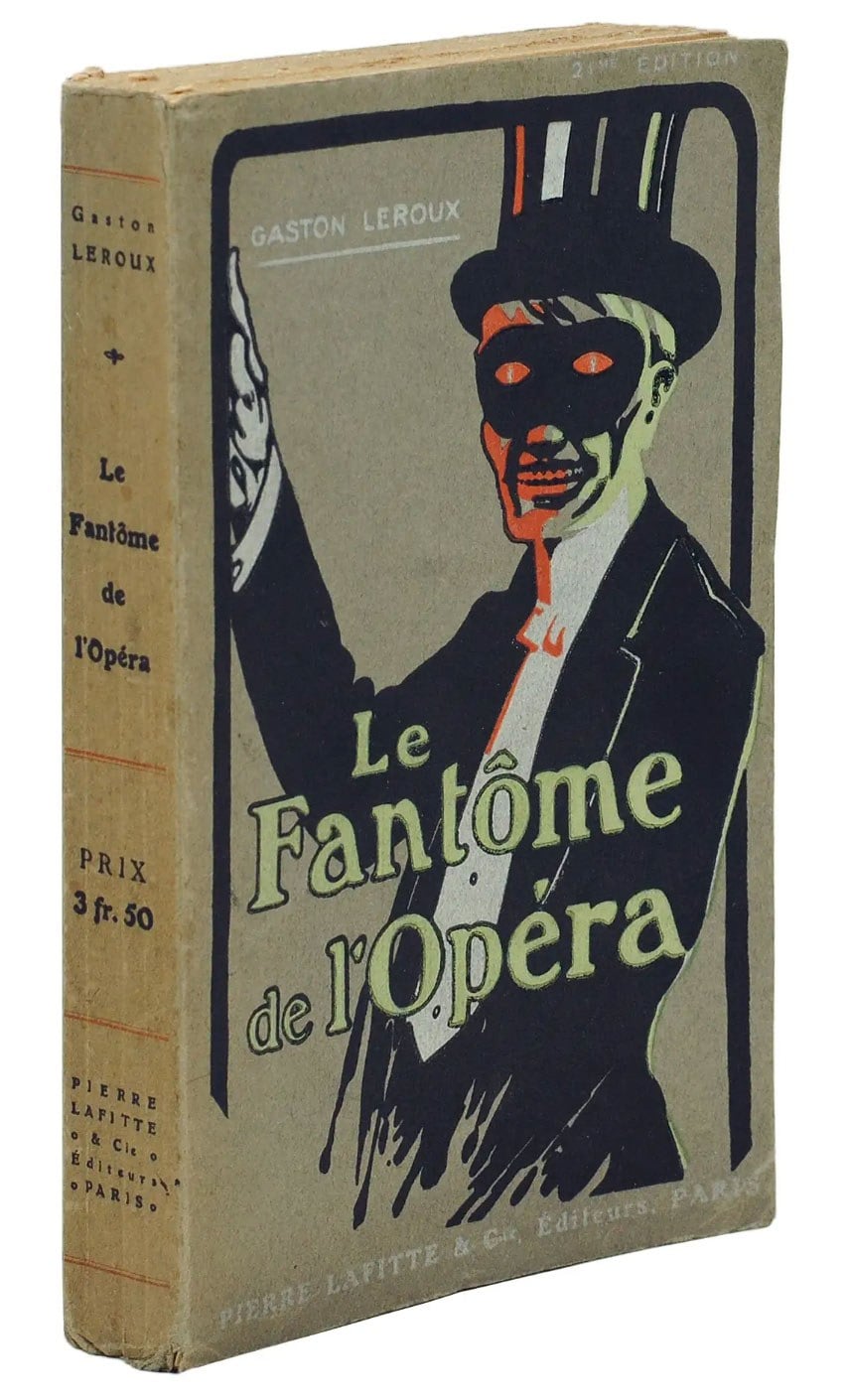
Paris: Pierre Lafitte & Gie, [1910]. 12mo (189 x 120 mm), (6), 520 pp. Untrimmed in the original publisher's four-color illustrated wrappers; upper wrapper and backstrip sunned, slight crease in lower wrapper, an astonishingly well preserved copy of a fragile book.
First edition of the Phantom of the Opera, a rare copy in original wrappers of the French gothic horror novel that became the basis of the longest running show in Broadway history, the second-longest running West End musical, and over $6 billion in worldwide ticket sales.
LeRoux was a French journalist and mystery writer, inspired by real events at the Palais Garnier opera house in Paris and by a love of Edgar Allen Poe and Arthur Conan Doyle. The story was first published in serial form in Le Gaulois from September 1909 to January 1910, and was later translated and serialized in both England and America. Stage and film adaptations followed, but it was Andrew Lloyd Weber's musical (a project which only took off when found and read a copy of LeRoux's original novel), which made the Phantom a household name. The original 1986 production starring Sarah Brightman, Michael Crawford, and Steven Barton, won multiple awards, and West End performances continued uninterrupted until the Covid pandemic of 2020. In the United States, the Phantom retains the title of the longest running Broadway show with 13,981 performances between 1988 and 2023.
First edition with "fatal rocher" for "fatal nocher" on page 400. Fictitious mention of the "30th edition" at the back of the half-title and the "21st edition" on the wrapper. Other issues stating 12th and 20th editions are seen but the true number of printings in 1910 is unknown and likely much lower.
Offered by John Windle Antiquarian Bookseller and found in "Recent Acquisitions."
Featured item:
1936 Framed Rockwell Kent Great Depression Print: And Now Where
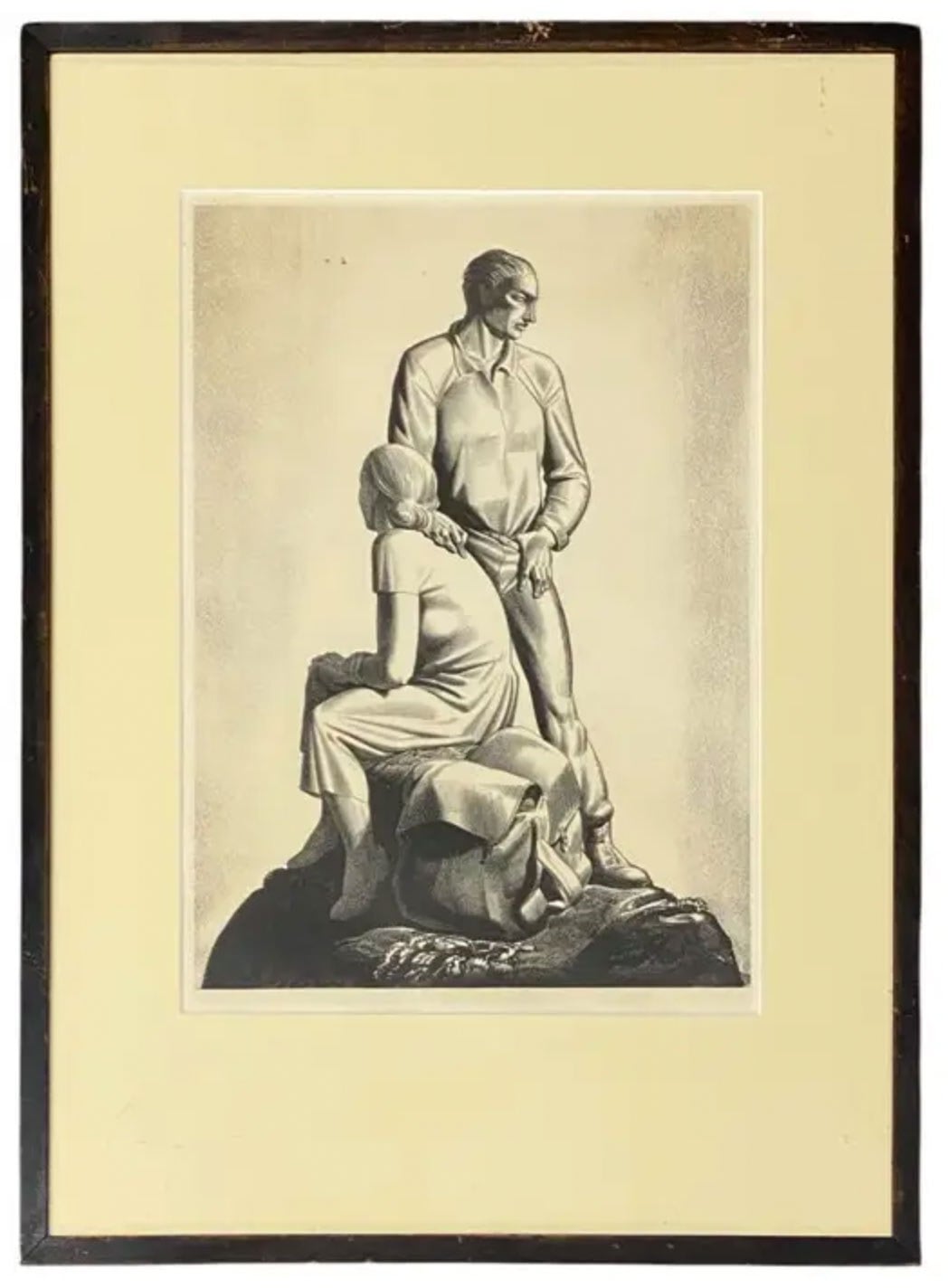
New York: American Artists Group, 1936. Kent, Rockwell. Print. Near Fine.
Minor wear to frame, a couple tiny spots in top corner, otherwise print very well preserved.
20 5/8 x 15 1/4, print about 13 1/2 x 10. Matted and framed under glass. American Artists Group tag adhered to backing of frame. Presaging the bleak stoicism of John Steinbeck's The Grapes of Wrath, Rockwell Kent's image epitomizes the loneliness and despair of those who lost everything in the Great Depression.
Offered by Yesterday's Muse Books and found in "Rockwell Kent."
- Spring Attractions/New York Book Fair 2026
- Portland & Environs -- catalogue issued in conjunction with the Rose City Book & Paper Fair
--
Remember, you can always browse and download the latest catalogs published by ABAA members on ABAA.org by visiting the following link: https://www.abaa.org/abaa-member-catalogues (You can also access this page by selecting 'Booksellers' from the top menu, scroll to the bottom of the page to 'Member Catalogs', and click on 'View All'.)